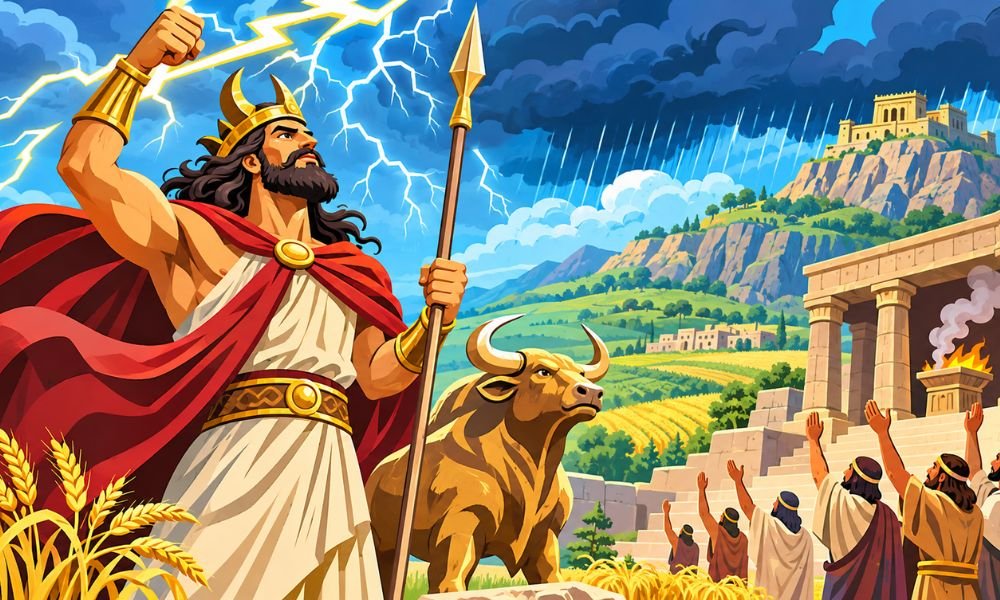
Have you ever heard of a god who could bring storms and rain? Long ago people believed Baal had these powers. He was one of the most important gods in ancient Canaan. Many people prayed to him for rain and good crops.
Baal was more than a storm god. Ancient stories describe him as a strong warrior and a powerful ruler. His name also appears in the Bible. There he is shown as a rival to the God of Israel.
So who is Baal and why was he so important? In this article we will explore his history and name. We will also learn about his powers and family. His famous battles will help us understand why people worshipped him.
Who Is Baal in Ancient History?
Baal was a major god in the ancient land of Canaan. This area included parts of modern Israel and nearby lands. People believed he controlled storms and rain. They also linked his power with healthy crops and a good harvest.
The best-known Baal was called Baal Hadad. He was an important god in the city of Ugarit. This ancient city stood near the coast of modern Syria. People there told stories about his great strength and power.
Today in 2026 people still ask who is Baal and why he mattered. His story helps us understand how ancient people viewed nature. They believed powerful gods could affect their land and their daily lives.
What Does the Name Baal Mean?
The name Baal comes from an old Semitic word. It means “lord” or “master.” At first it was a title rather than one god’s personal name. People could use this title for different gods in different places.
For example Baal Hadad was known for storms and rain. Other gods also had Baal in their names. This is why the name does not always point to one god. The place and time help explain its meaning.
You may also see the name written as Ba’al or Baʿal. These spellings come from the same ancient word. Knowing this makes old stories easier to understand. It also helps explain why different books describe Baal in different ways.
Where Did Baal Come From?
Baal’s history goes back thousands of years. His worship was common in ancient Canaan and nearby lands. He was closely linked with Hadad. This was another name used for a powerful storm god in the ancient Near East.
One important place in his history was Ugarit. This city stood near the Mediterranean Sea. It was a busy place where people traded goods. Baal had an important place in the city’s religious life.
In 1928 an ancient tomb was found near Ras Shamra in Syria. This led to the discovery of Ugarit. Work began there in 1929. Experts later found clay tablets with stories about Baal and other gods.
These tablets were a major discovery. They helped people learn how ancient worshippers understood Baal. Before this many readers knew him mainly through the Bible. The tablets gave a much wider picture of his story.
Continue reading: Collegia: The Secret Behind Ancient Rome’s Powerful Groups
What Powers Did Baal Have?
Baal was best known as the god of storms and rain. Ancient people linked him with thunder and lightning. They believed his power could bring water to dry land. Rain was very important for their food and survival.
Imagine living on a farm thousands of years ago. Your family grows wheat and barley. But the land needs rain to help the plants grow. If the rain does not come your family may face hunger.
This helps explain why people prayed to Baal. They hoped he would bring rain at the right time. His power was also linked with the growth of plants and the health of the land.
Baal was also seen as a strong ruler. Ancient myths show him fighting other gods to gain power. His victories were about more than winning battles. They showed his place as a powerful king among the gods.
Who Were Baal’s Family and Other Gods?
Baal was part of a large group of ancient gods. One important figure was El. He was an older god with great power and respect. In stories from Ugarit El held a high place among the gods.
Anat was another important figure in Baal’s story. She was a strong goddess and was often called his sister. She helped him during dangerous times. Ancient stories show her as brave and ready to fight.
Asherah was also an important goddess. She was called Athirat in the texts from Ugarit. She was closely linked with El. Other figures included Yamm the sea god and Mot who was linked with death.
Not every ancient story gave Baal the same family ties. Some texts called him the son of Dagan. Others focused on El’s power over the gods. This is why Baal’s family cannot be explained with one simple family tree.
Who Is Baal in Ancient Myths?
Ancient stories show Baal as a brave warrior. His most famous tales are found in the Baal Cycle. These stories were written on six clay tablets found at Ugarit. They tell of his battles and his fight for power.
One of his greatest enemies was Yamm. He was linked with the sea and its wild power. Yamm wanted the other gods to obey him. Baal refused and prepared to fight for his place among the gods.
A skilled god named Kothar-wa-Hasis made weapons for Baal. With these weapons Baal defeated Yamm. This victory showed his strength. It also helped explain how order could win over danger in the ancient world.
After this Baal gained a grand palace on Mount Zaphon. The palace showed that he had won royal power. But his troubles were not over. He later faced Mot who was linked with death and the loss of life.
The story of Baal and Mot is one of the most important parts of the myth. Baal faced a great threat and his place was at risk. Anat played a key role in the struggle. Baal later returned to power.
Some people link this story with the dry and rainy seasons. But experts do not all agree on that meaning. Parts of the old tablets are damaged. What is clear is that these stories connect Baal with life and power.
How Did Ancient People Worship Baal?
Long ago people worshipped Baal in temples and other holy places. They believed he could bring rain and help their crops grow. His worship was common in Canaan and nearby lands. Each place had its own ways of honoring him.
People gave offerings such as food and animals during religious events. Some also burned incense and poured drinks as gifts to the gods. Priests helped lead these events. Kings also took part in important acts of worship.
Imagine a farmer waiting for rain after many dry days. He might pray to Baal for help. A good harvest meant more food for his family. This made Baal an important part of life for many people.
The Bible also speaks about children being offered to Baal. But this does not prove that all Baal worshippers did this. The evidence is not the same in every place. Historians study these claims with care.
What Did Baal Look Like?
Ancient art often shows Baal as a strong man holding a weapon. He sometimes wears a tall crown. His raised arm makes him look ready to strike. These images show his power over storms and his role as a warrior.
One famous stone image of Baal was found at Ugarit in 1932. It shows him with a raised weapon and a long spear. The image is now kept at the Louvre Museum in Paris. It is an important piece of ancient history.
Bulls were also linked with storm gods in the ancient Near East. They stood for strength and power. Thunderbolts and mountains were other important signs. However a bull image does not always mean that it shows Baal.
These old images help answer the question who is Baal in ancient art. They show how people pictured his strength. They also help us understand why storms and royal power were important parts of his story.
Who Is Baal in the Bible?
Baal appears many times in the Old Testament. Biblical writers describe his worship as a serious problem for the people of Israel. They taught that Israel should worship Yahweh alone. Baal was seen as a rival to that worship.
One famous story appears in 1 Kings 18. The prophet Elijah challenged the prophets of Baal on Mount Carmel. Both sides called on their god to send fire. The story says Baal gave no answer while Yahweh answered Elijah.
This event also took place during a time of drought in the biblical story. That detail was important because Baal was known as a god of rain. The story showed that Yahweh held power over rain and storms.
King Ahab and Queen Jezebel also appear in these accounts. The Bible links them with the spread of Baal worship in Israel. Yet not every part of these stories can be checked through ancient finds. The Bible gives a religious view of these events.
Is Baal the Same as Satan?
Many people ask if Baal was another name for Satan. The simple answer is no. In ancient Canaanite religion Baal was a storm god. His worshippers did not see him as the Christian devil.
The confusion comes partly from later religious stories. A name called Baal-Zebub appears in the Bible as the god of Ekron. Over time related names such as Beelzebub became linked with evil spirits in Jewish and Christian traditions.
These changes happened across many years. They do not mean that Baal Hadad and Satan were the same figure. Ancient Canaanite beliefs and later Christian teachings came from different times and religious settings.
So who is Baal when compared with Satan? He was an ancient god whose name later gained different meanings. Knowing this difference helps readers avoid mixing old myths with much later beliefs.
Who Is Baal in Different Ancient Cultures?
The name Baal was used in more than one ancient place. Since the word meant lord it could be part of several divine names. This is why historians look at the place and time before deciding which Baal a text describes.
Baal Hadad was the famous storm god of Ugarit. He was linked with rain and royal power. Baal-Zephon was a name tied to Mount Zaphon. Baal-Berith meant lord of the covenant and appears in the Book of Judges.
Another important god was Baal Hammon. He was worshipped in Carthage in North Africa. His history was not exactly the same as Baal Hadad’s. Baal-Zebub was also known from the biblical account of Ekron.
These names may sound alike but they do not always describe the same god. Some were local titles while others had their own worship traditions. Understanding this makes ancient history much easier to follow.
Continue reading: UAWeek: Everything You Need to Know About This Big Event
Why Is Baal Still Famous Today?
Baal remains an important name in the study of ancient religion. His stories help us learn how people understood rain and storms. They also show how ancient people explained power and the dangers of the natural world.
The discovery of Ugarit made his history much clearer. Clay tablets and temple remains gave historians new evidence. Today in 2026 researchers still study these old finds to learn more about the people who worshipped him.
Baal also appears in modern books and games. Some stories show him as a dark or frightening figure. These modern versions often use later religious ideas rather than the original Canaanite stories.
People still search for who is Baal because his name has so many meanings. Some know him from the Bible. Others learn about him through ancient myths. His history connects these different stories in an interesting way.
Conclusion
Baal was one of the most important gods in ancient Canaan. People linked him with storms and rain. They believed his power could help crops grow and protect their land. His role was closely tied to everyday life.
His story also includes great battles and powerful gods. The Baal Cycle shows him fighting Yamm and facing Mot. The Bible gives another view by showing Baal worship as a rival to worship of Yahweh.
So who is Baal? He was an ancient storm god with a long and complex history. His name later took on new meanings in other religions. Learning about him helps us understand the beliefs of people who lived thousands of years ago.
(FAQs)
Who Is Baal in the Bible?
Baal was an ancient god linked with storms and rain. The Bible describes him as a rival to Yahweh. Biblical writers warned the people of Israel against worshipping Baal because they believed Yahweh alone should be worshipped.
What Is Baal the God Of?
Baal was mainly known as the god of storms and rain. Ancient people believed he could help crops grow and bring good harvests. He was also seen as a strong warrior and a powerful king among gods.
Is Baal the Same as Satan?
No. Baal and Satan were not the same figure in ancient religion. Baal was a Canaanite storm god. His name later became linked with evil in some religious traditions. This caused confusion about his true history.
Who Was Baal’s Wife?
Ancient stories do not clearly name one wife for Baal. Some traditions link him with goddesses such as Anat. She was often called his sister in Ugaritic myths. Their exact relationship remains a topic of study.
Why Did People Worship Baal?
People worshipped Baal because they believed he controlled rain and storms. Farmers needed rain to grow food. They prayed to him for healthy crops and good harvests. His worship also represented strength and protection in ancient communities.
What Happened to Baal in Ancient Myths?
Baal fought powerful gods in ancient stories. He defeated Yamm who was linked with the sea. Later he faced Mot who represented death. Baal returned to power after this struggle. These stories explored life and death.
What Did Baal Look Like?
Ancient art often shows Baal as a strong man wearing a tall crown. He holds weapons linked with thunder and lightning. A famous stone image found at Ugarit shows him with one arm raised and a spear.
Why Did Prophet Elijah Challenge Baal?
According to 1 Kings 18 Elijah challenged Baal’s prophets on Mount Carmel. The test was meant to show which god held true power. The Bible says Yahweh answered with fire while Baal gave no answer to his prophets.
Is Baal the Same as Beelzebub?
No. Baal Hadad and Beelzebub are not the same figure. Beelzebub developed from later religious traditions linked with Baal-Zebub. Baal Hadad was known as an ancient storm god while Beelzebub became linked with demons.
Do People Still Worship Baal Today?
Baal worship was common thousands of years ago. His ancient temples are no longer active in the same way. Some modern religious groups may honor ancient Canaanite gods. However Baal is mainly known today through history and mythology.
Continue reading: Trupeek Com: What It Is, How It Works, and Why People Visit It