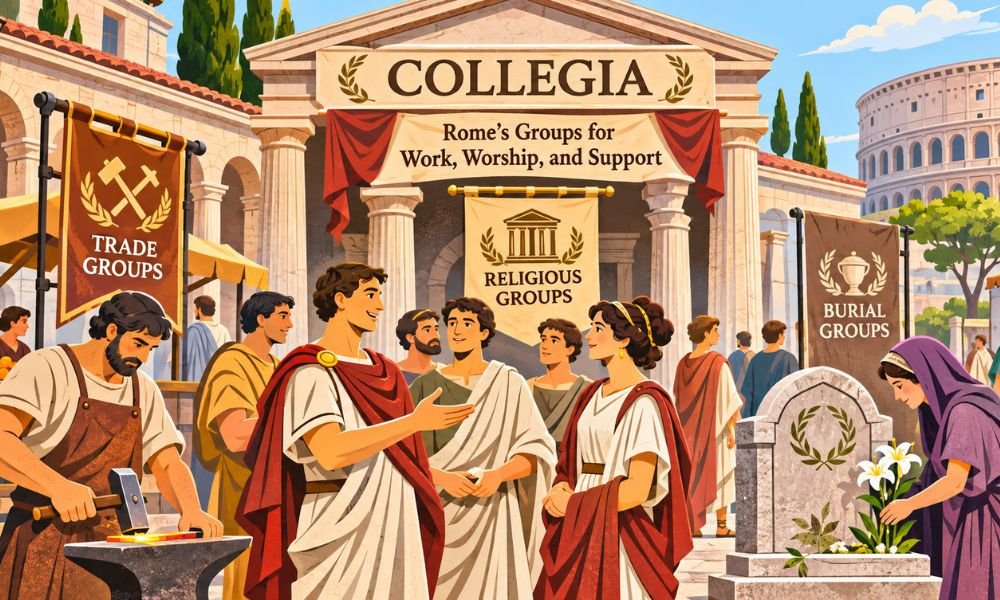
Have you ever wondered how ordinary people helped each other in ancient Rome? Life was not easy for everyone. Rich people had power and money. Poor workers often had fewer choices. Yet many Romans found a way to support each other.
They formed special groups called collegia. These groups brought people together through work and faith. Some helped members with funeral costs. Others held meals and events. They gave many people a place to feel welcome and respected.
In 2026 these old Roman groups still teach us about friendship and teamwork. Their story shows how people worked together long before modern clubs existed. Today we will explore their history and rules. We will also learn why they mattered.
What Were Collegia in Ancient Rome?
Collegia were groups of people who shared a common goal. Some members did the same kind of work. Others followed the same religious customs. These groups helped people meet and support each other in daily life.
The word collegium means one group. The word collegia means more than one group. Romans used these groups for many reasons. Some were linked to jobs. Others focused on worship or helping members after death.
Think about a group of bakers living in ancient Rome. They might join a group to meet other bakers. They could share meals and take part in events. This made life feel less lonely in a large city.
The History and Origin of Collegia
The history of collegia goes back to the early days of Rome. Romans formed groups around shared work and religious duties. Some old stories link trade groups to Rome’s early kings. Yet the exact start of these groups remains unclear.
During the Roman Republic these groups became more common. Workers and local people joined them for support. Some groups also became active in public life. Roman leaders began to worry when certain groups gained too much power.
Under the Roman Empire many collegia continued to grow. Some gained legal rights and owned shared property. Others faced strict rules from the state. Their role changed over time as Roman cities and the government grew.
Continue reading: Delta Dental NJ: Everything You Need to Know Before Choosing a Plan
Different Types of Roman Collegia
Not all Roman collegia served the same purpose. Some helped people who worked in the same trade. Bakers and builders could form groups around their jobs. These groups offered a place to meet and share common interests.
Other groups focused on religion. Members honored Roman gods and held special events. They could share meals and take part in worship. Religious life was often mixed with social life. This made many groups more than simple work clubs.
Burial groups were also important. Members paid money into a shared fund for funeral costs. Some local groups brought neighbors together as well. These different types show how collegia touched many parts of Roman life.
How Collegia Worked in Daily Life
Joining a collegium could give someone a new circle of friends. Some groups asked new members to pay a fee. Members might also pay a small amount each month. This money helped cover the group’s shared needs.
Members often met for meals and special events. They could honor their gods or remember people who had died. Some groups had meeting places of their own. Others used rooms or spaces offered by members and wealthy supporters.
Imagine a worker who spent long days making shoes. After work he could meet people who understood his daily life. They might eat together and share news. For many Romans these gatherings offered friendship and a sense of belonging.
Collegia Rules and Leadership
Roman collegia often had written rules called lex collegii. These rules explained how a group should work. They could cover membership fees and meetings. They also helped members understand their duties and what the group would provide.
Many groups chose leaders to manage their work. Some had officers who handled money and planned events. Wealthy patrons could also offer support. A patron might give money or help the group gain respect in Roman society.
The Roman government also made rules for these groups. Under laws linked to Julius Caesar and Augustus many new associations needed official approval. Leaders wanted to stop groups that might cause trouble. Still many approved groups continued their work.
Continue reading: Colegia: Everything You Need to Know About This Learning Platform
Why Collegia Helped Workers and Slaves
Life in ancient Rome was very different for rich and poor people. Wealthy families often held the most power. Workers and freedmen had fewer chances to gain respect. Collegia gave some of them a place to belong.
Some groups also allowed enslaved people to take part. Their rights were still limited by Roman law and their owners. Yet membership could offer social ties and shared activities. It did not make enslaved members free or equal citizens.
For a worker these groups could offer more than friendship. Some provided funeral support and chances to meet helpful people. Members could also gain respect through group roles. This made collegia an important part of life for many ordinary Romans.
Collegia and Religion in Ancient Rome
Religion was an important part of life in ancient Rome. People believed that gods could protect their homes and families. Many collegia brought people together through shared religious beliefs. Members prayed and took part in special events to honor their gods.
Some groups followed gods such as Diana and Bacchus. Others honored Isis or Mithras. Members could gather for worship and enjoy meals together. These events helped people build friendships while keeping their religious customs alive.
Not every group focused only on religion. Many mixed worship with work and social activities. A group of workers might honor a god during a yearly feast. This shows how religion and daily life were closely linked in Roman society.
How Collegia Influenced Early Christians
Early Christians lived in the same cities as other Roman people. They knew the customs of the world around them. Some ways they formed groups were similar to collegia. Both brought people together and offered a sense of belonging.
Many early Christians met in private homes. A member with enough space might welcome others for prayer and shared meals. Christians often called each other brother and sister. They also taught the importance of love and helping people in need.
Over time Christian groups began to change. Church leaders gained more power and bishops took larger roles. By the late second century church leadership was becoming more organized. Christian communities still valued friendship and care but their structure was changing.
Collegia and Roman Burial Traditions
Funerals were very important in ancient Rome. Families wanted their loved ones to receive a proper burial. Yet many poor people could not afford funeral costs. Burial groups helped members prepare for this difficult time by collecting money together.
Members often paid a joining fee and regular dues. The money could help cover funeral needs when someone died. Some groups also held meals to remember the dead. This gave members peace of mind and helped families during sad times.
Shared burial places also tell us about Roman life. People buried near each other did not always follow the same religion. Some may have belonged to the same social group. This is why historians study burial sites carefully before deciding who belonged to a Christian community.
Famous Collegia That Made History
One well-known group was the College of Diana and Antinous. It was based in Lanuvium near Rome. A record from 136 CE shows that members paid 100 sesterces to join. They also paid monthly dues to support funeral needs.
Another group was the College of Aesculapius and Hygia. It was linked to a woman named Salvia Marcellina. This group had a limit of 60 members. It held shared meals and helped keep the memory of loved ones alive.
Rome also had four major priestly colleges. These were the Pontifices and Augures along with the Quindecimviri and Epulones. They helped guide public religious life. Their duties included religious rules and signs from the gods and public feasts.
Roman Laws and the Decline of Collegia
Roman leaders did not always trust large groups. They feared that some associations could cause trouble or gain political power. During the Roman Republic certain groups faced bans. Julius Caesar later placed more limits on some associations.
Under the Roman Empire the government continued to watch these groups. Some were allowed to operate with official approval. Others faced restrictions. Roman leaders wanted the benefits of organized workers without allowing groups to become a threat to public order.
By the later Roman Empire some worker groups had less freedom. Bakers and shippers were important to daily life. The government placed greater duties on certain trades. Some members found it hard to leave their work. Yet collegia did not all disappear at once.
How Collegia Shaped Modern Society
The story of collegia still matters in 2026. Today people join clubs and worker groups for many of the same reasons. They want friendship and support. They also want to meet others who share their work or interests.
Modern trade groups and social clubs have some things in common with Roman associations. Members may pay fees and follow rules. They may also choose leaders and hold events. Still these modern groups developed in different ways over many years.
The biggest lesson is simple. People have always needed one another. Ancient Roman workers found ways to build friendships and offer help. Their groups remind us that working together can make daily life easier and give people a stronger sense of belonging.
Conclusion
Collegia played an important role in ancient Roman society. They brought people together through work and religion. Some helped members pay for funerals. Others held shared meals and special events. These groups gave many ordinary Romans a place to belong.
Their history also helps us understand early Christian communities. Christians lived within Roman society and shared some of its social customs. Over time both religious groups and worker associations changed. Roman laws also shaped how many of these groups could operate.
Today we can still learn from their story. Collegia show how people found support in a world with deep social divisions. They were more than simple clubs. They helped shape daily life and left a lasting mark on how we understand community.
(FAQs)
What Were Collegia in Ancient Rome?
Collegia were groups of people who shared the same work or interests. They helped members make friends and support each other. Some groups focused on religion while others helped workers or paid for funerals.
Why Were Collegia Important in Roman Society?
Collegia gave ordinary Romans a place to belong. They helped workers and freedmen build friendships and gain respect. Some groups also offered financial help for funerals. This made life easier for many people.
Who Could Join Collegia in Ancient Rome?
Membership depended on the group’s rules. Workers and freedmen could join many associations. Some groups also accepted enslaved people with limits. Women took part in certain groups too. Not every collegium accepted everyone.
What Were the Main Types of Roman Collegia?
The main types included trade groups and religious groups and burial groups. Trade groups brought workers together. Religious groups honored gods. Burial groups collected money to help members receive proper funerals after death.
Did Roman Collegia Help Slaves and Poor People?
Yes. Some collegia welcomed enslaved people and poor workers. Members could enjoy shared meals and social events. Certain groups also offered funeral support. However membership did not free enslaved people or give them equal rights.
How Did Collegia Influence Early Christianity?
Early Christians lived within Roman society and knew its group customs. Like some collegia they met in homes and shared meals. They also supported one another. However Christian communities had their own beliefs and religious goals.
Did Members Have to Pay Money to Join Collegia?
Many groups required joining fees and regular payments. The money helped cover meals and religious events and funeral costs. One famous Roman burial group charged 100 sesterces to join. Fees differed between groups.
Were Collegia Legal in Ancient Rome?
Some collegia were legal and had official approval. Others faced limits or bans. Roman leaders worried that certain groups might cause unrest. The rules changed under different leaders and during different periods of Roman history.
What Was the Most Famous Collegium in Ancient Rome?
The College of Diana and Antinous is one of the best-known examples. A record from 136 CE describes its fees and funeral rules. Rome also had powerful priestly colleges that guided public religious life.
Do Collegia Still Exist in Modern Society?
Ancient Roman collegia no longer exist in their original form. However modern clubs and worker groups share some similar ideas. They bring people together through common goals and rules. Their history still helps us understand community life.
Continue reading: Bumetro: Is It a Real App or Just an Idea?