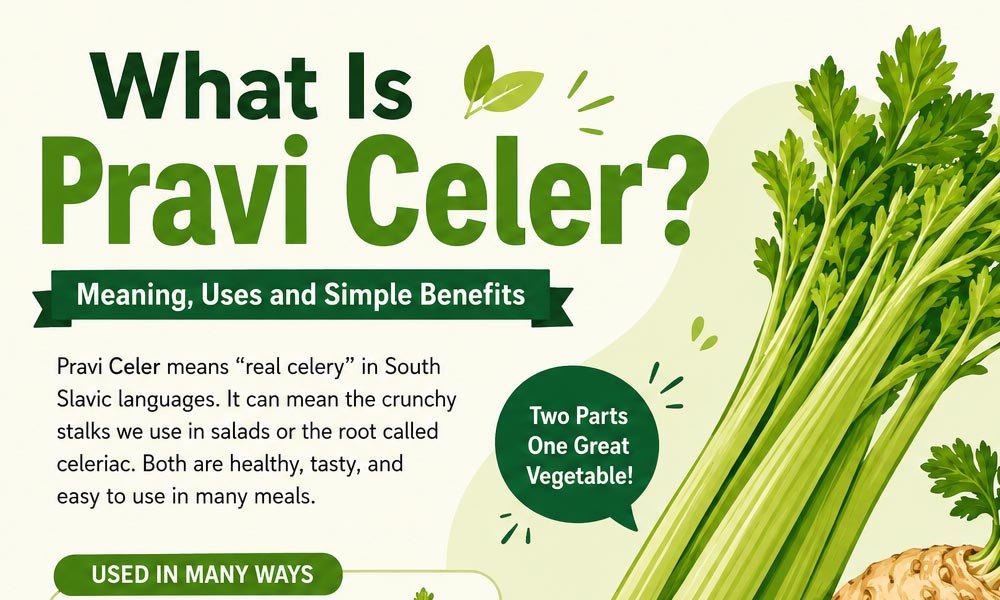
Have you ever seen the words Pravi Celer in a recipe and wondered what they mean? The name may sound unusual at first. Yet the idea behind it is quite simple. It is closely linked with celery.
In 2026 people are showing more interest in simple foods. They want fresh foods that are easy to cook and easy to understand. This has also brought more attention to old food names and cooking styles.
But there is some confusion online about Pravi Celer. Some pages call it real celery. Some connect it mainly with celeriac. Others make big health claims. This guide will explain the meaning and clear up those mixed ideas.
What Is Pravi Celer?
The simple meaning of Pravi Celer is linked with “real celery” or “true celery.” The words come from South Slavic languages. The word pravi can mean real or true. The word celer means celery.
You may see these words in food writing from places such as Serbia and Croatia. They may also appear in Balkan recipes. Celery has long been used there in soups and other warm meals.
However Pravi Celer is not the name of a new plant species. It is also not an official label for a special health food. This point matters because some websites make the name sound like a new type of superfood.
Is Pravi Celer the Same as Celery?
In simple terms Pravi Celer is connected with celery. Celery has the scientific name Apium graveolens. It belongs to the same plant family as carrots and parsley.
The celery most people know has long green stalks. These stalks are crisp and full of water. People eat them raw or put them into soups and salads. The leaves can also be used for taste.
Some online pages say Pravi Celer means celery grown in a more natural way. That idea should be treated with care. There is no clear farming rule that makes something official “Pravi Celer.” It is better to understand the words through their language and food use.
Pravi Celer and Celeriac Explained
Here is where the topic can become a little confusing. Some writers use Pravi Celer when talking about celeriac. Celeriac is closely related to the green celery you may already know.
Celeriac is grown mainly for its large root-like base. It looks rough and round on the outside. Once peeled it has pale flesh with a celery-like smell and taste. People often cook it in soups or mash it like potatoes.
This does not mean every use of Pravi Celer refers only to celeriac. The term can be used more widely around celery. Looking at the recipe or local meaning can help you understand which form the writer means.
History of Pravi Celer
Celery has a much longer story than many people may expect. People have known plants from the celery family for thousands of years. Over time celery became both a food plant and a useful kitchen ingredient.
It later became important in many European cooking styles. Celery works very well with carrots and onions. Together these simple foods can make a rich base for soups and slow cooked meals.
In Balkan cooking the root and leaves can be just as useful as the stalks. A piece of celery root can give broth a deep smell and taste. Fresh or dried leaves can also add extra flavor to a simple meal.
You may also read: Shelly Tresvant: Everything to Know About Ralph Tresvant’s Ex-Wife
Main Types of Pravi Celer
Not all celery looks like the green stalks sold in a supermarket. Different forms have been grown because people wanted different parts of the plant. Three types are especially useful to know.
Stalk celery is the familiar kind. It grows long and crisp green stalks. You can eat them raw with a dip. You can also chop them into salad or cook them in soup.
Leaf celery is grown more for its leaves and strong taste. Celeriac is grown for its large base or root. Celeriac can be roasted or mashed. It can also be grated raw into some salads.
Pravi Celer Nutrition
One reason people enjoy Pravi Celer is that celery is a light food. Fresh celery contains a lot of water. This makes it crisp and refreshing.
Celery also gives the body some fiber. Fiber is useful for normal digestion. Whole celery keeps this fiber while much of it can be removed when celery is turned into strained juice.
Celery also provides vitamin K. It contains smaller amounts of nutrients such as potassium and folate. The exact amount can change with the type of celery and how much you eat.
Simple Benefits of Pravi Celer
The benefits of Pravi Celer do not need big health promises to sound useful. One of its easiest benefits is hydration. Celery contains plenty of water. Eating it can add to the water you already get from drinks and other foods.
Whole celery also provides fiber. Fiber supports normal bowel movement and helps make a balanced meal more filling. This is one reason celery can work well as a snack with other foods.
Celery is also low in calories. That can make it useful for people who want lighter meals. Still it is not a magic weight loss food. Good health comes from the whole diet rather than one vegetable.
Pravi Celer and Celery Juice
Celery juice has received plenty of attention in recent years. You may have seen people drinking a bright green glass in the morning. It can be a refreshing drink but some claims about it go too far.
When celery is juiced and strained much of its fiber can be left behind. Whole Pravi Celer gives you that fiber along with its water and nutrients. This does not make celery juice bad. It simply makes the two choices different.
Celery juice also does not need to be called a miracle detox drink. Your body already has organs that remove waste. Celery can be part of a healthy diet but it does not replace the work done by your liver and kidneys.
You may also read: Who Is Kim Hasse? All About Gordon Lightfoot’s Wife
How to Use Pravi Celer in Food
One of the best things about Pravi Celer is how easy it is to use. You do not need a special recipe. Celery can fit into simple meals that many families already make at home.
Fresh stalks can be cut into small pieces for salads. You can also eat them raw as a snack. Their crisp bite works well with simple dips. The leaves can be chopped and added to food for more taste.
Celeriac gives you even more choices. Peel the rough outside first. Then roast the inside or add it to soup. You can also mash it with potatoes. Its warm celery taste works especially well in winter meals.
How to Buy and Store Pravi Celer
Good Pravi Celer should look fresh and firm. When buying stalk celery look for crisp stalks that do not bend too easily. Fresh leaves should look green rather than dry or badly yellow.
If you are buying celeriac choose a firm root. A good one should feel heavy for its size. Small marks on the rough skin are normal. Avoid roots with very soft or rotten areas.
Keep fresh celery in the fridge. This helps it stay crisp for longer. Celeriac can also stay fresh for quite a while when kept cool. Wash and cut it when you are ready to use it.
How to Grow Pravi Celer
Want to try growing Pravi Celer yourself? Celery can take some patience. It likes rich soil and needs steady water. Dry soil can make it harder for the plant to grow well.
Celery seeds are very small. Many gardeners start them indoors before moving the young plants outside. The plants need enough light and regular care. They also tend to grow better when the weather is not extremely hot.
Celeriac also takes time to form its large base. Do not worry if it seems slow at first. Give it water and good soil. After several months you may have fresh celery ready to bring straight from your garden into the kitchen.
Is Pravi Celer Safe to Eat?
For most people Pravi Celer can be enjoyed as a normal food. You can eat the stalks raw or cooked. The leaves and celeriac can also be used in many meals.
However celery can cause an allergy in some people. A celery allergy can sometimes be serious. Anyone who knows they are allergic to celery should avoid celery and foods that contain it.
Celery also contains vitamin K. This nutrient is useful for the body but it can matter for people taking certain blood thinning medicines. If your medicine comes with food advice it is best to follow the advice given by your doctor.
Pravi Celer Myths and Facts
The growing interest in Pravi Celer has also brought some big claims. One popular idea says celery is a “negative calorie” food. This means your body would use more energy eating it than the food gives you.
That claim is misleading. Celery is very low in calories but it still gives your body energy. You can enjoy it as part of a balanced diet. There is no need to turn it into a magic weight loss food.
Another common claim is that celery juice cleans all harmful things from the body. There is no need for such a big promise. Celery gives you water and useful nutrients. Your liver and kidneys do the main work of removing waste.
Some websites also say Pravi Celer is always more natural or healthier than supermarket celery. The name alone cannot prove that. How celery is grown and stored matters more than simply calling it “real celery.”
Conclusion
So what is Pravi Celer really? The simple answer is much less mysterious than some online pages make it sound. The words are linked with the idea of true or real celery and have a South Slavic language connection.
The interesting part is how celery is used. Stalks can make a crisp snack. Leaves can add flavor. Celeriac can become part of soup or a warm meal. Using more of the plant can also help reduce food waste.
In 2026 Pravi Celer does not need to be a new superfood to be worth learning about. It is a simple vegetable with an interesting food story. Its water fiber and nutrients make it useful while its many cooking uses make it easy to enjoy.
The next time you see Pravi Celer in a recipe you will know what to look for. Check whether the recipe means stalk celery or celeriac. Then choose the right type and enjoy it for what it really is: a simple and useful food.
You may also read: What Is Val Studio? A Simple Guide for Beginners