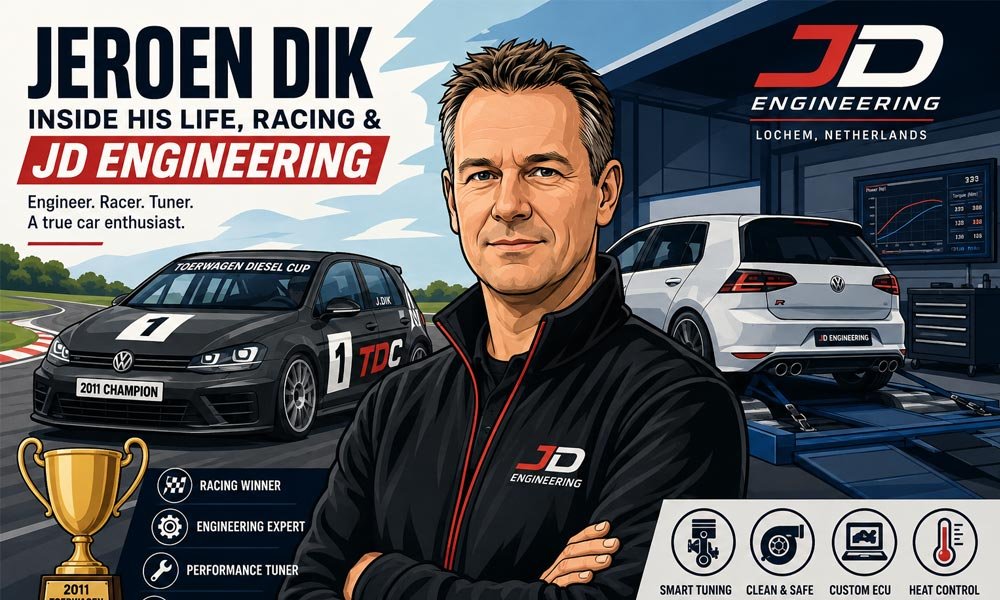
Some car experts become known for making huge power. Others become famous through racing. Jeroen Dik stands out because his story brings both worlds together. He is linked with tuning and racing. He is also the name behind JD Engineering.
For many car fans his work is about more than speed. A fast car should still feel smooth and easy to drive. It should also stay strong when used often. This simple idea has helped Jeroen build respect in the tuning world.
In this article we will explore the life and work of Jeroen Dik. We will look at his early interest in cars and his move into tuning. We will also explore JD Engineering and his famous G60 work before moving into his racing story.
Who Is Jeroen Dik?
Jeroen Dik is a Dutch car tuner and racing driver. He is best known for his work with JD Engineering in the Netherlands. His name is strongly linked with Volkswagen Group cars and smart performance tuning.
Online profiles report that Jeroen was born on March 13 1969. He comes from the Netherlands. However his public story is mainly about cars rather than his private life. He has built his name through years of hands-on work.
Some car fans have called him the “Tuning Yoda.” The nickname points to his calm way of working. He does not need wild claims to make a car interesting. His focus is on making power that drivers can really use.
Jeroen Dik’s Early Life and Love for Cars
Many stories about Jeroen Dik describe a strong interest in cars from an early age. Cars and engines became more than simple machines to him. He wanted to understand why they worked and what could make them perform better.
There are online stories about him fixing machines and taking things apart when he was young. Yet clear public proof for every childhood story is limited. What we can see from his later career is a deep interest in how cars work.
That interest became the base for everything that followed. Instead of looking at a car only as something fast Jeroen studied how its parts worked together. Power was important. But control and safe use of that power mattered too.
How Jeroen Dik Entered Car Tuning
Car tuning may sound simple from the outside. Add more power and the job is done. In real life it is much harder. More power can create more heat and stress. One wrong change can make a good engine less reliable.
Jeroen Dik developed a style built around understanding these limits. His work became linked with fuel settings and airflow. Engine software also became an important part of his tuning. Each part had to work well with the others.
Testing was also key. A change may look good on paper but the car must still work well on the road. This practical way of thinking helped shape Jeroen’s later work. It also became an important part of the JD Engineering name.
Jeroen Dik and the Start of JD Engineering
Jeroen Dik became best known through JD Engineering. The tuning company is based in Lochem in the Netherlands. It became closely linked with Volkswagen Group cars and drivers looking for more useful performance.
Volkswagen and Audi cars became a big part of the company’s work. SEAT and Škoda models also share many engines and parts with these brands. This gave JD Engineering a clear area where deep knowledge could make a real difference.
The goal was not simply to make every car as powerful as possible. Smooth power and safe engine use were important too. This helped create the type of tuning many drivers wanted. Their cars could become quicker without losing their normal road manners.
You may also read: John Paul Sarkisian: The Real Story of Cher’s Father
Jeroen Dik and His Famous G60 Work
One important part of the Jeroen Dik story is his connection with G60 engines. Volkswagen used the G-Lader supercharger in several performance cars. These engines became popular with fans but tuning them well could take skill and care.
More power brings new problems. Airflow and fuel must work together. Heat also needs attention. Pushing an engine too far can shorten its life. Jeroen’s work with these cars helped show why careful tuning matters as much as raw power.
A Golf Mk1 16V G60 is often linked with his early tuning story. The project helped show the type of car he liked to build. It mixed an older light Golf with strong performance and careful engine work.
Jeroen Dik’s Racing Career
The workshop was only one part of Jeroen Dik’s car life. Racing gave him another place to test what he knew. A race track can quickly show whether an idea really works when a car is pushed hard.
Think about what happens during a race. The engine stays hot for long periods. Brakes and tyres work hard. The driver needs smooth power when leaving a corner. A car with a huge power number can still lose if that power is difficult to use.
This experience gave Jeroen another view of tuning. Racing was not only about driving fast. It could show how power and grip work together. It could also reveal problems that might never appear during a short test on a normal road.
Jeroen Dik’s 2011 Racing Success
One of the most interesting parts of Jeroen Dik’s racing story came through the Toerwagen Diesel Cup. Reports about his racing career say he finished second in the championship in 2010. That result put him close to the top.
The following season brought an even bigger result. Jeroen is reported to have won the 2011 Toerwagen Diesel Cup. He raced a Volkswagen Golf VI TDI. His tuning knowledge was also closely connected with the car and its performance.
That result brought his two worlds together. Jeroen Dik was not simply tuning cars in a workshop. He was putting performance ideas under real race pressure. Winning showed why balance and useful power could matter just as much as an impressive number.
His racing success also gives us the perfect point to move into the next part of his story. Next we can look closely at how Jeroen Dik tunes cars and why the OEM+ idea became so important to JD Engineering.
How Jeroen Dik Tunes Cars
Jeroen Dik has built his name around a simple idea. A tuned car should not only make more power. It should also feel good on the road. The driver should be able to use that extra power without making the car hard to control.
This is why smooth power is so important in his work. A sudden jump in power may sound exciting. Yet it can make a car harder to drive. Smooth power gives the driver more control and can make normal road driving more enjoyable.
Torque is also an important part of performance tuning. Good torque can make a car pull strongly without needing very high engine speed. For a daily driver this can make overtaking and normal driving feel quick and easy.
You may also read: Who Is Mary Joan Schutz? All About Gene Wilder’s Ex-Wife
Jeroen Dik and the OEM+ Style
The OEM+ idea fits well with the tuning style linked with Jeroen Dik. OEM means the car feels close to how it came from the maker. The “plus” means adding useful changes without taking away that clean factory feel.
Imagine a Volkswagen that looks and drives almost normal during a quiet trip. Then you press the pedal and feel much stronger power. The car is quicker but it still feels easy to use. That is the basic idea behind OEM+ tuning.
This style is useful for people who drive their cars every day. They may want more power without turning the car into a difficult race machine. Good tuning should work on a fun weekend drive and on a normal trip to work.
JD Engineering Cars and Services
JD Engineering has become closely linked with Volkswagen Group cars. Volkswagen and Audi models form an important part of its tuning work. SEAT and Škoda cars are also a natural fit because many models share engines and other parts.
The company has also worked with performance cars from brands such as Porsche. Different cars need different care. A small road car does not need the same setup as a powerful sports car. This is why testing each setup matters.
Engine software is a major part of modern tuning. Changes can affect power and torque. They can also change how an engine responds. Dyno tests and data logs help tuners see what is happening instead of simply making guesses.
Why Jeroen Dik Is Respected by Car Fans
Experience is one big reason people know the Jeroen Dik name. His story connects years of tuning with time spent racing. This gives him a view of cars from both the workshop and the driver’s seat.
His approach also puts value on data. A tuner can make a big claim about power. A proper test tells a much clearer story. Heat and engine behavior can be checked while changes are made. Problems can then be found before they become serious.
This careful style has helped Jeroen Dik gain attention among Volkswagen Group fans. Many car owners want more speed. But they also want a car they can enjoy often. A strong car is much more useful when it also stays smooth and easy to drive.
Jeroen Dik and JD Engineering Today
Cars have changed a lot since the early G60 years. Modern engines use far more software and sensors. Turbo engines are common. Gearboxes and engine systems also work closely together. This means modern tuning needs a careful approach.
In 2026 JD Engineering remains a known name in the European performance car scene. The company continues to be linked with tuning and performance work. Its long history with Volkswagen Group cars remains an important part of its identity.
Some online articles make wider claims about Jeroen Dik working with AI tools and new electric car tuning. These claims should be treated with care unless JD Engineering confirms them. It is better to use clear facts than turn guesses into part of his story.
Jeroen Dik’s Impact on Car Tuning
One useful lesson from Jeroen Dik is that the biggest number does not always make the best car. Imagine two cars. One has huge power but feels rough. The other has slightly less power but delivers it smoothly. Which would you enjoy every day?
Heat control is another useful lesson. More power can create more heat. More heat can put extra stress on an engine. Good tuning therefore means knowing when to push harder and when to stay within the safe limits of the car.
Testing matters for the same reason. Real data can show what an engine is doing. This helps a tuner make better choices. That careful way of working is one reason the Jeroen Dik story remains interesting to people who love Volkswagen performance cars.
Conclusion
Jeroen Dik has built a long connection with fast cars. His story brings together tuning and racing. Through JD Engineering he became especially known among drivers who enjoy Volkswagen Group cars and want more useful performance.
His reported 2011 Toerwagen Diesel Cup win is an important part of that story. His G60 work also helped shape his name among car fans. Both areas show how workshop knowledge and real driving can work together.
In 2026 the Jeroen Dik name still stands out because his story is about more than chasing power. Smooth performance and careful testing are at its heart. For car lovers that simple idea explains why Jeroen Dik and JD Engineering continue to attract interest.
You may also read: Neatlanta: The Music Artist and Atlanta Meaning Explained