Few ingredients sit as comfortably on a supplement shelf as they do in a skincare routine, and zinc is the clearest example. The same trace mineral that supports immune health also turns up in cleansers, creams, sunscreens and spot treatments aimed at blemish-prone skin, which raises a fair question about what it is actually doing in each of them.
Understanding that starts with the way breakouts form, because zinc touches several of the steps at once. From there it comes down to the research, the different forms on offer, and how to fit zinc into a routine without overdoing it.
Why Is Zinc a Go-To Ingredient for Acne-Prone Skin?
Breakouts tend to follow the same sequence. Excess oil mixes with dead skin cells and blocks a pore, bacteria settle into the blockage, and the surrounding skin becomes inflamed, which is the red, tender stage most people notice first. Zinc is unusual because it has been studied against each of those steps rather than just one, with reported effects on oil production, on acne-associated bacteria and on inflammation.
Zinc is also an essential mineral for skin itself, playing a part in cell turnover and in how skin repairs after a blemish clears. That combination of roles explains why zinc keeps appearing in dermatology conversations, and why formulators reach for it when building products for oily and breakout-prone complexions.
What Does the Research Say About Zinc and Acne?
The most frequently cited overview is a systematic review published in the Journal of Drugs in Dermatology in 2013, which examined both oral and topical zinc. Its authors found that most of the evidence pointed to antibacterial and anti-inflammatory effects, with a possible reduction in sebum production. The same review was candid about the limits, rating the supporting evidence as inconsistent or limited in quality, which is a useful reminder that zinc is a supportive ingredient rather than a cure-all.
Results also depend on the form. Studies of topical zinc have been mixed, while oral zinc has produced more consistent responses in some trials, though at doses that call for professional guidance. Anyone considering supplements, or weighing them against professional skin treatments, is better served by a clinician who can look at the skin in person.
Formulation explains much of the variation. Concentration, the specific zinc compound and how well it stays on the skin all change what reaches the blemish, so two products that both list zinc can behave very differently. Ingredients that hold the active in place, such as patches and leave-on gels, give zinc more contact time than a cleanser that is rinsed away within a minute.
Which Forms of Zinc Suit Acne-Prone Skin?
Zinc PCA
Zinc PCA is a zinc salt of pyrrolidone carboxylic acid, a compound found naturally in skin. Ingredient suppliers describe it as helping balance oil and keep shine in check, which is why it appears in mattifying serums, toners and blemish-focused formulas. It tends to be well tolerated, making it a common choice for combination and oily skin.
Zinc Oxide
Best known as a mineral sunscreen filter, zinc oxide also has a long history in soothing, protective creams. Its gentle profile suits skin that reacts to stronger actives, and daily sun protection matters for breakout-prone skin because ultraviolet exposure can darken the marks a blemish leaves behind.
Dietary and Oral Zinc
Zinc also comes from food, with seeds, legumes and nuts among the richest sources, as covered in this look at dry fruits and their role in a balanced diet. Supplements are a different matter, since adults are advised to stay below 40 mg of zinc a day from all sources, and long-term excess can interfere with copper absorption and cause nausea. Checking with a doctor or pharmacist first is sensible.
How to Use Zinc in an Acne-Prone Skin Routine
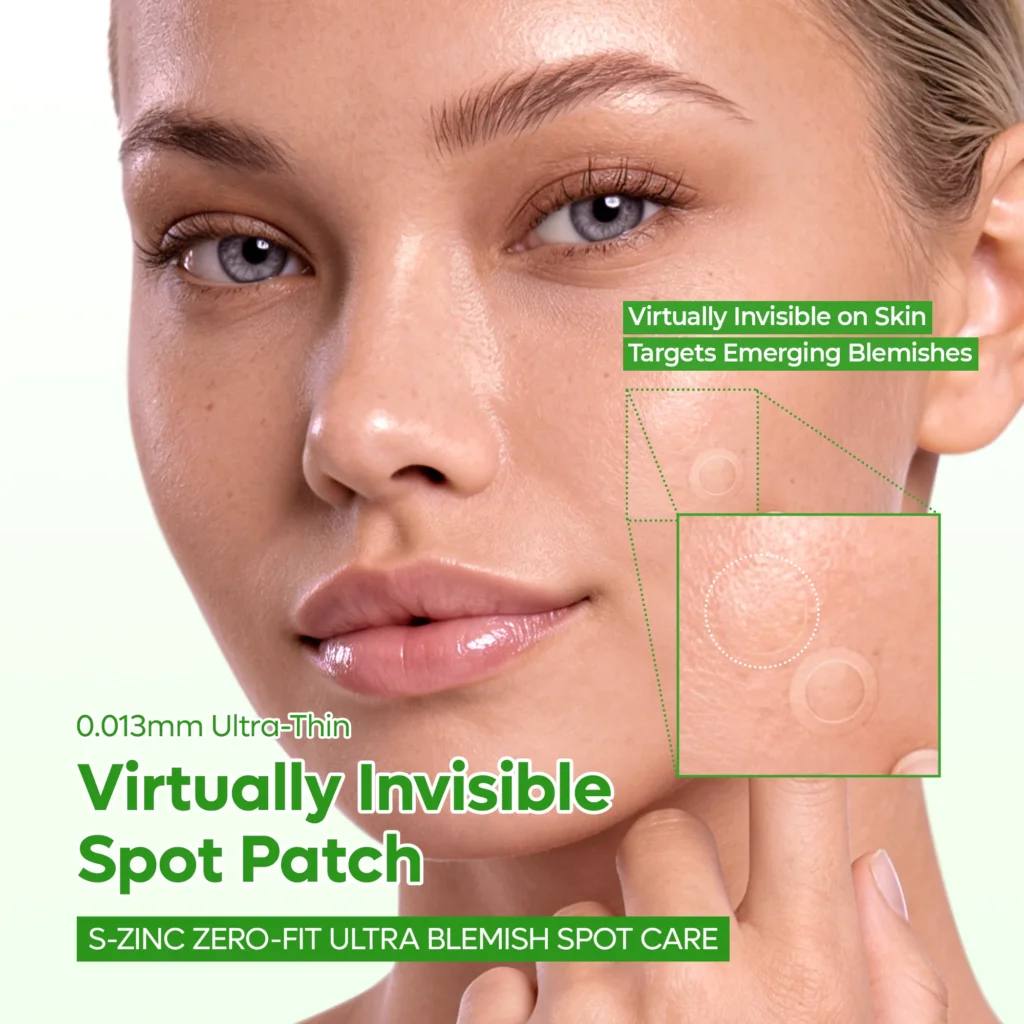
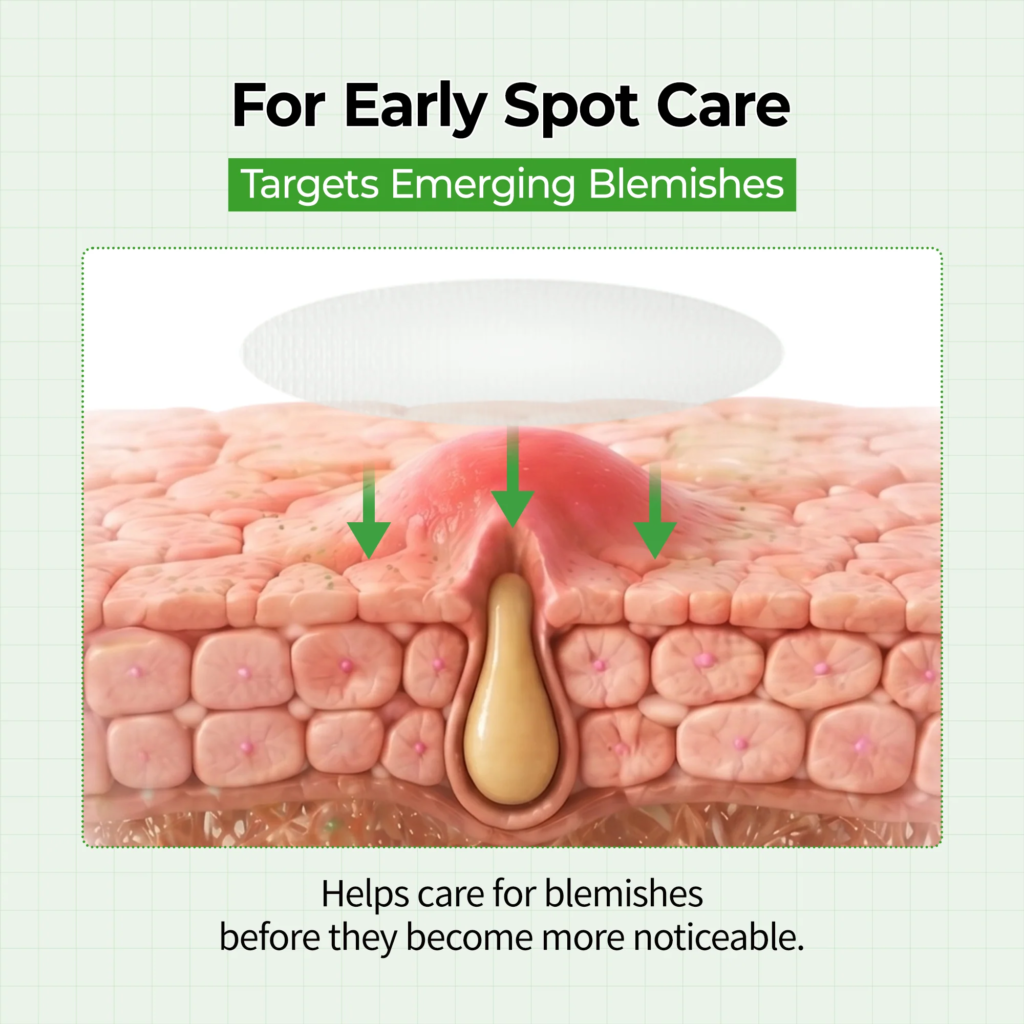
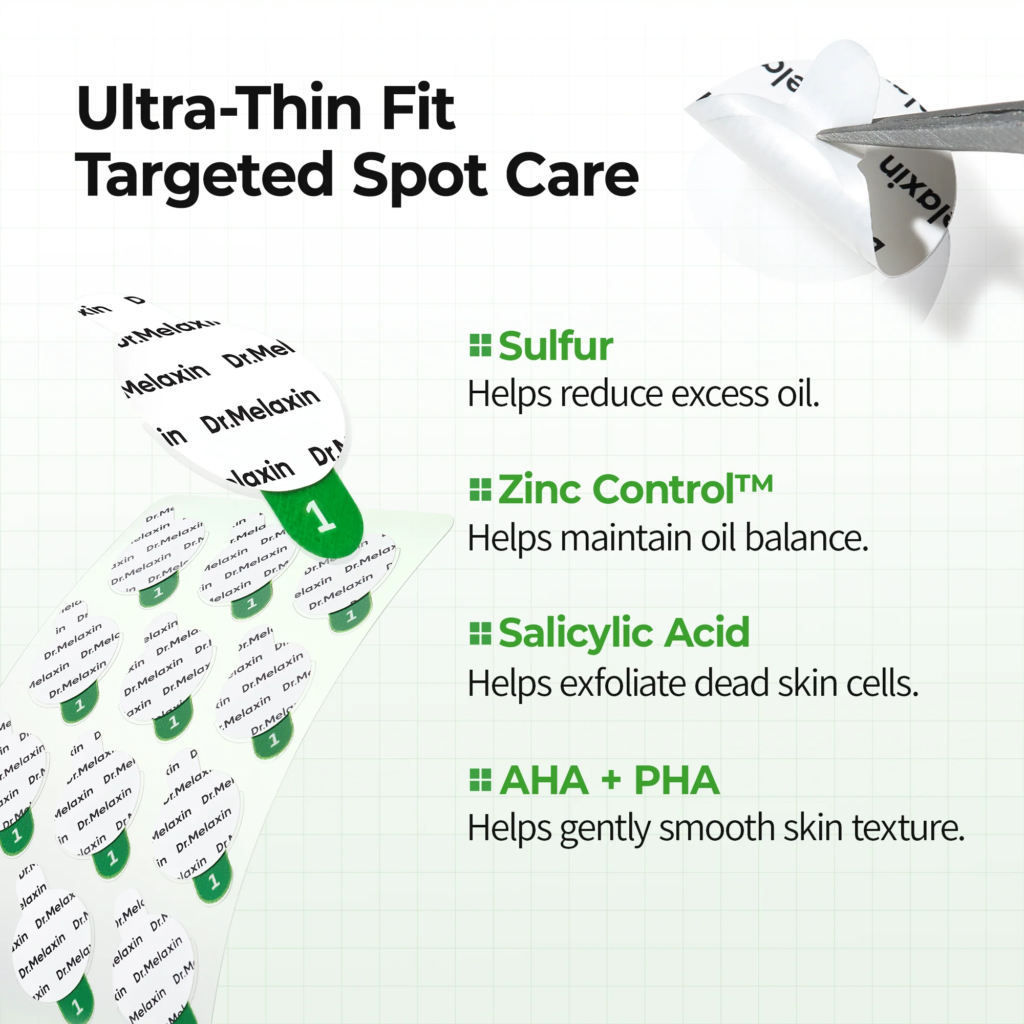
Topical zinc works best when it is placed where the problem is. A zinc spot treatment for acne-prone skin delivers the ingredient directly to an emerging blemish and keeps it there, which is difficult to achieve with a wash-off cleanser. Dr.Melaxin’s S-ZINC ZERO FIT patch is built on that idea, pairing zinc PCA and sulfur for oil care with salicylic acid, AHA and PHA to help lift surface buildup and refine texture. At 0.013mm it sits under makeup without a visible edge, and each pack holds 72 patches for $23.
Patches are one piece of a wider routine, and a few habits get the most from zinc whatever form it takes:
- Cleanse gently twice a day, since scrubbing irritates skin and can worsen breakouts.
- Apply a patch to clean, dry skin and leave it on for several hours or overnight.
- Introduce one new active at a time and allow about four weeks before judging results.
- Wear sunscreen every morning to protect skin and the marks a blemish leaves behind.
- Avoid picking, because it spreads bacteria and raises the risk of lasting marks.
Patience belongs on that list as well. Skin renews itself over weeks, so a zinc routine shows its value gradually, and consistent use will always outperform switching products every few days in search of a faster result.
Is Zinc Good for Acne-Prone Skin?
Zinc earns its reputation by working on oil, bacteria and inflammation together, even though the research calls for realistic expectations. Used topically in a well-formulated product, it is a gentle and sensible addition for blemish-prone skin, while persistent or painful breakouts deserve a conversation with a dermatologist. Start with one zinc product, keep the rest of the routine simple, and give it a month before deciding whether it suits your skin.