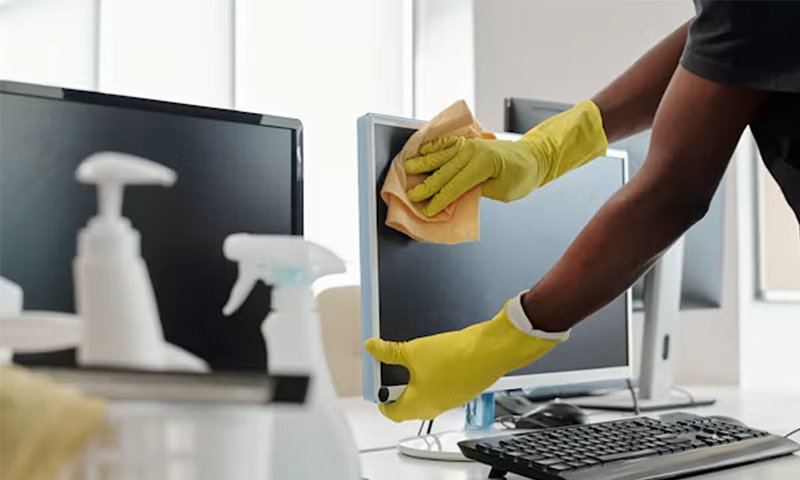
Maintaining a clean and organized workplace is essential for creating a professional atmosphere where employees, customers, and visitors feel comfortable and welcome. Offices, commercial buildings, educational facilities, healthcare environments, and retail spaces experience regular foot traffic that brings dust, dirt, germs, and other contaminants into indoor areas. Without a consistent maintenance plan, these materials can accumulate on floors, furniture, restrooms, and frequently touched surfaces, affecting the appearance and hygiene of the building. A well-maintained environment also helps protect workplace equipment, preserve flooring, and create a positive impression on visitors. Professional cleaning supports businesses by keeping facilities presentable while allowing employees to focus on their primary responsibilities. By prioritizing cleanliness and organization, companies can create a healthier atmosphere, improve daily operations, and demonstrate their commitment to maintaining professional standards.
Understanding the Importance of Workplace Cleanliness
A clean workplace contributes to a more organized and professional atmosphere by ensuring that common areas, workstations, and shared facilities remain presentable. Dusty desks, overflowing trash bins, stained carpets, and poorly maintained restrooms can create an unpleasant experience for employees and visitors. Regular cleaning helps control these issues before they become more difficult to manage, allowing businesses to maintain consistent standards throughout their facilities. Clean surroundings can also make it easier for employees to organize their belongings, move safely through shared areas, and concentrate on daily tasks without unnecessary distractions. Maintaining these standards requires a planned approach that addresses both visible dirt and less noticeable areas where contaminants may accumulate. Workplace cleanliness also plays an important role in protecting the condition of building materials and furnishings. Dirt and abrasive particles can gradually damage flooring, while spills left untreated may create stains or unpleasant odors. Moisture in bathrooms and kitchens can contribute to surface deterioration if it is not managed appropriately. Routine cleaning helps identify minor maintenance concerns before they become more expensive problems, allowing facility managers to respond promptly. Establishing clear cleaning schedules and assigning responsibility for different areas makes it easier to maintain consistent results. These practices help businesses protect their investments while creating an environment that reflects professionalism and attention to detail.
Understanding Professional Cleaning and Maintenance
Janitorial services generally involve routine cleaning tasks that keep commercial and institutional facilities hygienic, organized, and ready for daily use. Depending on the agreement, these tasks may include sweeping, mopping, vacuuming, dusting, restroom sanitation, trash removal, and cleaning shared surfaces. Some providers also offer additional services such as replenishing restroom supplies, maintaining break rooms, cleaning interior glass, and reporting visible maintenance concerns. The exact scope depends on the building’s size, type, occupancy, and operational requirements. A clearly defined service plan helps ensure that important areas receive appropriate attention without unnecessary duplication of work. Professional cleaning teams typically follow established procedures to complete tasks efficiently and consistently. They may use color-coded cloths, specialized equipment, approved cleaning products, and checklists to reduce cross-contamination and maintain quality standards. High-contact surfaces, including door handles, switches, shared desks, and handrails, may require more frequent attention depending on the facility’s use. Cleaning schedules can also be adjusted to avoid disrupting employees, customers, or other building occupants. By matching the cleaning approach to the environment, businesses can maintain suitable hygiene standards while making efficient use of their available resources.
Creating a Healthier Indoor Environment
Indoor environments can collect dust, pollen, pet dander, and other airborne particles that settle on furniture, floors, and work equipment. Regular dust removal and vacuuming can help reduce the accumulation of these materials, especially in spaces with carpets, upholstered furniture, and frequent foot traffic. Businesses should also maintain ventilation systems according to manufacturer recommendations and replace air filters when necessary. Although cleaning alone cannot eliminate every indoor pollutant, combining surface maintenance with suitable ventilation practices can contribute to a more comfortable working environment. Attention to indoor conditions is particularly important in buildings where employees spend many hours each day. Restrooms, kitchens, break rooms, and shared meeting spaces require consistent attention because they are used by multiple people throughout the day. Cleaning these areas appropriately helps manage visible dirt, food residue, moisture, and other sources of unpleasant odors. Surfaces that come into contact with food should be handled using suitable hygiene practices, while restrooms require appropriate cleaning and disinfection procedures. Cleaning products must always be used according to their labels, and chemicals should never be mixed unless the manufacturer explicitly confirms that doing so is safe. A thoughtful cleaning plan helps businesses maintain a pleasant environment while protecting employees, visitors, and cleaning personnel.
Improving Employee Comfort and Productivity
Employees often feel more comfortable working in spaces that are clean, organized, and free from unnecessary clutter. A tidy environment makes it easier to locate supplies, use shared equipment, and complete everyday responsibilities without distractions. Clean desks, well-maintained floors, and orderly common areas can also contribute to a more professional atmosphere that encourages employees to take pride in their workplace. Although cleanliness alone cannot determine productivity, a well-maintained environment can remove certain obstacles that interfere with concentration and routine tasks. Businesses that prioritize workplace organization demonstrate consideration for the people who use their facilities. Consistent maintenance can also reduce the burden on employees who might otherwise feel responsible for managing shared spaces in addition to their regular duties. When trash bins overflow, restrooms run out of supplies, or break rooms remain dirty, employees may become frustrated by avoidable inconveniences. A reliable cleaning schedule helps prevent these problems and clarifies which responsibilities belong to the cleaning team and which belong to individual staff members. Clear expectations encourage everyone to contribute to maintaining a respectful environment. By combining professional support with sensible workplace habits, businesses can improve daily comfort and help employees focus on their core responsibilities.
Maintaining Professional Standards for Customers and Visitors
First impressions can influence how customers and visitors perceive a business, particularly when they enter a reception area, showroom, office, or commercial facility. Dusty furniture, stained flooring, unpleasant odors, and untidy restrooms may create doubts about the organization’s attention to detail. Conversely, clean floors, organized waiting areas, clear windows, and properly maintained facilities can make visitors feel more comfortable. A professional appearance does not depend on expensive decorations or elaborate designs; it often begins with consistent maintenance and attention to basic details. Businesses that welcome visitors regularly should establish standards that keep customer-facing areas presentable throughout operating hours. Professional cleaning arrangements can help companies maintain these standards even when daily operations become busy. Scheduled visits, routine inspections, and clear communication about priorities make it easier to address areas that receive the most public attention. Entrance mats may need frequent maintenance during periods of heavy foot traffic, while reception counters and waiting-room furniture may require regular dusting and wiping. Restrooms should be checked according to their usage and the facility’s needs. By identifying high-priority areas and maintaining them consistently, businesses can create a welcoming experience for visitors while supporting a positive reputation.
Supporting Safety Through Proper Facility Maintenance
Cleanliness and safety are closely connected in many workplaces because dirt, spills, clutter, and poorly maintained walkways can create avoidable hazards. Liquid spills on hard floors may cause slipping, while objects left in corridors can obstruct movement or interfere with emergency access. Regular cleaning routines should include prompt spill management, clear walkways, and attention to entry points where water or debris may be tracked inside. Warning signs should be used when floors are wet, and affected areas should remain restricted until they are safe for normal use. These practices help reduce common hazards and support a safer environment for employees and visitors. Cleaning personnel also need appropriate training, equipment, and procedures to perform their work safely. They should understand how to handle cleaning chemicals, use protective equipment when required, and operate machines according to manufacturer instructions. Electrical equipment should be used carefully around water, and products must be stored securely when not in use. Businesses should establish clear procedures for reporting damaged flooring, leaking fixtures, broken equipment, and other conditions that cleaning staff may discover. Addressing these concerns promptly helps prevent minor issues from developing into more significant operational or safety problems.
Choosing the Right Cleaning Schedule
The ideal cleaning schedule depends on the type of facility, number of occupants, business hours, and activities performed inside the building. A busy office may need daily attention to restrooms, kitchen areas, floors, and waste bins, while less frequently used rooms may require maintenance at longer intervals. Facilities that handle food, provide healthcare, or accommodate large numbers of visitors may need more specialized procedures and frequent checks. A thoughtful schedule should identify the tasks required, how often each task must be completed, and who is responsible for verifying the results. This structure helps businesses maintain consistent standards without spending resources on unnecessary repetition. Janitorial services can be arranged around daily, weekly, monthly, or specialized maintenance requirements, depending on the provider’s capabilities and the organization’s needs. Daily duties may include trash removal, restroom maintenance, and cleaning high-contact surfaces, while weekly tasks may cover more detailed dusting and floor care. Periodic activities can include deep cleaning carpets, washing interior glass, and addressing less accessible areas. Businesses should review their schedules when occupancy changes, new departments are added, or particular areas begin experiencing heavier use. Regular evaluation helps ensure that cleaning arrangements remain practical, effective, and aligned with the facility’s actual requirements.
Selecting Suitable Cleaning Products and Equipment
Choosing appropriate cleaning products is important for maintaining hygiene without damaging building materials or exposing occupants to unnecessary risks. Different surfaces may require different solutions, and products designed for glass, natural stone, hardwood, or specialized equipment should be used according to their instructions. Microfiber cloths, suitable vacuum cleaners, floor machines, and well-maintained mops can help cleaning teams complete tasks more efficiently. Equipment should be inspected regularly, cleaned after use, and replaced when it no longer performs properly. Using the right tools can improve the consistency of results while reducing avoidable wear on furniture and flooring. Businesses should also consider product labels, ventilation requirements, and the needs of employees who may be sensitive to strong fragrances or particular chemicals. Cleaning products should never be combined without explicit manufacturer guidance, and all containers should remain clearly labeled. Dilution instructions and recommended contact times must be followed to achieve the intended result safely. Environmentally considerate products may be suitable for some facilities, but their effectiveness and compatibility with the cleaning task should still be evaluated. Careful selection helps organizations balance cleaning performance, workplace safety, and the long-term condition of their facilities.
The Benefits of Hiring a Professional Cleaning Provider
Hiring a professional cleaning provider can help businesses maintain consistent standards without assigning every cleaning responsibility to existing employees. Experienced teams may bring specialized equipment, established procedures, and knowledge of appropriate methods for different surfaces and facilities. This can be particularly valuable for organizations with large premises, multiple departments, or demanding operating schedules. A professional provider can also help establish a clear plan that addresses daily cleaning needs alongside periodic maintenance tasks. The arrangement allows business managers to focus more attention on operational goals while maintaining a suitable level of cleanliness throughout the building. Before choosing a provider, businesses should review the proposed service scope, staffing arrangements, insurance coverage, communication process, and quality-control procedures. It is useful to ask which tasks are included, how missed services are handled, and whether additional work may involve separate charges. References, relevant experience, staff training, and clear contractual terms can also help organizations make informed decisions. Janitorial services should be tailored to the facility rather than offered as a generic arrangement that overlooks specific needs. Regular discussions with the provider help resolve concerns, adjust priorities, and maintain an effective working relationship over time.
Maintaining Clean Restrooms and Shared Facilities
Restrooms are among the most important areas to maintain in any workplace because they influence comfort, hygiene, and the overall perception of the facility. Cleaning should address toilets, sinks, faucets, mirrors, floors, dispensers, and frequently touched surfaces using suitable products and methods. Soap, paper towels, and other essential supplies should be replenished before they run out, particularly in buildings with high visitor numbers. Proper ventilation helps control moisture and odors, while prompt attention to leaks can reduce the risk of water damage. Routine inspections allow businesses to identify problems before they create an unpleasant experience for employees or customers. Break rooms, staff kitchens, and shared dining areas also require consistent maintenance because food residue and moisture can attract pests or produce unpleasant odors. Counters and tables should be cleaned after use, waste should be removed regularly, and sinks should be maintained to prevent buildup. Refrigerators and shared appliances should be included in an appropriate maintenance plan, with responsibilities clearly communicated to employees. Cleaning personnel can maintain common surfaces and floors, while staff members should dispose of their food waste and personal items responsibly. Cooperation between employees and cleaning teams helps keep shared facilities organized, hygienic, and convenient for everyone.
Measuring Cleaning Quality and Service Performance
Establishing clear quality standards helps businesses determine whether their cleaning arrangements are meeting expectations. Facility managers can use checklists, scheduled inspections, employee feedback, and service reports to evaluate the condition of different areas. Important indicators may include the cleanliness of floors, the condition of restrooms, the availability of supplies, the handling of waste, and the completion of agreed tasks. Assessments should be based on the actual needs of the facility rather than relying only on appearance. A clean-looking room may still require attention to high-contact surfaces, while an occasional visible mark may need to be considered in the context of ongoing use. Communication is essential when a cleaning task is missed or an area repeatedly falls below the expected standard. Managers should document concerns, discuss them with the provider, and agree on practical steps for improvement. Regular meetings can also identify changes in occupancy, new maintenance requirements, or opportunities to make schedules more efficient. Janitorial services are most effective when expectations are clear and both parties understand how performance will be reviewed. Consistent monitoring encourages accountability, supports continuous improvement, and helps organizations maintain a dependable standard of cleanliness across their facilities.
Conclusion
A clean and organized workplace supports employee comfort, creates a welcoming experience for visitors, and helps businesses protect the condition of their facilities. Regular attention to floors, restrooms, kitchens, workstations, and shared spaces can reduce the buildup of dirt, improve the overall appearance of the building, and help address common safety concerns. Effective maintenance also depends on suitable products, trained personnel, realistic schedules, and clear procedures for identifying problems. When businesses treat cleanliness as an ongoing operational priority, they can create a more professional environment that supports everyday activities and reflects their commitment to quality. Choosing an appropriate cleaning arrangement begins with understanding the facility’s needs, identifying high-priority areas, and establishing clear expectations for service quality. Professional support can help organizations manage routine responsibilities while maintaining consistent standards across different rooms and work areas. Regular inspections and open communication make it easier to adjust schedules, address concerns, and maintain long-term results. By combining reliable cleaning practices with employee cooperation and responsible facility management, businesses can build a cleaner, safer, and more comfortable environment that benefits staff, customers, and visitors alike.