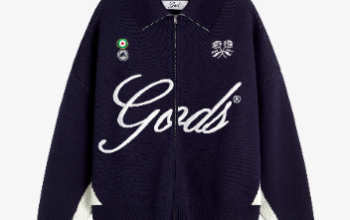
Thirty-eight hooded sweatshirts sit on one page, and they scroll past in about fifteen seconds. That’s the whole problem. None of them looks like a mistake, which sounds like a compliment until six tabs are open and nobody can remember which gray one had the curved hem. So the hoodie rail at Cold Culture wants a filter rather than more browsing — three cuts in a fixed order, and thirty-eight turns into three.
Thirty-eight of them, and every one reads as a candidate
Long rails punish people who shop carefully. A ten-piece page you can hold in your head: you remember the second one was dark green, you scroll back, you buy it. Thirty-eight doesn’t behave that way. By the time you reach the bottom the first ten have blurred into one gray shape, and the usual response is to scroll up and start again.
Which means the order of your decisions matters more than the decisions themselves. Cut on something the page already sorts by and you stop comparing thirty-eight garments. You compare ten, then four, then two.
And the cuts have to be things the shop actually tells you. Price, color and hem shape all sit in plain sight in the product names and the listing photos, so nobody has to guess at them. Anything beyond that — how a particular cotton settles after four washes, say — belongs to the garment you end up with, not to the business of getting from thirty-eight down to a pair you can argue about.
The page lands on five numbers
Prices here don’t drift. They stop at €90, €95, €99, €100 and €111, and that is the entire spread — ten hoodies at €90, ten at €95, ten at €99, six at €100 and two at €111. So the first cut costs you nothing. Pick a step, not a budget. A ceiling of €97 means nothing at all when no garment exists between €95 and €99.
One move, and three quarters of the page goes away.
Gray is doing most of the work here
Read the product names instead of the photos and a pattern shows up fast. Gray appears in thirteen of the thirty-eight — basalt, ash, silver, smoked, dust. Blue in eight, black in six, green in three, white in two. Then one wine red, one walnut brown, one cream, and that’s the color story of the rail in a single breath.
So the second cut is color, and it’s blunt on purpose. Own two gray hoodies already? You just removed a third of the page without opening a photo. Wear gray constantly through a damp Oviedo January? Then the opposite happens, and your shortlist builds itself in one click.
Three cuts, and what each one leaves
Run them in that order — price step, then color, then hem — and the arithmetic is quick. The row below uses gray as the worked example, because gray is the biggest group on the rail and the hardest one to narrow by eye.
| Cut | What you keep | Hoodies still standing |
| Nothing yet | The full hoodie rail | 38 |
| 1. One price step | Everything at €99 | 10 |
| 2. One color family | Gray only | 4 |
| 3. Hem shape | Curved hem only | 2 |
Two left out of thirty-eight, and finding them took under a minute. That’s the argument for this order: the cheap cuts go first and the slow, squinting comparison happens last, on a pair instead of a crowd. Anyone who’d rather watch it happen live can sort the sudadera cold culture rail by price and work down the same way.
The curved hem is its own decision
Seven of the thirty-eight carry a curved hem, and they sit at €99 and €100 — never at €90. Worth knowing before you set a price step, since the shape you want may only exist above the step you chose. Those seven run in red, midnight blue, jungle green, black and two grays, so the color cut still has room to work inside them.
A curved hem also changes how the body of the sweatshirt sits over a waistband, which matters more in a Tarragona September — hoodie on at eight, off by midday — than it does in the middle of winter under a coat.
There is exactly one zip
Of the thirty-eight pieces, one opens with a zipper. The other thirty-seven pull over your head. If a zip is what you came for, the hoodie page is really a one-item page and your search ends in a second. If you genuinely don’t mind either way, skip the question and keep your three cuts. Once the list is down to two or three, these are the things still worth a slow look:
- Where the print sits — chest, sleeve or across the shoulders changes how often the thing comes out of the drawer.
- The drawcord in the photos, flat or round, since the two behave very differently after a few washes.
- Both shades in the same tab, never across two tabs, because screen brightness shifts between them and gray is the shade that suffers most.
The rail next door, one price apart
One more thing to know while you narrow. A second rail in the same shop holds sixteen sweatshirts at a flat €90, and a few of them are close cousins to what’s on the hoodie page. If your price step landed on €90 anyway, glance at it before you commit. Different page, different comparison, so finish the hoodie shortlist first and then go look.
It does explain something odd about the hoodie rail, though. Ten pieces there also carry a €90 tag, which puts them level with an entire sixteen-piece rail that never moves off that figure. Everything above €90 on the hoodie page is paying for something specific — the curved hem, a bigger print, a heavier build — and the first group is where the two rails meet. Useful to notice when your step is the cheapest one.
When two is still one too many
Sometimes the filter leaves a pair and both of them work. Stop filtering at that point, because no further cut is honest — you’d be inventing a reason to pick basalt over ash. Decide on something you’d actually notice on a Tuesday instead: which print you’d wear to work, which shade forgives a coffee spill, which one sits with the jacket already hanging by your door.
Thirty-eight down to two in three cuts, and the last step is a coin toss you can make without a spreadsheet. Sort by price, pick your step, drop the colors you never wear, then settle the hem. Do that much and the page does the rest of the work for you.