Finding a factory that can produce sunglasses is relatively easy. Finding one that can consistently deliver the right product, maintain quality across bulk orders, support your brand’s development, and meet your target market’s requirements is a different challenge.
For eyewear brands, importers, distributors, and optical retailers, choosing between different sunglass manufacturers is not simply a matter of comparing quotations. A supplier may offer attractive prices and hundreds of designs but still lack the production controls, customization capabilities, or communication needed for a long-term partnership.
Whether you are comparing suppliers in the United States, exploring Chinese manufacturing facilities, or developing your own private-label collection, these 10 criteria will help you make a more informed sourcing decision.
1. Evaluate Actual Manufacturing Capabilities, Not Just Product Catalogs
A large product catalog does not necessarily indicate strong manufacturing capabilities.
Start by understanding what the manufacturer actually produces. Can it manufacture acetate, metal, TR90, injection-molded, or titanium sunglasses? Does it have dedicated production lines, or does it outsource important processes?
This distinction matters because different materials require different machinery, technical knowledge, and production controls.
When comparing major sunglass manufacturers, ask for their production capabilities, machinery information, manufacturing processes, and examples of similar projects.
A factory that specializes in your required product category is often a better choice than a supplier offering everything without demonstrating technical expertise.
2. Check Product Quality Beyond Appearance
A sunglasses sample may look impressive, but appearance alone cannot establish manufacturing quality.
Examine the following:
- Frame alignment and symmetry.
- Hinge strength and opening resistance.
- Surface finishing and polishing.
- Lens fitting and stability.
- Temple flexibility and structural durability.
- Consistency of colors and materials.
Also ask about quality checks during incoming material inspection, production, assembly, and final inspection.
For sunglasses, lens performance deserves particular attention. Ask for relevant test reports supporting UV protection claims and confirm that the documentation matches the product and destination market.
This is one of the most important differences between ordinary suppliers and the best sunglass manufacturers for professional B2B buyers.
3. Understand OEM, ODM, and Customization Capabilities
Your manufacturer should support your business model rather than limit your product development.
There are two common approaches:
OEM manufacturing: You provide your design, technical specifications, or reference samples, and the factory manufactures the product according to your requirements.
ODM manufacturing: You select an existing manufacturer-developed design and adapt it through customization.
When evaluating custom sunglass manufacturers, investigate whether they can customize:
- Frame shapes, dimensions, and materials.
- Frame colors and surface finishes.
- Lens colors, materials, and specifications.
- Temple designs and logo applications.
- Hinges and other components.
- Cases, cleaning cloths, and retail packaging.
If you are comparing custom sunglass manufacturers usa with overseas suppliers, compare the actual customization scope, development costs, communication, and production arrangements rather than assuming that location determines capability.
4. Compare MOQ and Pricing Together
Minimum order quantity (MOQ) can significantly affect your initial investment.
Some manufacturers offer flexible quantities for existing designs, while fully customized frames may require higher volumes because of tooling, material procurement, and production setup.
Do not compare quotations based only on unit price.
Ask whether the quotation includes:
- Frame and lens specifications.
- Logo customization.
- Tooling or mold charges.
- Sample development.
- Quality inspections.
- Shipping terms.
A cheaper quotation may become more expensive once additional charges are included.
For smaller brands, finding wholesale sunglass manufacturers that offer flexible starting quantities can make it easier to test products before committing to larger orders.
5. Verify Quality Control and Compliance Documentation
Quality control should be a documented process, not simply a promise that every product is inspected.
Ask manufacturers about their inspection procedures and whether they perform incoming, in-process, and final inspections.
For sunglasses sold in different markets, compliance requirements also need attention.
For example, European buyers should investigate applicable EN ISO 12312-1 requirements. US buyers should check applicable requirements, including ANSI Z80.3 where relevant.
Request actual product-specific test reports and declarations where applicable. Do not assume that an ISO-certified factory automatically means every sunglasses model is compliant with every destination market’s requirements.
6. Investigate Production Capacity and Delivery Reliability
A manufacturer may handle a small sample order successfully but struggle when production volumes increase.
Ask about monthly production capacity, current production commitments, peak-season planning, and the production lead time for both new orders and repeat orders.
More importantly, understand how the supplier manages delays.
A reliable manufacturing partner should communicate production milestones, identify potential bottlenecks, and provide updates when problems arise.
When comparing top sunglass manufacturers, delivery reliability deserves as much attention as advertised production capacity.
7. Compare Manufacturers Across Different Countries
Should you choose sunglass manufacturers usa or look overseas?
There is no universal answer. Your decision should depend on product positioning, order quantity, development requirements, landed cost, and service expectations.
US-based suppliers may offer advantages in local communication, proximity, and domestic supply arrangements. However, their actual manufacturing location must be verified; a US-based supplier is not necessarily a US factory.
Meanwhile, sunglass manufacturers in china provide access to established eyewear manufacturing ecosystems, multiple frame materials, component suppliers, and OEM/ODM production options.
China is particularly worth investigating when your project requires different materials, design customization, or larger-scale production.
8. Examine Communication and Product Development Support
Manufacturing is a collaborative process. Poor communication can create expensive mistakes even when the factory has good machinery.
Before placing an order, evaluate how quickly the supplier responds and whether its team understands your technical requirements.
Can it explain material differences? Can it recommend suitable frame constructions? Can it identify production limitations before sampling?
The best manufacturing relationships involve technical discussions, clear specifications, sample approvals, and documented changes.
9. Research the Supplier’s Track Record and Customer Experience
Do not select suppliers based solely on website claims.
When preparing a sunglass manufacturers list, investigate:
- Years of manufacturing experience.
- Product categories and material specialization.
- Export markets and relevant experience.
- Customer references, where available.
- Factory audit information.
- Certifications and their validity.
- Experience serving private-label brands and retail chains.
Whether you are evaluating sunglass manufacturers china or domestic suppliers, verify claims using documents, samples, video factory tours, or an independent factory audit.
10. Assess Long-Term Partnership Potential
Your first order is only the beginning of a supplier relationship.
Consider whether the manufacturer can support future collections, repeat orders, changing market trends, new materials, and increasing production volumes.
A supplier that provides consistent quality, transparent pricing, responsive communication, and product development support may create more business value than one offering the lowest initial quotation.
Ultimately, the right manufacturing partner should help your business grow, not simply fulfill one purchase order.
Making the Final Decision
When comparing sunglass manufacturers, use a structured evaluation instead of relying on price or marketing promises.
Request samples, verify manufacturing capabilities, compare specifications, examine compliance documentation, and discuss production arrangements before committing to bulk orders.
For buyers exploring China, Wenzhou is one of the established eyewear manufacturing locations worth considering.
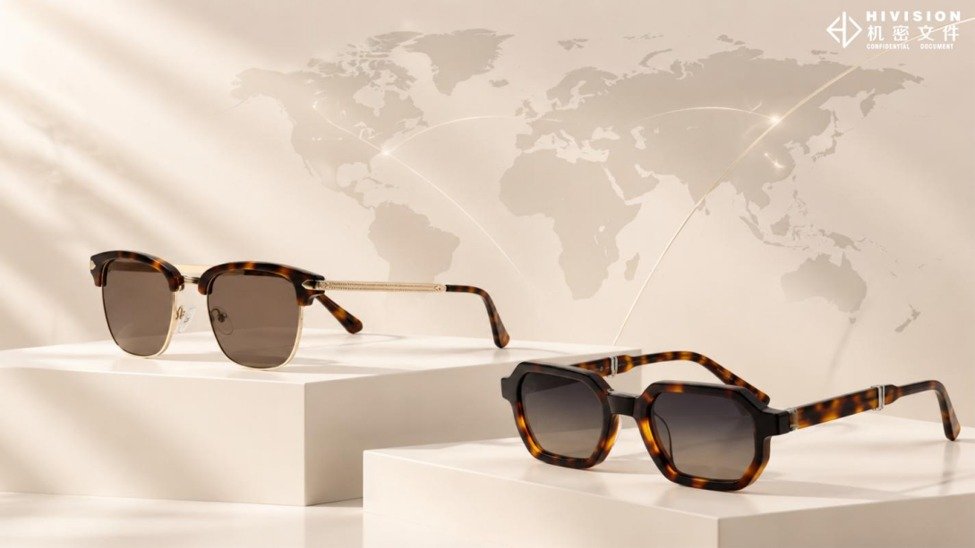
Hivision Eyewear, based in Wenzhou, China, is one manufacturer buyers can investigate for sunglasses OEM/ODM projects. Its production capabilities include acetate, metal, titanium, and injection eyewear, with customization and quality-control services.
You can explore its fashion sunglasses collection or learn more about its manufacturing capabilities when comparing potential suppliers.
The objective is not to find the manufacturer with the biggest catalog or the lowest quotation. It is to find a partner capable of delivering the product specifications, quality standards, and commercial reliability your business needs.