Playgrounds are essential spaces where children can explore their surroundings, develop physical abilities, build friendships, and enjoy meaningful recreational experiences. A thoughtfully designed playground provides more than entertainment; it creates an environment that encourages creativity, imagination, confidence, and healthy development. Whether developed for schools, parks, residential communities, childcare facilities, or commercial properties, a well-planned play area can become a valuable addition that benefits children and families for years. However, creating an effective playground requires careful consideration of safety, age groups, available space, accessibility, equipment selection, and long-term maintenance. Every element should work together to create an enjoyable environment that supports different types of play while meeting practical requirements.
A successful custom playground design focuses on creating a play environment that reflects the specific needs of its users and the characteristics of the available space. Instead of relying entirely on standard playground layouts, customized solutions allow property owners, school administrators, and community planners to incorporate equipment, colors, themes, and activity zones that suit their objectives. From climbing structures and interactive panels to slides, swings, sensory activities, and imaginative play features, every component can contribute to a more engaging experience. Understanding the planning process, safety considerations, design possibilities, and installation requirements can help decision-makers create playgrounds that are attractive, functional, inclusive, and enjoyable.
Understanding the Importance of Thoughtful Playground Planning
Playground planning is an important process because the arrangement of equipment and activity areas directly influences how children use the available space. A poorly organized play area may create congestion, limit movement, or make certain activities difficult to access. In contrast, a carefully planned environment allows children to move comfortably between different activities while providing suitable opportunities for physical exercise, social interaction, and imaginative exploration.
An effective playground should accommodate the developmental needs of its intended users. Younger children may benefit from low platforms, gentle slides, sensory panels, and simple interactive activities. Older children may prefer climbing structures, balance challenges, overhead equipment, and more complex play experiences. Separating activities according to age and ability can help create a more organized environment and reduce potential conflicts between users.
Planning should also consider the number of children expected to use the playground at the same time. Schools and public recreational facilities may require more activity stations than smaller residential play areas. Designers should evaluate available space, circulation routes, supervision requirements, shade, seating, and access points before finalizing the layout. These considerations help ensure that the finished playground meets both recreational and practical needs.
Benefits of Custom Playground Design
Customized playgrounds provide flexibility that standard equipment arrangements may not offer. Every property has different dimensions, user requirements, budgets, and design objectives. A tailored approach allows these factors to influence the final layout rather than forcing the available space to accommodate a generic design.
One major advantage is the ability to select equipment according to the age and abilities of children who will use the playground. A school may require different activities for preschool students and older children, while a residential community may want equipment that accommodates several age groups. Custom planning makes it possible to create separate activity zones while maintaining a connected recreational environment.
Another benefit is the opportunity to develop a distinctive visual identity. Colors, themes, decorative elements, and equipment arrangements can be coordinated to complement the surrounding architecture or landscape. Nature-inspired playgrounds, adventure-themed spaces, and modern interactive play areas are examples of designs that can create memorable recreational environments.
Customization also supports better use of available land. Designers can consider unusual site dimensions, existing trees, slopes, pathways, and other physical features when developing the layout. This helps property owners make practical use of their space while creating an environment that encourages children to participate in different activities.
Selecting Playground Equipment for Different Age Groups
Choosing appropriate equipment is one of the most important parts of playground planning. Children develop physical coordination, balance, strength, and problem-solving abilities at different stages, so equipment should reflect their developmental requirements and abilities.
Toddlers generally benefit from simple activities that encourage basic movement and sensory exploration. Low platforms, small slides, crawl-through tunnels, textured panels, and interactive play elements can provide suitable experiences. Equipment should be designed to support developing coordination while avoiding unnecessary height and complexity.
Preschool children may enjoy a wider variety of activities, including smaller climbing structures, balance elements, playhouses, swings designed for their age group, and imaginative play features. These activities can encourage independence, cooperation, and physical confidence.
Older children often prefer more challenging equipment that allows them to test their abilities. Climbing walls, rope structures, elevated platforms, balance bridges, and overhead activities can provide opportunities for developing strength and coordination. However, equipment selection must always account for age suitability, accessibility, supervision, and relevant safety requirements.
A well-planned playground should provide different levels of activity rather than focusing on one type of equipment. Combining active, creative, social, and sensory experiences helps create a more balanced recreational environment.
Creative Playground Themes and Design Concepts
Themes can make playgrounds more attractive and encourage imaginative play. Instead of arranging equipment without a common visual concept, designers can create an environment where colors, structures, and decorative elements work together to tell a story.
Nature-inspired playgrounds are popular because they incorporate elements that reflect forests, gardens, mountains, and wildlife. Wooden textures, earthy colors, leaf-shaped panels, and nature-themed climbing structures can create a welcoming atmosphere. These environments may also encourage children to develop an interest in the natural world.
Adventure-themed playgrounds can include castle-inspired towers, bridges, tunnels, climbing features, and imaginative exploration areas. These designs encourage children to create stories and engage in cooperative play. Ocean-inspired themes may use aquatic colors, wave-shaped structures, and sea-life decorations to create an engaging visual experience.
Educational themes can also be incorporated into playground layouts. Alphabet panels, number games, interactive puzzles, and activity boards allow children to explore learning concepts while playing. The most successful themes balance visual appeal with practical functionality, ensuring that decorative elements do not interfere with safe movement or equipment use.
Incorporating Slides, Swings, and Climbing Structures
Slides, swings, and climbing equipment are among the most recognizable playground features. Each provides different recreational and developmental opportunities, making them valuable components of many play environments.
Slides encourage children to explore height, movement, and coordination. They are available in different configurations, including straight, curved, spiral, and multi-lane designs. Selecting the appropriate slide involves considering platform height, access arrangements, landing areas, age suitability, and the required protective surfacing.
Swings provide enjoyable movement experiences and can support balance and body coordination. Traditional belt swings, bucket seats, accessible swing options, and group swing designs offer different experiences. Their placement requires sufficient clearance around the equipment and appropriate protective surfaces.
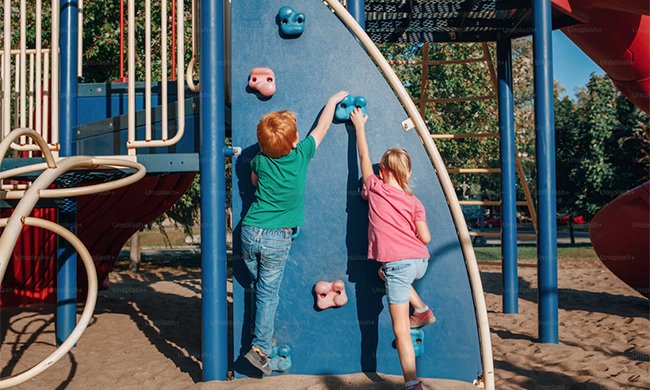
Climbing structures encourage children to develop strength, coordination, and confidence. These may include climbing walls, rope nets, ladders, arches, and interconnected platforms. Designers should select climbing equipment according to the intended age group and ensure that fall zones and protective surfacing meet applicable safety standards.
Combining these features with additional play elements creates a more varied experience. The arrangement should provide sufficient space between activities and prevent equipment from interfering with nearby movement routes.
Designing Inclusive and Accessible Playgrounds
Inclusive playgrounds are designed to provide meaningful recreational opportunities for children with different physical, sensory, and developmental abilities. Accessibility should be considered from the beginning of the planning process rather than added after the main design has been completed.
Accessible pathways are an important starting point. Routes should provide suitable widths, stable surfaces, and manageable slopes so that children using mobility devices can move through the play area. Where appropriate, ramps and transfer platforms can improve access to elevated activities.
Playground equipment can also support inclusive participation. Ground-level interactive panels, sensory activities, accessible swings, transfer stations, and group play features provide opportunities for children with different abilities to participate. Designers should consider a variety of movement, communication, and sensory experiences when selecting equipment.
Inclusive planning also involves considering seating, shaded rest areas, accessible entrances, and spaces for caregivers. Clear circulation routes can improve supervision and make the environment more comfortable for everyone. The goal is to create a playground where children can participate together rather than separating users according to their abilities.
Safety Considerations in Playground Design
Safety is one of the most important responsibilities in playground planning. Equipment should be selected, installed, and maintained according to relevant safety standards and manufacturer instructions. Designers must consider fall heights, entrapment hazards, moving components, spacing, surface conditions, and age suitability.
Protective surfacing is especially important because falls are a common playground hazard. Depending on the equipment and applicable requirements, suitable surfaces may include engineered wood fiber, rubber safety surfacing, or other tested materials. The selected surface should provide appropriate impact attenuation and be installed at the required depth or thickness.
Equipment spacing should allow children to move safely without creating unnecessary congestion. Slide exits, swing movement areas, climbing equipment, and other active features require appropriate clearance. Designers should also consider visibility so that caregivers and supervisors can monitor the play area effectively.
Regular inspections are essential after installation. Loose fasteners, damaged surfaces, worn components, sharp edges, and drainage problems should be identified and addressed promptly. Playground safety is an ongoing responsibility that continues throughout the equipment’s useful life.
Choosing Durable and Weather-Resistant Playground Materials
Material selection influences the appearance, durability, safety, and maintenance requirements of a playground. Equipment is exposed to regular use, sunlight, moisture, temperature changes, and other environmental conditions. Choosing appropriate materials can help reduce deterioration and support long-term performance.
High-quality metal components are commonly used for structural supports, climbing equipment, and other load-bearing features. Protective coatings can help reduce corrosion, while proper finishing helps maintain the appearance of exposed surfaces.
High-density polyethylene is frequently used for decorative panels, slides, and other playground components because it is available in different colors and can offer good resistance to weather exposure. Engineered wood may also be used in selected designs, provided it receives appropriate treatment and maintenance.
Rubber materials are often used for protective surfacing because they can provide cushioning when correctly designed and installed. Other surface options may be suitable depending on the equipment, site conditions, maintenance requirements, and relevant safety specifications.
Material selection should always consider the expected level of use and the manufacturer’s recommendations. Durable materials can reduce maintenance demands, but every playground still requires regular inspection and care.
The Role of Colors and Visual Elements in Playground Design
Color has a significant influence on how children experience recreational spaces. Bright and contrasting colors can make playgrounds feel energetic and inviting, while carefully coordinated color combinations create a more organized appearance.
Different activity zones can use distinct colors to help children recognize and navigate different parts of the playground. For example, creative areas may incorporate softer colors, while active climbing sections may use stronger contrasting shades. Color can also support educational activities through number panels, shape recognition, and interactive games.
However, selecting playground colors involves more than choosing visually attractive combinations. Materials should be suitable for outdoor exposure and should maintain their appearance under regular use. Some finishes may fade or become damaged when exposed to intense sunlight or improper cleaning products.
A balanced color scheme should complement the surrounding environment without making the playground visually overwhelming. Designers can coordinate equipment colors with nearby landscaping, buildings, pathways, and seating areas to create a cohesive appearance.
Integrating Natural Elements and Landscaping
Landscaping can improve the appearance and functionality of a playground by creating a more welcoming outdoor environment. Trees, planting areas, natural textures, and carefully arranged green spaces can help connect the recreational area with its surroundings.
Shade is an important consideration, particularly in playgrounds that experience significant sunlight. Suitable shade structures or carefully selected trees can provide more comfortable resting areas. However, vegetation should be positioned so that roots, branches, and falling debris do not interfere with equipment or protective surfaces.
Natural play elements may include logs, boulders designed for play, sensory gardens, and nature-themed activity areas. These features can encourage exploration and provide different types of recreational experiences. They must still be selected and positioned according to appropriate safety requirements.
Landscaping can also help define different playground zones. Low planting areas, pathways, and seating arrangements can create visual separation between active play spaces and quieter areas. Proper drainage and maintenance planning are necessary to prevent mud, standing water, and excessive debris from affecting the playground.
Designing Playgrounds for Schools and Educational Facilities
Schools require playgrounds that support physical activity, social development, and age-appropriate recreation. A well-designed school play area can provide opportunities for students to exercise, interact with classmates, and enjoy structured or independent play during breaks.
The design should reflect the school’s student population, available outdoor space, and supervision requirements. Younger students may need smaller equipment and clearly defined activity areas, while older students may benefit from more challenging climbing and balancing features.
Educational play elements can make the playground more interactive. Number games, alphabet panels, activity boards, and problem-solving features can encourage children to explore basic learning concepts outside the classroom.
School playgrounds should also consider traffic flow, accessibility, and the number of students using the area simultaneously. Multiple activity zones can reduce overcrowding and encourage a wider range of recreational choices. Durable materials and a practical maintenance schedule are particularly important in educational settings where equipment may experience frequent use.
Residential and Community Playground Planning
Residential communities often benefit from playgrounds because they provide a shared space where children and families can spend time together. These areas can encourage outdoor activity, support social connections, and improve the overall appeal of a neighborhood.
Community playgrounds should accommodate different age groups and recreational preferences. A balanced layout may include toddler activities, climbing equipment, swings, slides, sensory features, and open areas for informal games.
Seating and shaded spaces are also valuable because they provide comfortable places for parents and caregivers to supervise children. Accessible pathways can improve movement between activity zones and connect the playground with nearby walking routes.
Community planners should consider the expected number of users, available land, ongoing maintenance responsibilities, and future expansion possibilities. Choosing equipment that can accommodate regular use while remaining easy to inspect and maintain can support the playground’s long-term success.
The Importance of Professional Playground Installation
Professional installation is essential for ensuring that playground equipment is assembled correctly and remains stable during use. Even high-quality equipment can create safety concerns if its foundations, connections, anchors, or protective surfaces are installed incorrectly.
The installation process generally begins with a site assessment. Contractors evaluate ground conditions, available space, drainage, underground utilities, access routes, and the proposed equipment arrangement. These factors help determine whether additional site preparation is required.
Installation may involve preparing foundations, assembling structural components, securing equipment, installing safety surfacing, and completing finishing work. Each stage should follow the manufacturer’s instructions and applicable safety requirements.
After installation, the playground should undergo a thorough inspection before it becomes available for use. This process helps confirm that equipment is correctly assembled, surfaces are properly installed, and safety clearances are maintained.
Working with experienced playground installers can help reduce installation errors and provide greater confidence in the finished recreational space.
Understanding Playground Design and Installation Costs
The cost of developing a playground depends on several factors, including the size of the site, selected equipment, material quality, design complexity, site preparation, and installation requirements. A small residential playground may require a different investment from a large school or community recreation area.
Equipment selection is often one of the most significant cost considerations. Slides, swings, climbing structures, interactive panels, and accessible play features have different manufacturing and installation requirements. Customized equipment or specialized themes may also affect the overall budget.
Site conditions can create additional expenses. Uneven ground, drainage improvements, surface preparation, fencing, shade structures, and pathway construction may increase project costs. Safety surfacing is another important expense that should be included in the initial planning process.
Property owners and organizations should request detailed quotations that explain equipment specifications, installation work, surfacing materials, warranties, and any additional services. Comparing proposals based on quality, safety, durability, and long-term maintenance requirements can help decision-makers achieve better overall value.
Playground Maintenance and Long-Term Care
Regular maintenance is essential for keeping playgrounds safe, attractive, and functional. Outdoor equipment experiences repeated use and environmental exposure, so even durable materials require periodic attention.
Routine inspections should examine structural supports, fasteners, moving components, climbing surfaces, platforms, slides, and protective surfacing. Any loose, damaged, or deteriorating components should be evaluated and repaired according to manufacturer recommendations.
Protective surfaces should also be inspected to ensure that they remain in suitable condition. Displacement, compaction, drainage problems, or surface deterioration may reduce their effectiveness. Cleaning and replenishment should follow the requirements of the selected material.
Landscaping and surrounding areas need regular attention as well. Removing debris, controlling vegetation, maintaining drainage, and checking fencing can help preserve the overall condition of the site.
A written maintenance schedule makes it easier to track inspections and repairs. Keeping records of equipment servicing and replacement parts can also support better long-term planning and budgeting.
Common Mistakes to Avoid During Playground Planning
One common mistake is selecting equipment based only on appearance. Attractive playground structures may look impressive, but they must also suit the intended age group, available space, and safety requirements. Equipment should be chosen according to how children will use it rather than visual appeal alone.
Another mistake is overlooking protective surfacing. Even well-designed equipment requires suitable fall protection, and inadequate surface installation can increase the risk of injuries. Safety surfacing should be considered during the earliest planning stages.
Poor space planning can also affect the playground’s usability. Placing active equipment too close together may create congestion and unnecessary hazards. Designers should account for movement areas, entry routes, supervision, and accessible pathways.
Some projects also underestimate long-term maintenance. Outdoor playgrounds need ongoing inspections and repairs, so property owners should consider future servicing costs when developing their initial budget.
Finally, accessibility should never be treated as an optional addition. Incorporating inclusive equipment and accessible routes from the beginning helps create a more welcoming recreational environment for all children.
Choosing the Right Playground Design and Installation Company
Selecting an experienced playground design and installation company can make a significant difference in the quality of the completed project. Professional providers should understand equipment selection, site planning, safety requirements, installation methods, and maintenance considerations.
Before choosing a company, property owners should review its previous playground projects and ask about experience with similar facilities. It is also useful to discuss equipment warranties, material specifications, installation procedures, and post-installation inspection services.
A reliable provider should take time to understand the property’s requirements and develop recommendations that match the intended users and available budget. Clear quotations should explain the scope of work, equipment, materials, labor, and expected project schedule.
Communication is equally important throughout the project. Designers, installers, property owners, and facility managers should coordinate to ensure that the final playground meets the agreed requirements. Choosing a professional company that prioritizes safety, quality, and long-term performance can help create a recreational space that provides lasting value.
Conclusion
A well-planned playground provides children with valuable opportunities to exercise, explore, develop social skills, and express their creativity. Creating an effective recreational environment requires more than selecting attractive equipment. It involves understanding the needs of different age groups, evaluating available space, incorporating accessible features, selecting durable materials, and following appropriate safety requirements.
A carefully developed custom playground design allows schools, residential communities, parks, and commercial properties to create recreational spaces that reflect their specific goals. From climbing structures and swings to sensory activities, interactive panels, natural play features, and inclusive equipment, every element can contribute to a more engaging experience.
Professional planning and installation are essential for achieving a safe and functional result. Regular inspections and preventive maintenance further help preserve equipment quality and support long-term performance. By investing in thoughtful design, suitable materials, and reliable installation, property owners and organizations can create attractive playgrounds that encourage healthy development and provide enjoyable experiences for children for many years.