Have you ever thought about who checks government projects? Every year the government spends large amounts of money on roads and buildings. But how can people know if this money is used in the right way? This is where a Chief Technical Examiner plays an important role.
A Chief Technical Examiner checks government work and contracts. They look for mistakes in project plans and payments. They also check if the work meets the required standards. Their main goal is to help protect public money and support fair decisions.
In this article we will explore what a Chief Technical Examiner does in India. We will discuss the history of this role and its main duties. We will also learn how these officers inspect projects and why their work matters in 2026.
What Is a Chief Technical Examiner?
A Chief Technical Examiner is a senior technical officer in India. The officer works within the technical wing of the Central Vigilance Commission. This wing is called the Chief Technical Examiners’ Organisation. It helps check selected government contracts and projects.
The main job is to examine how public money is spent. A Chief Technical Examiner checks whether work follows the approved plans and contract rules. The officer also looks at project costs and the quality of materials used.
For example, imagine the government builds a new school. The project looks complete from the outside. But what if the materials are not good? A technical examination can help find such problems and check whether the contractor followed the agreement.
Chief Technical Examiner Full Form and Meaning
CTE stands for Chief Technical Examiner. It is the title used for a senior officer who helps review government work. The officer uses technical knowledge to check contracts and find problems that may affect public spending.
CTEO stands for Chief Technical Examiners’ Organisation. This is the technical wing of the Central Vigilance Commission. The CVC is an important public body in India that deals with vigilance matters. The CTEO supports this work through technical checks.
Another term you may hear is CVO. It stands for Chief Vigilance Officer. A CVO handles vigilance work within an organisation. The CTE and CVO have different jobs. However, they may work together when an examination finds a problem.
History of the Chief Technical Examiner
The history of the Chief Technical Examiner goes back to 1957. That year the Indian government set up the Chief Technical Examiners’ Organisation. Its early work focused on checking construction projects handled by the Central Public Works Department.
In 1964 the organisation came under the Central Vigilance Commission. This was an important change in its history. It gave the technical examination team a place within India’s wider vigilance system. Another Chief Technical Examiner post was created in 1979.
Over time the work of CTEO grew. It began checking more than roads and buildings. Today its work can also cover equipment and services. In 2026 the organisation remains important because government contracts involve many types of public spending.
What Does a Chief Technical Examiner Do?
A Chief Technical Examiner helps review selected government contracts. The officer checks whether projects follow the approved rules and plans. This work can involve reading files and checking costs. It can also include reviewing the findings from site inspections.
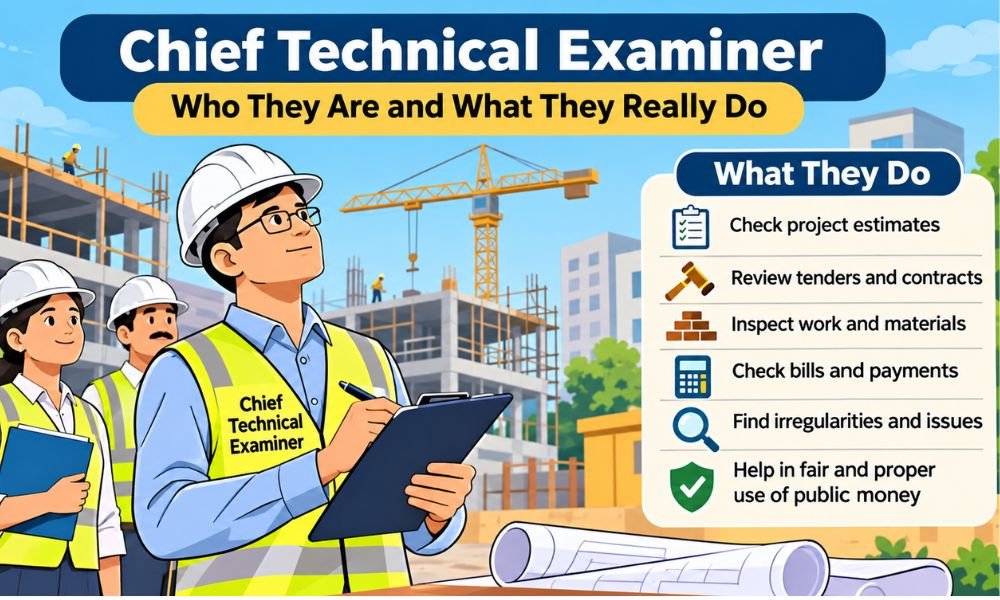
One important duty is checking how a contract was awarded. The examination may look at the tender process and the rules used to choose a contractor. It helps find cases where the process may not have been fair.
Think about a government office buying computers. The office must follow the rules for choosing a supplier. A technical review can check the purchase terms and delivery records. It can also examine whether the computers meet the agreed needs.
Continue reading: Who Is Kian William Jarrahy? All About Geena Davis’ Son
Main Responsibilities of a Chief Technical Examiner
A Chief Technical Examiner has several key duties. One is reviewing project estimates before or during an examination. These estimates show how much work may cost. The officer checks whether the figures have proper support and appear reasonable.
Another duty is checking the quality of work and materials. The examination team may study test reports and visit project sites. They can compare the actual work with the contract. This helps find poor materials or work that does not meet the agreed standards.
The officer also reviews bills and payments. For example, a contractor may ask for payment for work that is not fully complete. The team can compare the bill with site records. Any difference may need an explanation before further action.
How Does a Chief Technical Examiner Inspect Projects?
A Chief Technical Examiner does not inspect every government project. The CTEO selects certain contracts for detailed checks. Reports from government bodies can help with this choice. Complaints and other concerns may also lead to an examination.
Once a project is selected the team studies its records. These may include plans and contracts. Bills and approval papers are also checked. The team may then visit the site to compare the records with the actual work.
After the inspection the team prepares its findings. The Chief Technical Examiner reviews the report through the proper process. The report can then be sent to the concerned Chief Vigilance Officer. The organisation gets a chance to explain the issues raised.
What Is an Intensive Examination by CTEO?
An Intensive Examination is a detailed check of a selected government contract. It looks deeper than a normal file check. The CTEO may study project plans and tender papers. It may also check contracts and bills.
The examination can include a physical site visit. The team may compare the actual work with the records. It can check materials and measurements. This helps show whether the government received the work or goods promised in the contract.
An observation does not always mean corruption. Sometimes there may be a simple mistake or missing paper. There may also be a valid reason for a change. The organisation gets a chance to explain the issue and provide supporting records.
Common Problems Found by a Chief Technical Examiner
A Chief Technical Examiner may find different types of problems. One common issue is a project estimate that is too high or not properly supported. Poor estimates can affect the cost of a project before the work even begins.
Tender problems may also be found. Some tender rules may unfairly limit who can take part. Other problems can include poor materials and wrong measurements. Missing approvals or changes made without proper records may also raise questions.
Overpayment is another serious issue. Imagine a bill shows 120 metres of work but records support only 100 metres. The difference needs to be checked. It could be an error or there may be another valid record that explains it.
Chief Technical Examiner vs Chief Vigilance Officer
A Chief Technical Examiner and a Chief Vigilance Officer have different roles. A CTE provides technical examination under the CVC framework. The focus is mainly on contracts and technical matters. This can include quality and payments.
A Chief Vigilance Officer works within the concerned organisation. The CVO deals with vigilance matters and helps coordinate replies to CTEO observations. The officer may also handle follow-up work when an examination finds an issue that needs more attention.
The two roles can therefore connect. CTEO may raise a technical concern. The CVO can collect records and comments from the organisation. CVOs can also carry out CTE-type examinations because the central team cannot directly inspect every public contract.
Skills Needed to Become a Chief Technical Examiner
Strong technical knowledge is important for this type of work. An officer needs to understand projects and contracts. They may need to read drawings and check costs. Good knowledge of engineering and public procurement can also support careful examination.
Attention to detail matters too. A small difference in a bill or measurement can have a large financial effect. The examiner must compare records carefully. They should also avoid making a final view before all useful facts have been checked.
Clear writing is another useful skill. Technical findings need to be explained in a way that other officers can understand. Exact eligibility and appointment rules can depend on the post and current government requirements. Readers should check the latest official notice for those details.
Why Is a Chief Technical Examiner Important?
Government projects can involve very large amounts of public money. This makes careful checking important. A Chief Technical Examiner helps examine whether selected contracts were planned and carried out according to the required rules and terms.
The scale can be large. According to figures given in the CVC Annual Report 2024 that were discussed earlier, CTEO carried out 81 Intensive Examinations covering 64 organisations. The procurement cases examined were worth more than ₹33,514 crore.
Technical examination can also help improve future work. If the same problem appears in many projects then an organisation can improve its process. In this way the work is not only about finding past mistakes. It can also help prevent similar problems later.
How to Prepare for a Chief Technical Examiner Inspection
Good preparation starts before an inspection notice arrives. Project teams should keep important records organised from the start. This includes estimates and approvals. Tender papers and contracts should also be easy to find when needed.
Bills and measurement records should match the actual work. Test reports should clearly show what was tested and when. If a project changes then the reason and approval should be recorded. Clear records make it much easier to explain important decisions later.
Teams should not create papers at the last minute just to look prepared. Good records should be part of normal project work. If something is missing then it is better to explain the facts clearly. Accurate information is more useful than a rushed answer.
Continue reading: Meet Judith Holste: Everything About Christoph Waltz’s Wife and Their Children
Conclusion
A Chief Technical Examiner plays an important role in India’s public procurement system. The job goes far beyond looking at a finished building. Technical examination can cover project estimates and tenders. It can also include contracts and quality checks.
The role also connects physical work with public spending. If records show that something was supplied or completed then the examination can check whether the available evidence supports that claim. Problems can then be explained and followed through the proper process.
In 2026 the Chief Technical Examiner remains useful for understanding how technical checks support public accountability. For project teams the lesson is simple. Keep clear records and follow contract rules. Good planning and honest records make public projects easier to check and explain.
(FAQs)
A Chief Technical Examiner is a senior technical officer linked with the CTEO under India’s Central Vigilance Commission. The role involves checking selected government contracts and public projects for technical and payment-related issues.
What is the full form of CTE?
CTE stands for Chief Technical Examiner. CTEO means Chief Technical Examiners’ Organisation. The CTEO works as the technical wing of India’s Central Vigilance Commission.
What does a Chief Technical Examiner do?
A Chief Technical Examiner helps review government projects and contracts. The work can include checking estimates and tenders. It can also cover project quality and measurements. Bills and payments may also be examined.
Does a Chief Technical Examiner inspect only construction projects?
No. The work is not limited to buildings and roads. Technical examination can also cover goods and services. It may include equipment and other types of public procurement.
What is a CTEO Intensive Examination?
An Intensive Examination is a detailed review of a selected contract. It may include checking tender papers and bills. The team can also study measurements and visit the project site when needed.
Does a CTE observation mean corruption happened?
No. An observation does not automatically prove corruption. It may show a technical mistake or missing record. The concerned organisation can provide records and an explanation before further action is considered.
What problems can a Chief Technical Examiner find?
The examination may find poor work and weak project estimates. Other issues can include wrong measurements and unsupported payments. Missing approvals or problems with tender rules may also be found.
What is the difference between CTE and CVO?
A CTE mainly provides technical examination under the CVC framework. A Chief Vigilance Officer handles vigilance work within an organisation. The CVO can also coordinate replies and follow-up after CTEO observations.
How should a project team prepare for a CTE inspection?
Teams should keep contracts and approvals organised. Bills and measurement records should be accurate. Test reports should also be saved. Any project change should have a clear reason and proper approval.
Why is the Chief Technical Examiner important?
The role helps check how public money is used in selected contracts. Technical examination can find quality and payment problems. It can also show weak processes that an organisation may need to improve.
Continue reading: Elan Ruspoli: Meet Jacqueline MacInnes Wood’s Husband and Father of Five