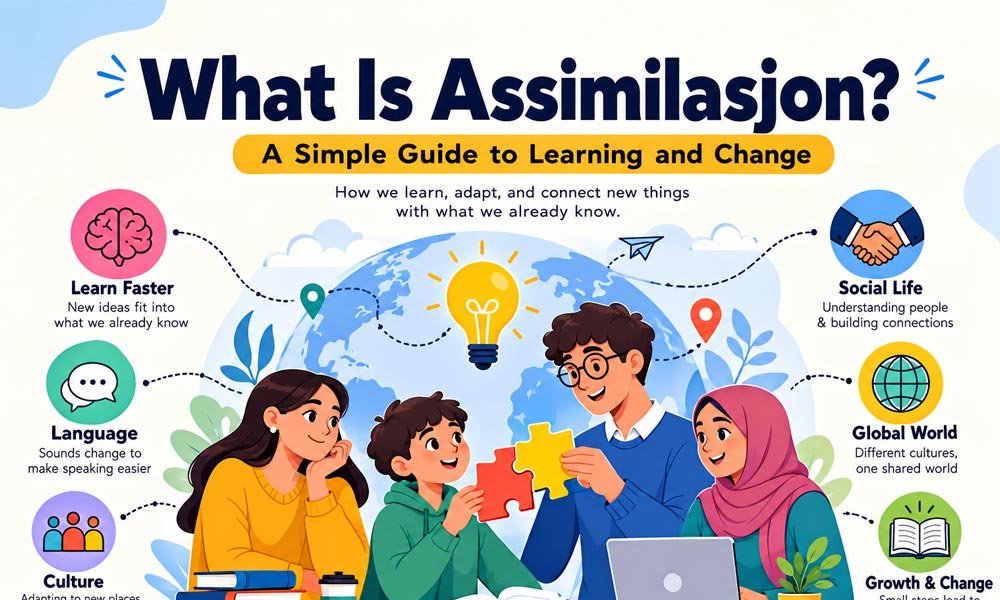
Think about the first time you used a new phone. You did not learn everything from zero. You looked for buttons and signs that felt familiar. Your old knowledge helped you understand the new phone. This simple process happens every day.
This idea is called assimilasjon. It can help explain how we learn and understand new things. The word is also used when we talk about language and culture. Its exact meaning can change based on the topic.
In this guide we will explain assimilasjon in very easy words. We will look at learning and psychology. We will also explore language and culture later. Simple examples will help make each meaning clear.
What Is Assimilasjon?
Assimilasjon can mean taking something new and connecting it with something you already know. This meaning is common in learning and psychology. Your mind uses old knowledge to make sense of a new experience.
Imagine that a child already knows what a dog is. One day the child sees a dog with very long hair. It looks different from other dogs. Still the child calls it a dog because it fits an idea already in the mind.
The word can have other meanings too. In culture it can describe a group becoming more like another group over time. In language it can describe one sound becoming more like a nearby sound. The topic decides what assimilasjon means.
Where Does the Word Assimilasjon Come From?
The word assimilasjon is linked to the Latin word assimilare. It carries the idea of making something similar. This old meaning helps us understand why the same word can appear in several different fields.
The term is used in Norwegian. English uses the related word “assimilation.” You may find it in books about children and learning. You may also see it in lessons about language and changes within society.
The meanings are connected by one basic idea. Something new becomes more like something that is already there. Yet we should not mix every meaning together. Assimilasjon in psychology is different from cultural assimilasjon.
How Does Assimilasjon Work?
Our minds often use things we already know to understand something new. This saves time. Instead of treating every new thing as completely unknown we look for familiar signs. That can make learning feel much easier.
Think about starting a new app. You may already know that a small house sign takes you to the home page. When another app uses the same sign you understand it quickly. Your past experience helps you use something new.
This happens at school and work too. A new math problem may look easier when it is like one you solved before. A new job task may feel simple when you have done similar work. Old knowledge becomes a useful starting point.
Assimilasjon in Psychology
Assimilasjon in psychology is strongly linked with Jean Piaget. He studied how children learn and build knowledge. Piaget explained that children do not simply collect facts. They organize what they learn into patterns often called schemas.
A schema is a simple mental idea about something. A young child may have a schema for birds. The child may know that birds have wings and feathers. When they see a new bird they can place it inside that known group.
That is an example of assimilasjon. The child learns about a new bird without needing to rebuild the basic idea of a bird. New information fits into knowledge that is already there. This process supports learning as children explore their world.
You may also read: Naomi Yomtov: The Real Story of Bob Odenkirk’s Wife
Assimilasjon vs Akkomodasjon
Assimilasjon becomes clearer when we compare it with akkomodasjon. Piaget used both ideas when explaining learning. Assimilasjon uses an existing schema. Akkomodasjon happens when the old schema needs to change because new information does not fit.
Imagine a small child who thinks every four-legged furry animal is a dog. Then the child meets a cat. At first they may say “dog.” Later they learn that cats form another group. Their old understanding must now change.
Both processes are important. Assimilasjon helps us use what we already know. Akkomodasjon helps us correct or expand that knowledge when it no longer works. Together they show why learning is more than simply remembering new facts.
Assimilasjon in Language
Assimilasjon in language has a different meaning. It happens when one speech sound becomes more like a sound close to it. This often happens because certain sound groups are easier and quicker for people to say.
A useful example comes from words built with the prefix “in.” Before some sounds the form changes. We say “impossible” rather than “inpossible.” The sound changes because it fits more naturally with the sound that follows it.
This kind of assimilasjon can appear in many languages. Speakers often make these changes without thinking about them. Children can also change sounds while learning to speak. As their speech grows they slowly learn the sound patterns used around them.
Cultural Assimilasjon
Cultural assimilasjon happens when people begin to take on parts of another culture. This may happen after moving to a new country. A person may learn the local language. They may also learn local habits and ways of life.
Think about a family moving to a new country. At first many things may feel strange. School may work differently. Food may be new. Even simple greetings may feel different. Over time the family learns how daily life works there.
Assimilation is not always the same as integration. With integration people can join a new society while keeping much of their own culture. Strong assimilation can mean that older customs become less common. This difference is important when discussing cultural change.
Social Assimilasjon in Daily Life
Social assimilasjon can happen whenever we enter a new social group. It may happen at school or work. It can also happen after moving into a new area. We slowly learn how people around us act and communicate.
Imagine your first day at a new school. You do not know anyone yet. You watch how other children speak and play. Soon you learn the daily routine. You make friends and begin to feel more comfortable.
Adults can have the same experience at work. A new worker learns how the team talks and works together. Small things become familiar with time. This kind of social learning can help a person feel that they belong.
You may also read: Eian Burton: What Happened to LeVar Burton’s Son
Benefits of Assimilasjon
One benefit of assimilasjon in learning is speed. New information can be easier to understand when it connects with something familiar. You do not always need to begin from zero. Your old knowledge gives you a useful starting point.
Cultural and social change can also make daily life easier. Learning a local language can help a person shop or study. Understanding common social habits can also make it easier to meet people and build friendships.
Still the benefits depend on how the process happens. Change can feel positive when people have choice and support. It can become harmful when people are pushed to hide their background. Healthy change should leave room for respect and personal choice.
Challenges of Cultural Assimilasjon
Cultural assimilasjon can bring difficult questions. How much should someone change to fit into a new place? Should they stop speaking their first language? Should they leave old traditions behind? There is no simple answer for every person.
Some people may feel pressure to become like the larger group around them. Children may stop using their family language. Old customs may slowly disappear. This can create a gap between younger people and older members of the same family.
History also shows that assimilation has not always been freely chosen. Some groups have faced strong pressure to leave their language and culture behind. This is why choice matters. People should be able to join society without being treated badly for their roots.
Assimilasjon in the Modern World
The world is very connected in 2026. People move between countries for work and study. They also meet different cultures online. Because of this assimilasjon and other forms of cultural change can happen in many parts of daily life.
Schools and workplaces are important places for this change. A student may learn a new language while keeping family traditions at home. A worker may learn new social rules while still enjoying food and holidays from their first culture.
The internet adds another layer. People can discover music and food from places far away. At the same time they can stay close to their own culture through family chats and online groups. Modern life can bring old and new traditions together.
Why Assimilasjon Matters Today
Understanding assimilasjon helps us understand how people learn and change. In psychology it shows how old knowledge can help us understand something new. In language it shows how speech sounds can change because of nearby sounds.
The word also helps us talk about social and cultural change. Moving somewhere new can bring exciting chances. It can also bring hard choices about language and identity. Knowing the difference between assimilation and integration makes these talks much clearer.
The biggest lesson is simple. Change is a normal part of life. But people do not all change in the same way. Learning can build on old knowledge. Cultural change should also leave space for people to value where they came from.
Conclusion
Assimilasjon may sound like a difficult word at first. Yet the basic ideas behind it are easy to see in daily life. We use old knowledge to understand new things. Languages change sounds. People also learn new social and cultural habits.
The meaning depends on the subject. Psychological assimilasjon is about fitting new knowledge into an existing idea. Language assimilation deals with sounds. Cultural assimilation deals with changes that happen when groups and cultures come into closer contact.
In 2026 these ideas remain useful because our world keeps changing. We learn new tools and meet people from many backgrounds. Understanding assimilasjon can help us see these changes more clearly while remembering that learning and culture both deserve care and respect.
You may also read: What Is Cñims? A Simple Guide to How It Works