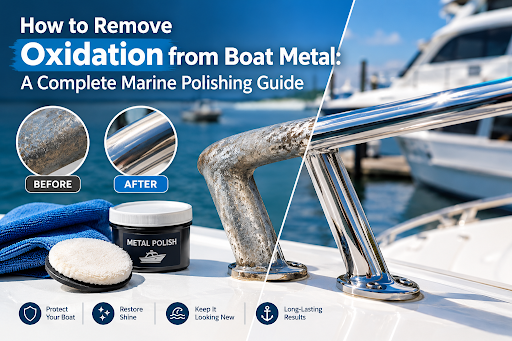
Saltwater is brutal on metal. Every trip out leaves behind a fine layer of salt, moisture and UV exposure that slowly turns gleaming rails, cleats and fittings dull, chalky and pitted. Staying ahead of it is far easier than fixing it later, and stocking up with these boat detailing kit deals means you’ll always have the right polish on hand when the boating season starts.
The secret to winning this battle is using a product built for marine conditions. A marine-grade metal polish is designed to cut through oxidation, water spots and light surface rust on aluminum, chrome and stainless steel, then leave a protective layer that helps slow future corrosion. In this guide, we’ll explain why oxidation forms, how to remove it step by step, and how to keep your boat’s hardware looking new all season long.
What Is Oxidation, and Why Does It Happen on Boats?
Oxidation is a chemical reaction between metal and oxygen, and moisture speeds it up dramatically. Salt makes it even worse because chlorides attack metal surfaces and hold moisture against them. That is why a boat used on the ocean shows wear far faster than one kept on a freshwater lake.
Each metal reacts in its own way. Aluminum develops a white, chalky film that feels rough to the touch. Stainless steel is resistant but not immune; in salty air it can develop light brown “tea staining” and small rust spots. Chrome-plated parts look perfect until the plating is breached, after which small pits and rust blooms appear underneath.
Signs Your Boat Metal Needs Attention
- A white, powdery residue on aluminum rails, T-tops or windshield frames.
- Brown or orange spotting on stainless steel cleats, ladders and fittings.
- Hazy, cloudy chrome that no longer reflects clearly.
- Hard water spots that won’t wipe away with a normal wash.
- A rough or gritty feel when you run your hand along a rail.
Tools and Supplies
- A marine metal polish that is non-abrasive and safe for aluminum, chrome and stainless steel.
- A bucket, boat soap and fresh water.
- Several clean microfiber cloths or terry applicator pads.
- Soft-bristled detail brushes for bolt heads and tight corners.
- Gloves and painter’s tape to protect nearby gelcoat, vinyl or teak if needed.
Step-by-Step: How to Remove Oxidation from Boat Metal
Step 1: Rinse and Wash with Fresh Water
Start by washing away salt, dirt and grime with fresh water and a dedicated boat soap. Polishing over salt crystals grinds them into the surface, which is the last thing you want.
Step 2: Dry the Surface Completely
Dry every part with a microfiber cloth. Polish works best on a clean, dry surface, and drying also lets you see exactly where oxidation is heaviest.
Step 3: Test a Small Area
Apply a little polish to an inconspicuous spot and check the result. This is especially important for anodized or painted aluminum, so you can confirm the finish reacts well before working on larger areas.
Step 4: Apply the Polish in Small Sections
Put a small amount of polish on your cloth and work it into the metal in sections of about one or two feet at a time. Use firm, even pressure in overlapping strokes. On rails, wrap the cloth around the tube and slide it along to cover the entire surface.
Step 5: Buff to a Shine
Before the polish dries completely, buff the area with a clean microfiber cloth. Turn the cloth often so you are always buffing with a clean face. You should see a bright, reflective finish emerge.
Step 6: Repeat on Heavy Oxidation
Badly neglected metal may need a second or third pass. Patience pays off here; several gentle applications are better than one aggressive scrub.
Where to Focus Your Efforts
Some areas take more punishment than others. Bow and stern rails, cleats and chocks face constant spray. Aluminum T-tops and towers bake in the sun. Boarding ladders and swim platform hardware sit in the water itself. Windshield frames, cup holders and steering wheel spokes are touched constantly, so they collect both salt and skin oils. Give these areas extra attention every time you polish.
Building a Simple Maintenance Routine
- After every trip, rinse all metal with fresh water and wipe it dry.
- During the season, polish exposed metal about once a month, or more often if you boat in saltwater.
- Before winter storage, give everything a thorough cleaning and polish so it is protected while the boat sits.
- At the start of each season, inspect for pitting or damaged plating that may need professional repair.
Common Mistakes to Avoid
- Polishing hot metal in direct sun, which makes the product dry too quickly and leaves streaks.
- Using steel wool on stainless steel. It can leave tiny carbon steel particles that rust and stain the surface.
- Skipping the freshwater rinse, which grinds salt into the metal.
- Letting polish sit on gelcoat or vinyl. Wipe off any overspray promptly.
- Ignoring early warning signs. Light oxidation takes minutes to remove; deep pitting can be permanent.
Choosing the Right Size
Small 2oz and 4oz bottles are perfect for quick touch-ups and for keeping in a dock box. Owners of larger boats, and professional detailers who care for several vessels, will get more value from 16oz or 32oz sizes. Bundles that combine a metal polish with a multi-surface cleaner are especially handy for boats, where you also have glass, gauges and plastic surfaces to care for.
Frequently Asked Questions
Can I use car polish on my boat?
Car polishes are not formulated for constant exposure to salt and moisture. A marine metal polish is designed specifically for those harsher conditions.
How do I stop oxidation from coming back?
Rinse your boat with fresh water after every use, dry the metal, and polish regularly so a protective layer is always in place.
Can oxidation damage be permanent?
Light oxidation can be removed easily, but if it is left for too long it can lead to pitting that may need professional repair. Regular care prevents that.
Final Thoughts
Oxidation is a fact of life on the water, but it doesn’t have to win. With a freshwater rinse after every trip, a quality marine metal polish and a few minutes of buffing each month, your boat’s rails, cleats and fittings can shine like new season after season. Your boat will look better at the dock, and you’ll protect its resale value too.