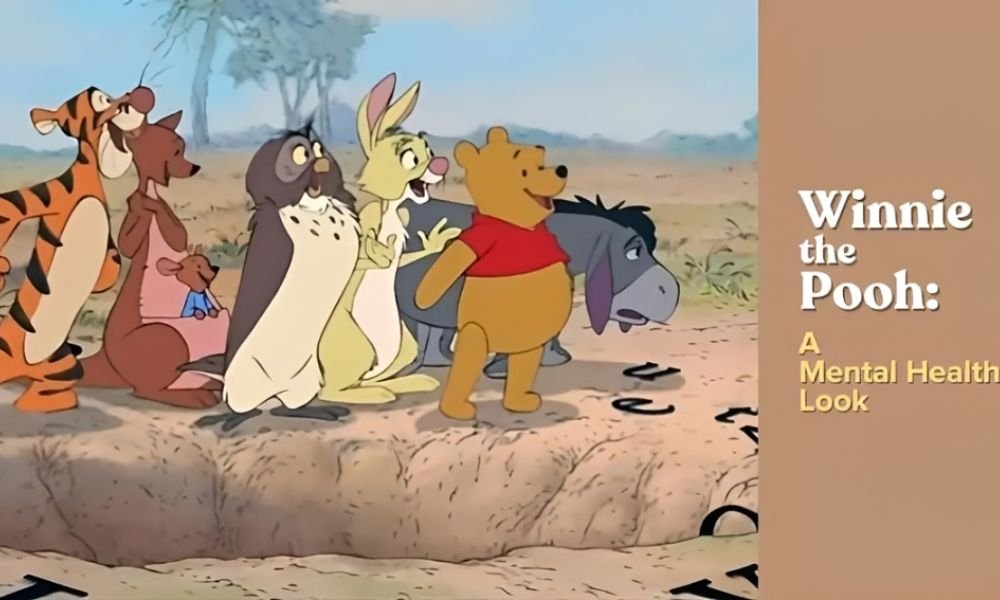
Have you ever watched Winnie the Pooh and thought about why each character acts so differently? Pooh loves honey. Piglet gets scared easily. Eeyore often feels sad. Tigger never seems to run out of energy.
But what if these habits have a deeper meaning? A popular theory called Pooh Mental Illnesses links these famous characters with different mental health conditions. Some people believe each character shows signs of a certain disorder.
In this article we will explore where this theory came from and what each character may represent. We will also explain what is true and what is only a theory. The story may surprise you.
What Are Pooh Mental Illnesses?
Pooh Mental Illnesses is a popular theory about Winnie the Pooh and his friends. It suggests that each character shows habits that look like signs of certain mental health conditions. These include anxiety and depression.
For example Piglet worries about almost everything. Eeyore often expects bad things to happen. Tigger loves jumping and moving around. People connect these habits with real conditions that can affect how someone feels or acts.
However these characters do not have confirmed medical diagnoses. They were created for children’s stories. Their habits help make each character special. The theory is simply one way people try to understand their behavior.
Where Did the Pooh Mental Illnesses Theory Come From?
The Pooh Mental Illnesses theory became well known in December 2000. A group of writers published an article in the Canadian Medical Association Journal. It was called Pathology in the Hundred Acre Wood.
The article looked at Pooh and his friends through the ideas of mental health. It linked Pooh with ADHD and possible OCD. Piglet was linked with anxiety. Eeyore was linked with long-term sadness.
But there is something important to know. The article was written in a playful way. It was not a real medical study of the characters. There is also no strong proof that A. A. Milne planned these meanings.
Pooh Mental Illnesses: What Does Each Character Represent?
Every character in the Hundred Acre Wood has a different personality. Some are quiet while others are loud. Some worry too much. Others act without thinking. These differences helped create the popular theory.
Here is a simple look at the mental health conditions people often connect with each character.
| Character | Common Mental Health Link |
|---|---|
| Winnie the Pooh | ADHD and OCD |
| Piglet | Anxiety |
| Eeyore | Depression |
| Tigger | ADHD |
| Rabbit | OCD or narcissistic traits |
| Owl | Reading problems |
| Christopher Robin | Schizophrenia in online theories |
| Kanga | Social anxiety in online theories |
| Roo | Autism in online theories |
These links are not official facts. Some also come from online posts rather than the original article. A character can act nervous or sad without having a mental illness. Real health conditions need proper medical checks.
Winnie the Pooh and His Link to ADHD and OCD
Winnie the Pooh is a sweet bear who loves honey more than almost anything. He often forgets plans and gets distracted. Sometimes he starts doing one thing but soon begins thinking about something else.
These habits make some people connect Pooh with ADHD. ADHD can make it hard to stay focused or control quick actions. The original theory also linked Pooh with possible OCD because of his repeated habits.
However loving honey does not mean someone has OCD. Forgetting things does not always mean ADHD either. Pooh may simply be a funny and forgetful bear. His kindness and love for friends remain his best qualities.
Continue reading: Templescan: Everything You Need to Know Before Reading
Piglet and Pooh Mental Illnesses: Why Is He Always Scared?
Piglet is one of the smallest animals in the Hundred Acre Wood. He often feels nervous when something new happens. Even a small sound can make him worry that something bad is about to happen.
This is why the Pooh Mental Illnesses theory connects Piglet with anxiety. People with anxiety may worry a lot and find it hard to feel calm. Piglet often asks his friends for help when he feels afraid.
But Piglet also teaches us something special. He may be scared but he still helps his friends. He shows that being brave does not mean having no fear. Sometimes bravery means doing something good while feeling afraid.
Eeyore and Pooh Mental Illnesses: Why Is He So Sad?
Eeyore is the quiet donkey who often looks unhappy. He speaks in a slow voice and expects things to go wrong. Even when his friends plan something fun he may think it will not end well.
Many people connect Eeyore with depression. Depression can make someone feel sad or lose interest in things they once enjoyed. The original theory linked Eeyore with a form of long-lasting low mood once called dysthymia.
Still we cannot say Eeyore truly has depression. He also enjoys friendship and sometimes shows humor. His friends care about him even when he feels down. His story reminds us that sad people deserve love and support.
Tigger and Pooh Mental Illnesses: Why Is He So Active?
Tigger is one of the most active characters in Winnie the Pooh. He loves jumping and running around. He gets excited about almost everything. Sometimes he acts before thinking about what might happen next.
The Pooh Mental Illnesses theory connects Tigger with ADHD. People with ADHD may find it hard to sit still or control quick actions. Tigger often interrupts his friends and jumps into new adventures without making a plan.
However being active does not always mean someone has ADHD. Tigger may simply have a playful personality. His energy brings fun to the Hundred Acre Wood. He shows that being different can also bring happiness to others.
Rabbit and Pooh Mental Illnesses: Does He Have OCD?
Rabbit loves keeping his garden clean and his home neat. He likes making plans and wants everything done the right way. When his friends change those plans he often becomes upset or annoyed.
Many online posts connect Rabbit with OCD. People with OCD can have unwanted thoughts and feel a strong need to repeat certain actions. However the original 2000 article linked Rabbit with narcissistic personality traits instead.
Being clean or organized does not mean someone has OCD. Rabbit simply enjoys order and control. He also cares about his friends even when they make him angry. His story shows that planning can be useful but patience matters too.
Owl and Pooh Mental Illnesses: Does He Have Learning Problems?
Owl is known as one of the smartest characters in the Hundred Acre Wood. He enjoys giving advice and telling long stories. His friends often visit him when they need help or want to understand something.
However Owl sometimes makes spelling mistakes and has trouble with written words. The original Pooh Mental Illnesses theory linked him with a reading disorder. Some online posts also connect him with narcissistic traits because he likes sounding clever.
But making spelling mistakes does not always mean someone has a learning problem. Owl may simply be a funny character who thinks he knows everything. His story reminds us that even confident people can make mistakes.
Christopher Robin, Kanga, and Roo: What Do They Represent?
Christopher Robin is the young boy who spends time with Pooh and his friends. He talks to his animal friends and enjoys adventures with them. Some online theories connect him with schizophrenia because of his imaginary world.
However this claim has no strong proof. Children often create imaginary friends during play. This is a normal part of growing up. The original medical article did not link Christopher Robin with schizophrenia.
Kanga and Roo also appear in online mental health theories. Some posts connect Kanga with social anxiety and Roo with autism. But these claims were not made in the original article. Kanga is a caring mother while Roo is a curious young animal. Their behavior does not prove any disorder.
Continue reading: Trupeek Com: What It Is, How It Works, and Why People Visit It
Are Pooh Mental Illnesses Real or Just a Theory?
Many people still ask whether Pooh Mental Illnesses are real in 2026. The simple answer is that these ideas are only theories. The characters show certain habits but they have never received real medical diagnoses.
The original article from 2000 was written as a playful look at the characters. It was not meant to prove that every animal had a mental disorder. Over time social media posts changed some of the original claims.
Real mental health conditions are more than simple habits. Doctors look at how long problems last and how much they affect daily life. Feeling sad or being very active is not enough to prove a disorder. This is why readers should treat these character links as interesting ideas rather than medical facts.
What Can Pooh Mental Illnesses Teach Us About Friendship?
The Hundred Acre Wood is full of characters who think and act differently. Pooh is forgetful. Piglet worries. Eeyore feels sad. Tigger is full of energy. Yet they still enjoy spending time together and helping each other.
This is one of the best lessons behind the Pooh Mental Illnesses theory. Piglet shows that courage can exist with fear. Eeyore reminds us to care for friends who feel down. Tigger brings excitement while Rabbit helps keep things organized.
Their friendship teaches us that nobody needs to be perfect to feel loved. Sometimes people need patience instead of judgment. A kind word or a small act of care can make someone feel welcome. That is what makes the Hundred Acre Wood special.
Conclusion
The Pooh Mental Illnesses theory gives readers a different way to look at Winnie the Pooh and his friends. Each character has habits that may remind people of certain mental health conditions. But these connections are not official diagnoses.
The theory became popular after a humorous medical article appeared in 2000. Since then many online posts have added new claims. Some of those claims are misleading. There is no strong evidence that A. A. Milne created the characters to represent mental disorders.
The real beauty of Winnie the Pooh is its message about kindness and friendship. Pooh and his friends have different feelings and personalities. Yet they continue to care for one another. Their stories remind us that everyone deserves understanding and respect.
(FAQs)
What mental illness does Winnie the Pooh represent?
Winnie the Pooh is often linked with ADHD and OCD. He forgets things and gets distracted easily. He also loves honey and repeats certain habits. However these behaviors do not prove that Pooh has a mental illness.
Does Piglet have an anxiety disorder?
Piglet is often linked with anxiety because he worries about many things. He gets scared easily and looks to his friends for help. However Piglet also shows great courage. His behavior is not enough to confirm an anxiety disorder.
Why is Eeyore linked with depression?
Eeyore often feels sad and expects bad things to happen. He speaks slowly and rarely seems excited. These habits remind people of depression. However Eeyore also enjoys friendship and kindness. His sadness alone does not prove a medical condition.
Does Tigger represent ADHD?
Tigger is commonly linked with ADHD because he is always moving and jumping. He gets excited quickly and sometimes acts without thinking. These habits can look like ADHD symptoms. However being energetic does not always mean someone has ADHD.
Is Rabbit really connected with OCD?
Many online theories connect Rabbit with OCD because he loves clean spaces and careful plans. However the original 2000 article linked him with narcissistic personality traits. Being neat or organized does not mean someone has OCD.
Does Owl have dyslexia?
Owl is sometimes linked with dyslexia because he makes spelling mistakes. He enjoys giving advice but does not always write words correctly. The original theory suggested a reading disorder. However these mistakes do not confirm that Owl has dyslexia.
Does Christopher Robin have schizophrenia?
No evidence shows that Christopher Robin has schizophrenia. Some online posts make this claim because he talks to animal friends. However imaginary play is common among children. The original 2000 article did not diagnose him with schizophrenia.
Is Roo linked with autism?
Some online theories connect Roo with autism because of his playful behavior and close bond with Kanga. However the original medical article did not make this claim. Roo’s behavior does not provide enough evidence to suggest an autism diagnosis.
Did A. A. Milne create Winnie the Pooh to explain mental illness?
There is no reliable evidence that A. A. Milne created Winnie the Pooh characters to represent mental illnesses. He wrote children’s stories about friendship and adventure. The mental health theory appeared many years after his books were published.
Is the Pooh Mental Illnesses theory true in 2026?
The Pooh Mental Illnesses theory remains a popular idea in 2026. However it is not a proven medical fact. The characters may show behaviors linked with mental health conditions. Their stories are best understood as lessons about friendship and accepting differences.
Continue reading: Fonvira: The Easy Way to Find Colors for Any Design