Good soil can make farm work much easier. Yet soil does not always stay smooth. Rain can make a hard top layer. Tractor wheels can leave marks. Old plants can also remain across the field after harvest.
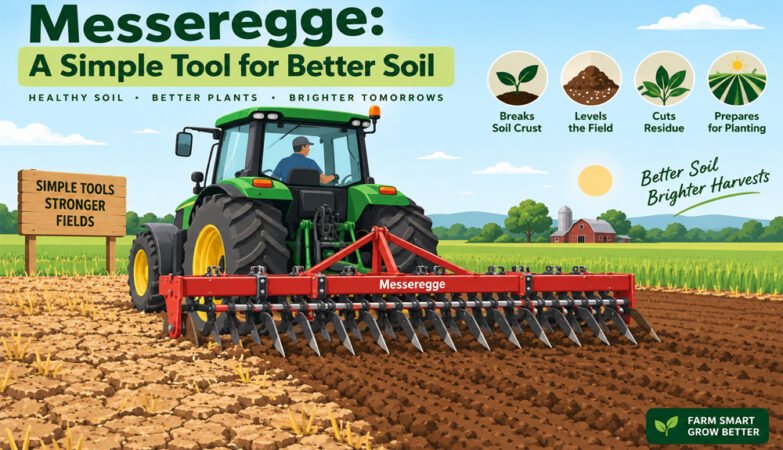
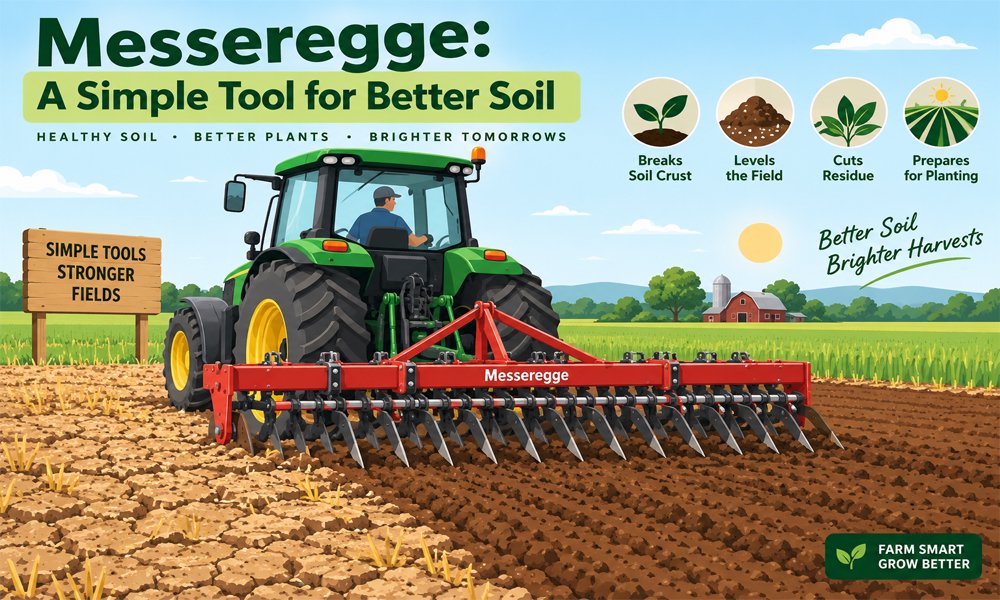
A Messeregge is made for this kind of light field work. It works near the top of the soil. Its blades can break crust and cut light plant remains. It can also make the field more even.
In this 2026 guide we will explain the Messeregge in simple words. We will look at how it works and its main parts. We will also cover its uses and how it can help prepare better soil.
What Is a Messeregge?
A Messeregge is a farm tool used for shallow soil work. The German name is often explained as a knife harrow or blade harrow. Sharp blades work across the surface instead of digging very deep into the ground.
This makes the machine useful when a field needs light work. A farmer may have hard crust on top after rain. The deeper soil may still be fine. Heavy tillage may not be needed in this case.
The Messeregge gives farmers another choice. It can work on the problem area near the surface. This may help prepare the land while leaving much of the deeper soil alone. That simple idea makes the tool useful.
How Does a Messeregge Work?
The Messeregge uses rows of blades that move across the field. These blades cut into the upper soil layer. They can break small hard areas and move loose soil around. The exact result depends on the machine setup.
Think about a field after heavy rain. The top may dry into a firm crust. Small young plants or new seeds can struggle with poor surface conditions. A light pass can help break this crust into smaller pieces.
Depth and speed are important during this work. The goal is usually not to dig deep. Farmers can check the ground after a short first pass. They can then change the setup when the finish is too rough.
Main Parts of a Messeregge
The main frame holds the Messeregge together. It must handle movement and pressure during field work. Under the frame are the working blades. Their shape and layout can differ based on the maker and machine model.
Many machines also have a way to control working depth. Some setups may use hydraulic parts for easier changes. The exact design can vary. This is why farmers should always check the guide for their exact machine.
The tractor connection is another important part. The machine must match the tractor and its lifting limits. A wider tool can also be heavier. Farmers should check size and weight before using any new setup.
Messeregge Uses on the Farm
One common Messeregge use is preparing land before planting. A field may already be in fairly good shape. It may only need a light final pass to break small clods and make the upper surface more even.
The machine may also help with light plant remains. Straw and other crop material can sit across the surface after harvest. The blades can cut and spread some of this material while working through the top soil layer.
Small wheel marks and rough areas may also be improved. However the tool is not made to fix every deep field problem. Very deep tracks or hard soil below the surface may need a different machine and method.
Messeregge for Better Soil
Heavy soil work is not always the best answer. Sometimes only the top layer needs attention. A Messeregge can target this area while causing less movement deeper down. This can make field work more focused.
Leaving deeper soil mostly alone may also help keep its natural structure. Plant remains can stay closer to the surface too. This cover can help protect soil from wind and hard rain when field conditions allow it.
Still every field is different. Clay soil can act very differently from light soil. Water levels also change how the machine works. Farmers should look at the real field and avoid using one setting everywhere without checking.
Messeregge for Seedbed Preparation
A good seedbed should give seeds a steady place to start. Large clods and an uneven surface can make planting harder. A Messeregge can help create a finer and more even upper layer before the planter arrives.
A smoother surface can help the planter move more steadily. Seeds may then be placed at a more even depth when the full planting setup is correct. This can support a more even crop start across the field.
Timing still matters. Soil that is very wet may stick and move badly. Very dry hard ground may also need another approach. Farmers should check moisture and soil condition first before deciding whether a Messeregge pass makes sense.
Messeregge vs Other Farm Tools
A Messeregge is different from many other farm tools. It is mainly made for light work near the soil surface. A disc harrow can work deeper. It can also move and mix much more soil.
A spring-tine harrow is different too. It uses flexible tines that move through the ground. A Messeregge uses blade-like working parts. These can cut crust and work through light plant remains near the surface.
The right tool depends on the field. Deep or very hard soil may need stronger work. A field with only light surface problems may need less. Farmers should choose the tool based on the job.
Best Time to Use a Messeregge
Timing can change how well a Messeregge works. Before planting is a common time to use it. The machine can help prepare the top layer when small clods or crust make the field rough.
Soil moisture matters as well. Very wet soil can stick to farm tools. It may also smear instead of breaking apart. Waiting until the ground is ready can give a cleaner and more even result.
Farmers should check behind the machine after the first short pass. Is the surface smooth enough? Are the blades working well? A quick check can show whether the depth or speed needs to change.
How to Set Up a Messeregge
A Messeregge should usually start with a light setup. Farmers can begin with shallow work and check the result. There is little reason to work deeper when the surface already looks good after a light pass.
Speed also changes the result. Moving too fast may leave a rough finish in some fields. Moving too slowly may not give the wanted result either. The best speed depends on soil and the exact machine.
Blade angle and pressure may also be changed on some models. Small changes can make a big difference. Always follow the maker’s guide. Then check the field after each change before doing the whole area.
How to Choose the Right Messeregge
Choosing a Messeregge starts with the tractor. The machine must match the tractor’s power and lifting ability. A very wide machine may cover more land. However it can also be heavier and harder to handle.
Farm size matters too. A compact model may work well on smaller fields. Large farms may want more working width to finish jobs faster. Road travel and storage space should also be part of the choice.
Think about soil and plant remains as well. Heavy soil may need a stronger setup. Farmers should also check blade type and spare parts. Easy service can save valuable time during a busy planting season.
Messeregge Care and Safety Tips
Regular care helps a Messeregge stay ready for work. Check the blades for damage and wear. Look for loose bolts too. Follow the machine guide for grease points and other regular service jobs.
Cleaning is also useful. Wet soil and plant material can stay around the frame after work. Removing this dirt makes it easier to see worn or damaged parts. Dry storage can also help protect the machine.
Safety is even more important. Stop the tractor before checking close parts. Keep other people away during setup and movement. Sharp blades can cause serious harm. Secure the machine correctly before road travel or storage.
The Future of Messeregge Farming
In 2026 many farmers are looking for ways to work soil with more care. They want to prepare good fields without doing extra work. A Messeregge can fit this approach when only shallow work is needed.
New machines may also make setup easier. Better hydraulic controls can help farmers change some settings with less effort. Stronger parts and improved blade designs may also help machines handle different field needs.
Yet the main idea remains simple. Work the area that needs attention and avoid extra soil movement when it is not needed. This simple idea may keep the Messeregge useful as farming tools continue to improve.
Conclusion
The Messeregge is a simple farm tool with a clear job. It works near the surface. It can break light crust and help smooth rough areas. It may also help manage light plant remains before planting.
Its gentle style is one of its main benefits. Not every field needs deep soil work. Sometimes farmers only need to improve the upper layer. Using the right tool can save extra work and protect deeper soil.
A Messeregge will not be right for every field or every problem. Still it can be useful when shallow soil work is needed. The key is simple. Check the field first and choose the setup that fits.
You may also read: What Is Inomyalgia? Easy Guide to Pain Symptoms and Treatment