Key Takeaways
- Small, scheduled inspections can help prevent larger problems later.
- Engine care, batteries, hull hardware, trailer components, and safety gear all need regular attention.
- Seasonal tasks should be completed early enough to avoid rushed launch-day decisions.
- Maintenance records make it easier to track recurring issues and upcoming service needs.
Boat maintenance is easier to manage when it becomes a routine rather than a reaction to a breakdown. A practical checklist helps owners spot loose connections, worn parts, leaks, and safety concerns before they interrupt a day on the water. When an issue goes beyond a basic inspection, searching for marine repairs near me can help connect you with qualified assistance for more complex work.
Every boat, engine, and operating environment is different, so the owner’s manuals should remain the final authority for service intervals, fluids, replacement parts, and winterization steps. Use this calendar as a planning framework, then adjust it for your boat’s age, engine hours, storage location, and local climate.
A written checklist is more reliable than memory, especially when several family members use the same boat. Keep it with your manuals, service receipts, and a running list of repairs that still need attention.
Whether your boat stays in a slip, rests on a trailer, or is stored indoors, exposure to sun, moisture, vibration, salt, and long idle periods can affect its systems. Consistent checks help you identify changes before they become urgent.
For owners comparing their next option or replacing an older vessel, browsing boats for sell can also provide a useful reference point for features, layouts, and equipment that suit their boating plans.
Table Of Contents
- Why A Maintenance Calendar Helps
- Checks Before Every Trip
- Monthly Boat Maintenance Tasks
- Spring Launch Preparation
- Mid-Season Inspection Points
- Fall Storage And Winterization
- Systems That Need Extra Attention
- Safety Gear And Compliance Checks
- When To Call A Marine Technician
- Keeping Maintenance Records
Why A Maintenance Calendar Helps
A boat can develop issues even when it is not being used. Batteries may lose charge, terminals can corrode, hoses can age, and moisture can collect in enclosed spaces. A calendar turns a large maintenance workload into smaller, repeatable tasks. For example, a quick monthly battery inspection may reveal a loose cable connection at the dock rather than leaving you with a no-start condition at the ramp.
Checks To Complete Before Every Trip
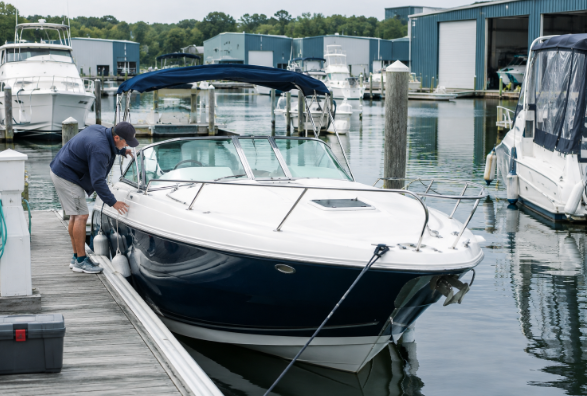
Build a short pre-departure routine that takes only a few minutes. Check fuel level and look for fuel odors or visible leaks. Inspect engine oil, coolant where applicable, belts, hoses, and fluid levels. Test the battery switch, navigation lights, horn, and bilge pump. Confirm the drain plug is installed when required, inspect the bilge for unusual water, and check steering, throttle, shift controls, and the propeller area. Finally, make sure life jackets and required safety equipment are accessible rather than buried under gear.
Monthly Boat Maintenance Tasks
Once a month, inspect battery terminals for corrosion and tighten connections as needed. Look over visible wiring, hose clamps, fittings, and fuel lines for cracking, chafing, or looseness. Operate seacocks if your boat has them and they can be safely accessed. Test pumps, alarms, radios, lights, and displays. For trailered boats, inspect tire condition, lights, tie-downs, safety chains, coupler components, and wheel-bearing service needs. Wash away salt and grime, particularly around metal hardware and the engine compartment.
Spring Launch Preparation
Start spring preparation before the first busy boating weekend. Review last season’s notes, inspect the hull and hardware, and check drain points and sealant around fittings. Service fluids, filters, impellers, and lubricants only as directed by the relevant equipment manuals. Charge and test batteries, inspect fuel lines and cooling-water paths, and test steering, controls, pumps, electronics, and safety equipment. A short dockside run can reveal problems before a longer outing.
Mid-Season Inspection Points
Regular use creates another reason to inspect the boat halfway through the season. Check for loose fasteners, new leaks, worn hoses, damaged wiring, or changes in engine performance. Inspect the propeller for fishing line, dents, and other damage, and compare engine hours with the manufacturer’s service schedule. Examine the canvas, covers, upholstery, and exposed sealants for signs of sun damage. Repeat these checks after storms, rough water, a hard impact, or any unusual vibration.
Fall Storage And Winterization
Storage preparation depends on climate and the length of the layup. In freezing areas, water-containing systems require proper protection per the engine and equipment instructions. Address fuel stabilization, oil changes, battery care, hoses, seals, and exposed metal as recommended for your boat. Clean and dry the interior before covering it, and use ventilation that helps limit trapped moisture. Make a repair list before storage so spring work begins with clear priorities.
Boat Systems That Need Extra Attention
Engine And Fuel System
Monitor oil, filters, belts, hoses, cooling flow, and fuel lines. Do not ignore hard starting, overheating, warning alarms, fuel odors, or exhaust odors.
Electrical System
Inspect battery terminals, charging equipment, switches, fuses, and visible wiring. Corrosion, cracked insulation, loose connections, and unexplained battery drain all deserve investigation.
Hull, Hardware, And Trailer
Look for cracks, blisters, damaged sealant, loose fittings, and signs of water intrusion. During haul-out, inspect underwater hardware carefully. Before towing, check tires, brakes, lights, straps, chains, coupler components, and wheel bearings.
Safety Gear And Compliance Checks
Maintenance and safety should stay on the same checklist. Review the condition, fit, and accessibility of life jackets; inspect fire extinguishers; test lights, sound signals, radios, and emergency communication tools; and check dates on time-sensitive equipment. Review federal boating safety guidance alongside your state requirements, since required equipment can depend on vessel type, size, and where you operate. A voluntary courtesy vessel safety check can provide another practical review before the busiest part of the season.
When To Call A Marine Technician
Owner inspections are valuable, but they do not replace technical diagnosis. Arrange professional service for repeated alarms, overheating, fuel or exhaust odors, unexplained bilge water, steering trouble, electrical shorts, repeated fuse failures, severe corrosion, or vibration after striking an object. Complex engine, electrical, structural, and underwater repairs should follow manufacturer instructions and be handled by appropriately trained professionals.
How To Keep Better Maintenance Records
For each task, record the date, engine hours, work completed, parts used, and observations. Save receipts, manuals, warranties, and inspection reports together. Photos can help document unusual wear for future comparison. Set reminders for seasonal work and for expiring safety equipment, and maintain a separate follow-up list so minor repairs do not fall off the radar.
Final Thoughts
Consistent maintenance is usually less stressful than emergency repair. A simple 2026 calendar gives boat owners a repeatable way to prepare for changing seasons, catch small problems earlier, and leave the dock with greater confidence. Follow your manuals, document each task, and address safety concerns before the next departure.