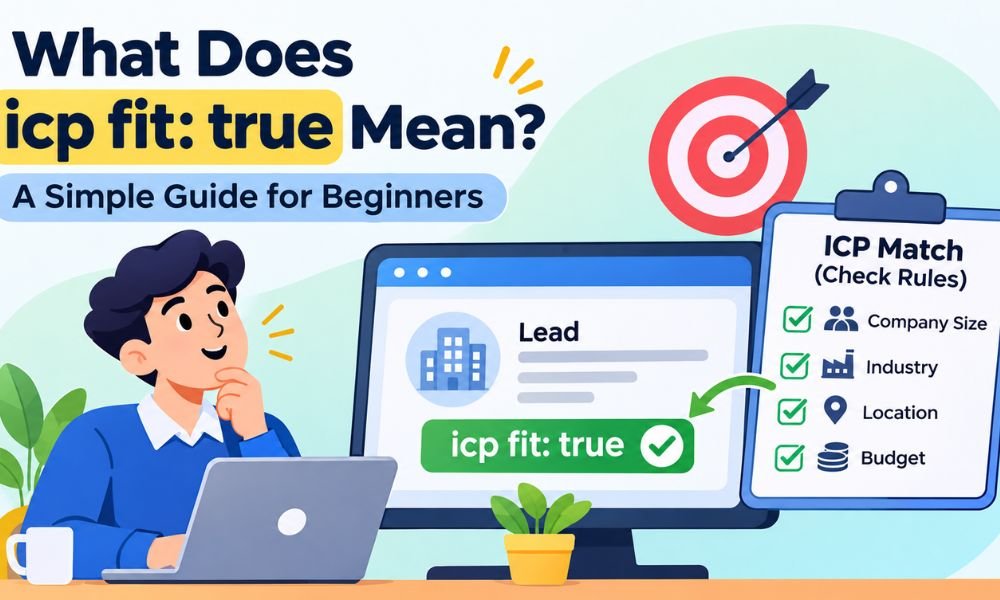
Have you ever seen icp fit: true in a sales tool and wondered what it means? This small message can tell you something useful about a possible customer. It may help your team find the right people to contact.
Many businesses use tools to check if a new lead is a good match. These tools look at details such as company size and work needs. They then compare those details with the rules set by the business.
In this guide we will explain what icp fit: true means in 2026. You will learn how it works and why it matters. We will also look at what makes a lead a good match and how to read the result.
What Does icp fit: true Mean?
The term icp fit: true may mean that a lead matches the type of customer a business wants. ICP stands for Ideal Customer Profile. It is a simple way to describe the kind of company that may need your product or service.
The word “true” often means yes in a computer system. So when a tool shows this result it may mean that the lead has passed a customer fit check. The system has found a match based on its own rules.
But not all sales tools use the same rules. Some use true or false values. Others use scores or levels. You should check how your own tool works before you trust the result. The exact field name alone does not tell the full story.
Continue reading: Tozymagazine com Trending: What It Is and Why Everyone Is Talking About It
How Does icp fit: true Work?
A business first sets rules for its ideal customer. These rules may include company size and location. They may also include the type of work a company does. A sales tool can use these rules to check new leads.
For example a software company may want to work with stores that have more than 10 workers. When a new store signs up the system checks its details. If the store meets the required rules it may get an icp fit: true result.
Some tools run these checks on their own. Others need a person to add details or start the check. The result may also change when new data is added. That is why keeping lead details correct is so important.
Why Is icp fit: true Important?
Sales teams often get many new leads each day. But not every lead is a good match for the product. A fit check can help the team find leads that meet the rules and may be worth a closer look.
The icp fit: true result can help save time. Instead of checking every lead in the same way a team can start with those that match its target group. This can make daily sales work much easier.
Still a good match does not mean a sure sale. A company may fit every rule but have no plan to buy right now. Sales teams must also look at the lead’s needs and interest before they decide what to do next.
What Makes a Lead Get icp fit: true?
A lead may get icp fit: true when its details match the rules set by a business. These rules are not the same for every company. Each business picks the type of customer it can serve best.
Company size is one common rule. A business may want customers with 20 to 200 workers. If a lead falls in that range it may pass the size check. But it may still need to meet other rules too.
Location and work needs can also matter. A company may only serve customers in certain places. Another may focus on schools or online shops. Some may check a customer’s budget. A true result depends on which rules the system uses.
icp fit: true vs icp fit: false
The main difference between icp fit: true and icp fit: false is the result of a fit check. True often means the lead passed the set rules. False may mean that one or more required rules were not met.
Think of a company that sells tools to large stores. A store with 100 workers may get a true result if it meets all the rules. A small shop with five workers may get false because it is too small.
But a false result does not always mean the lead is a poor match. Some systems may show false when key details are missing. Other systems may have a separate status for unknown leads. Always check the rules before making a choice.
How to Check icp fit: true in a CRM
A CRM is a tool that helps businesses keep track of customers and sales. Some CRM tools can also check if a lead is a good match. They use saved details and rules to help sales teams make better choices.
To check icp fit: true you should first open the lead’s record. Look for details about the company and its needs. Some tools may show a fit score or a special field. The name can be different in each system.
Next you should check the rules used by the tool. Make sure the lead’s details are correct and up to date. A wrong address or old company size may affect the result. If something looks wrong you should check it before moving forward.
Can icp fit: true Help You Find Better Leads?
Finding good leads can take a lot of time. Sales teams may speak with many people before finding someone who needs their product. A customer fit check can help them spend more time on leads that match their business goals.
When a lead shows icp fit: true it may be a good sign. The company may have the right size or work in the right field. This helps the sales team choose which leads to review first and which ones may need more time.
But there is one thing to keep in mind. A good fit and a wish to buy are not the same. A lead may match every rule but show little interest. Another lead may ask for a demo and be ready to buy soon.
Common Mistakes With icp fit: true
One common mistake is thinking that icp fit: true means a sale is sure to happen. That is not true. The result only shows that a lead has met certain rules. It does not prove that the customer will spend money.
Another mistake is using old or wrong data. A company may have grown or moved to a new place. If the CRM still has old details the result may not be right. Sales teams should check key facts from time to time.
Some businesses also use rules that no longer fit their goals. For example a company may start serving small shops after years of working with large stores. Its old rules may miss good leads. This is why regular checks matter.
What to Do After Getting icp fit: true
When a lead gets icp fit: true the first step is to check its details. Make sure the company meets the rules and that the data is correct. This helps you avoid wasting time on a result that may be wrong.
Next look for signs of real interest. Has the lead asked about prices? Has someone booked a product demo? Has the company sent a message asking for help? These signs may show that the lead wants to learn more.
After that the sales team can decide what to do next. They may send a friendly email or set up a call. They should also keep notes in the CRM. Good records help everyone know what has happened with the lead.
Can icp fit: true Change to false?
Yes. In some systems icp fit: true can change to false. This may happen when a lead’s details change or when the business updates its rules. The result depends on how the system checks customer fit.
For example a company may once serve stores with 10 or more workers. Later it may change its target to stores with at least 50 workers. A store with 20 workers may no longer pass the new size rule.
Wrong data can also cause a change. If a team finds that a lead has fewer workers than the CRM shows it may need a new check. Some systems update the result on their own. Others need a person to start the check again.
Real Examples of icp fit: true
Imagine a company that sells software to online stores. It wants customers with at least 20 workers and a need to track sales. A store with 40 workers asks for help with sales reports. It may get icp fit: true if it meets all the rules.
Now think about a small shop with only three workers. The owner likes the software and wants to try it. But the shop does not meet the size rule. The system may show false even though the owner has real interest.
These examples show why customer fit matters. The first store matches the target group and has a clear need. The second store may still be worth a look. A sales team should use the result as a guide and not as the final answer.
Continue reading: Fonvira: The Easy Way to Find Colors for Any Design
Conclusion
Understanding icp fit: true can help businesses make better sales choices. In a system that uses this field for customer fit it often means a lead has passed the set rules. It can help teams find companies that may be a good match.
Still a true result does not mean that a customer will buy. A lead may fit the target group but have no need to buy right now. That is why sales teams should also check interest and learn what each customer wants.
The best way to use this result is to keep customer details correct and review the rules often. When used with care it can save time and help teams focus on suitable leads. A good fit is a useful start but it is only one part of making a sale.
(FAQs)
What does icp fit: true mean in sales?
icp fit: true usually means a lead matches the type of customer a business wants. The system checks details such as company size and location. A true result shows that the lead passed the rules set by that business.
Is icp fit: true a good sign?
Yes. It can be a good sign because the lead may match your business needs. This helps sales teams find suitable customers. But it does not mean the person will buy. The team must still check their interest.
What is the difference between icp fit: true and false?
The main difference is how a lead matches the set rules. True often means the lead passed the check. False may mean it failed. But missing details can also affect the result. Each system may use different rules.
Does icp fit: true mean a customer will buy?
No. A true result does not promise a sale. It only shows that the lead meets certain rules. The customer may still need more time or information. Sales teams should check buying interest before making their next move.
How does a CRM decide if ICP fit is true?
A CRM may check details such as company size and industry. It compares those details with rules set by the business. If the lead meets all required rules the system may show true. The exact process depends on the CRM.
Can icp fit: true change over time?
Yes. A true result may change when company details or business rules change. For example a company may grow or move to another place. Some CRM tools update the result on their own. Others need a new check.
What should I do when a lead shows icp fit: true?
First check that the lead’s details are correct. Next look for signs of buying interest. You can then contact the lead or plan a call if it makes sense. Keep your CRM notes updated so your team can follow up.
Is icp fit: true the same as a lead score?
No. ICP fit checks how well a lead matches your target customer rules. A lead score may also use actions such as website visits or demo requests. Some tools keep these checks apart. Others combine them into one score.
Can wrong customer data cause an incorrect result?
Yes. Wrong or old data can affect the result. For example a CRM may show that a company has 100 workers when it has only 10. This could lead to a wrong fit result. Checking the facts helps prevent mistakes.
Does every CRM use icp fit: true?
No. Not every CRM uses this exact field. Some tools use scores or labels to show customer fit. Others may use true and false values. Always check your CRM’s field settings to understand what the result means.
Continue reading: Mindset Energy: What It Is and How to Improve It Every Day