No one can tell you how a health issue can alter your self-image in the mirror. An itchy, non-clearing rash. A balding area that continues to get thinner. A birthmark that you thought, “Oh, it wasn’t there, but was”. A birthmark that gets a lot of attention, but you didn’t notice. These things are not as likely to hurt you medically, but they’re there with you all day long. True to its name, something that is seen and chronic, such as skin conditions, vascular malformations and hair loss. They eat away at your appearance, your sense of self-confidence, and your love of common life.
It’s not cosmetic; it’s real. If anthe individual has severe acne, he or she might miss meetings. Individuals who begin to experience hair loss at 23 or 24 can begin to avoid photos and dating. Hair Transplant Clinic experts such as Nikitha Reddy witness this situation every day, individuals that come in complaining about their hair and yet they are actually concerning their loss of self-confidence. Emotional and physical are intermingled, and there’s no way to make them separate.
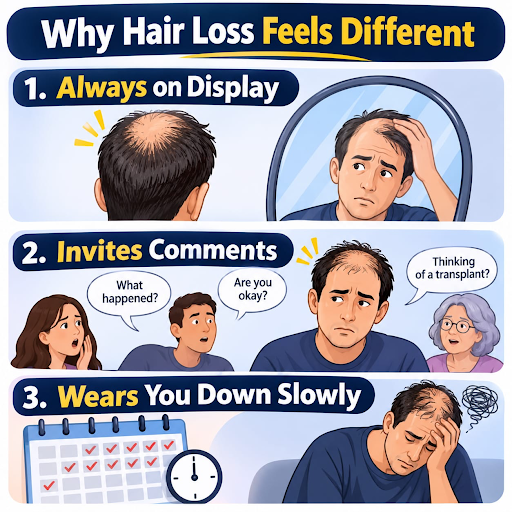
Here is what often goes unsaid about visible conditions:
This is why good care treats the whole person, not just the symptom. An Aesthetic Physician like Dr Harjot Kaur– The Inspiration approaches these cases by looking past the surface complaint. The question is not only “how do we fix this skin or this hairline,” but “how is this affecting your sleep, your work, your relationships?” A treatment that clears a condition but ignores the person behind it has only done half the job.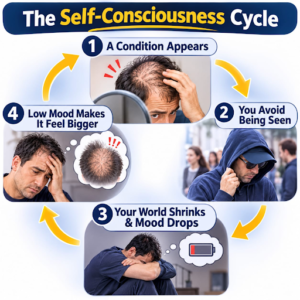
The confidence spiral
The damage usually follows a pattern. It starts small and feeds itself.
Breaking that loop early matters more than people realise. The longer someone waits, the deeper the habit of hiding becomes, and undoing that takes time even after the physical issue is treated.
Why early help changes everything
People delay for all sorts of reasons. Cost, fear, embarrassment, or the belief that it’s “not serious enough” to bother a doctor. But acting early tends to give better results and faster relief. A thinning hairline caught early has more options than one left for a decade. A skin condition treated before it scars is simpler to manage.
A few things worth keeping in mind:
The honest takeaway
Your looks are part and parcel of your life, and there is nothing wrong with paying attention to them. Health and self-image aren’t a separate department. If it is a condition that you notice in yourself that is robbing your confidence, it’s time to seek assistance. It doesn’t take a long time to get to an intolerable point. Early treatment by a person who is able to see the person and not just the problem is often the most compassionate treatment that a person can give himself or herself.
Frequently Asked Questions
1)So, is it really possible for the loss of hair to impact mental health?
Yes. Research, as well as clinical experience, indicates that balding can cause a decrease in one’s self-esteem, social anxiety, and in some instances, depression, particularly when it begins at an early age.
2)Is an obvious skin disorder a cosmetic problem?
No. There are underlying medical reasons that many have and can get worse if left untreated. It’s not only a cosmetic concern, it’s an emotional impact as well.
3) At what time can I have a look at specialist appearance?
It’s time when the condition begins to impact your activities, such as avoiding social interactions, photos or events. It doesn’t have to be bad, it doesn’t have to be extreme.
4) But, is a hair transplant the only solution for hair loss?
Not at all. Treatment will vary based on the cause and stage. They can be medications, in-clinic treatments or transplants and a good clinic will pair the treatment with you
5) What’s the difference between an aesthetic doctor and a normal doctor?
The aesthetic physician treats conditions relating to the appearance of the body and how they impact wellbeing, with an eye to the natural, confidence-boosting outcome and a medical approach.