Setting up a corporation gives a business a formal structure for ownership, management, and financial operations. A corporation is a separate legal entity from its owners and can continue operating as ownership changes. If you are learning how to set up a corporation, understanding the company registration process can help you prepare the required documents and establish your business correctly.
Why Set Up a Corporation?
A corporation can provide a structured framework for managing a growing business. Ownership is generally divided into shares, while directors oversee the company’s direction and officers handle day-to-day responsibilities.
Corporations can also offer flexibility in how ownership is organized and may have different federal tax treatment depending on the corporation type and elections made with the IRS.
How to Set Up a Corporation
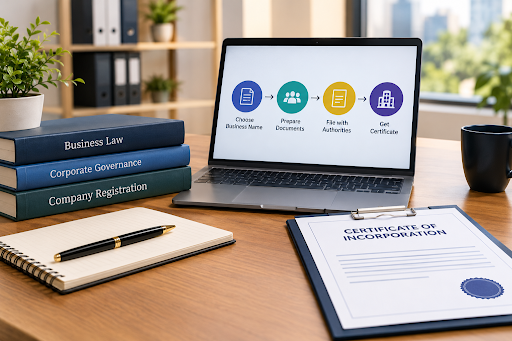
Requirements and filing fees vary by state. However, the general company registration process follows several key steps.
Step 1: Choose a Business Name
Choose a corporate name that meets your state’s requirements. The name generally must be distinguishable from existing entities registered in the state and may require a corporate designation such as “Corporation,” “Incorporated,” or an accepted abbreviation.
Search your state’s business records before filing to review name availability and confirm that your preferred name can be registered.
Step 2: Select Your State and Registered Agent
Corporations are formed under state law, so select the state where you plan to register your company. Many businesses register where they primarily operate, although specific circumstances may affect this decision.
You will also need a registered agent. The registered agent receives official correspondence and legal documents for the corporation and maintains a registered office as required by state law.
Step 3: Prepare and File Articles of Incorporation
Articles of Incorporation, also called a Certificate of Incorporation in some states, establish your corporation with the state. The document generally includes the corporation’s name, purpose, registered agent, incorporator, and authorized shares.
State filing fees vary. Review your state agency’s current requirements before submitting the documents. Services like MyCorporation can help business owners prepare and submit their formation paperwork.
Step 4: Establish Corporate Governance
Create bylaws that explain how the corporation will operate. Bylaws can address shareholder rights, director responsibilities, officer duties, meetings, voting procedures, and other internal matters.
The corporation should also hold an organizational meeting. During this meeting, the initial directors can adopt bylaws, appoint officers, authorize shares, and approve other foundational business matters.
Step 5: Issue Shares
Document the corporation’s ownership by issuing shares to the appropriate shareholders. Maintain records showing the number of shares issued and each shareholder’s ownership interest.
Keep stock records and other corporate documents organized as part of the company’s ongoing records.
Step 6: Obtain an EIN
An Employer Identification Number, or EIN, identifies your corporation for federal tax purposes. Corporations generally need an EIN and can apply through the IRS.
You can use the EIN for federal tax filings, opening a business bank account, hiring employees, and other business activities.
Step 7: Complete State and Local Requirements
After incorporation, review the licenses, permits, tax registrations, and other requirements that apply to your business. Requirements can vary based on your industry, location, employees, and business activities.
Check with the appropriate state and local agencies to identify applicable registrations and keep required filings current.
What Does Company Registration Cost?
The cost of registering a corporation depends on the state where you incorporate. State filing fees vary, and additional expenses may apply for registered agent services, business licenses, permits, and professional assistance.
Review your state’s current fee schedule and requirements when preparing your company registration budget.
Conclusion
Setting up a corporation involves choosing a business name, selecting a state and registered agent, filing formation documents, establishing corporate governance, issuing shares, obtaining an EIN, and completing applicable state and local requirements.
Taking time to organize each stage of the process can give your corporation a clear foundation for ownership, management, daily operations, and future planning. Keep formation documents, corporate records, tax information, and state filings organized so your business can remain prepared as it grows.