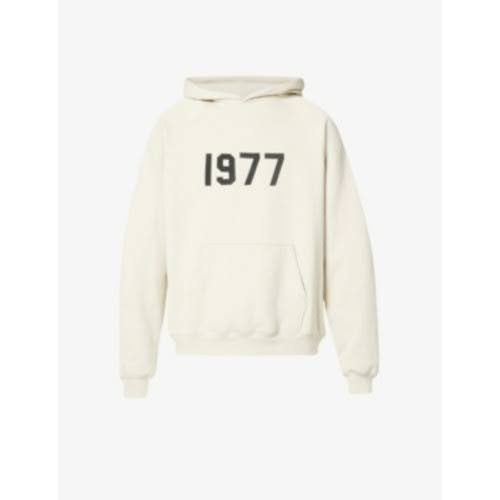
The hoodie goes on at 7:40 in a 38-degree parking lot and it’s off again by 9:15, because the building runs its heat at 72 and nobody asked you first. That’s most of what I’d tell anyone about heavy cotton fleece, honestly — it’s excellent for about twenty minutes of your day and then it’s cargo. The 1977 pullovers sitting on Essentials Clothing USA are firmly in the dense-fleece camp, which isn’t a knock at all. It just means your thermostat gets a vote in whether you wear the thing or carry it.
And a hoodie you’re carrying is a $99 scarf.
Seventy-two degrees indoors is the actual problem
Nobody buys a hoodie for the weather they’ll spend eight hours in, and that’s where this goes sideways. Offices, classrooms, the back of a coffee shop in February — all of them land between 70 and 74, and plenty overshoot. Heavy fleece in that range turns into a slow heat problem. You push the sleeves up. Then you roll the cuffs. Then you’re sitting there sweating quietly through a $500-list pullover you got for a fifth of that.
A lighter crewneck would have been fine. That’s the uncomfortable part, because it’s the cheaper option too.
Where the dense fleece genuinely pays off
I don’t want to talk anyone out of a heavy pullover — in genuine cold nothing lighter comes close. Think 30 to 45 degrees, outdoors, standing still: a football game in Chicago in late October, a dog walk at 6 a.m. in Denver when the sun hasn’t bothered yet. Dense cotton holds warm air against you rather than letting wind strip it off, and there’s room underneath for a tee without the shoulders pulling.
Stationary cold is the condition it was built for, basically. Moving cold is a different story, and so is any cold that ends with you walking into a heated room.
The car is worse than the office
Twelve minutes into a drive with the heat on 74 and the vents aimed at your chest, a heavy hoodie gets genuinely unpleasant — and you can’t take it off, because you’re driving. The seat back traps heat behind you while the vents load it in front. By the time you park you’re damp through the back panel, and that moisture doesn’t leave. Cotton holds it.
My workaround is dull but it works: drive in whatever’s under the hoodie and put the hoodie on in the parking lot. Thirty seconds. Saves the whole afternoon.
Rough temperatures, and what actually holds up in them
None of this is science, it’s just what survives contact with a real day. The second column matters more than the first — 50 degrees outdoors and 50 degrees spent mostly indoors are two different purchases.
| Outside temp | Most of your day | What holds up |
| Below 35°F | Outdoors, barely moving | Heavy 1977 fleece, tee underneath, coat over it |
| 35–48°F | Outdoors, in and out | Heavy fleece on its own — this is its range |
| 48–58°F | Split, with heated rooms | An $80 crewneck sweatshirt, or the hoodie you’ll be holding by noon |
| 58–68°F | Walking, commuting, errands | Sweatshirt or long sleeve; heavy fleece is too much |
| Above 68°F | Indoors at 72, all day | A tee. Keep the hoodie in the car for the walk out |
Sweat has nowhere to go in thick cotton
This is the part people find out the hard way. The dense pieces here are cotton-led fleece — a little polyester turns up in some blends for stretch and shrinkage — and cotton absorbs moisture rather than moving it along. Lovely for softness, awful for a body running warm. Sweat goes into the fleece, sits there, dries slowly while bacteria get comfortable. That’s where the smell comes from, not the fabric itself.
Then the care rules narrow your options. Cold wash, garment flipped, no bleach, dried on a hanger — and hang drying a dense pullover in a humid apartment eats most of a day. So you can’t just run it through a hot wash every time it gets sticky, which is exactly what you’d want to do.
Two things help. Air it out after a warm day instead of folding it damp, and own the weight you’ll actually wear — the 14 colorways in the 1977 Essentials Hoodie range run $99 to $116, so the temptation is to buy two heavy ones because the discount is absurd. One pullover worn three times a week is worse off than two you rotate. Give one a day to dry out and the smell mostly handles itself.
The $80 sweatshirt argument
This is the comparison nobody makes before buying. A 1977 pullover runs $99 to $116 off a $493–500 list, roughly 76 to 80 percent off, and at that number it feels silly to pass. The crewneck sweatshirts sit around $80. Twenty-odd dollars apart — and for a lot of people the $80 piece gets worn twice as often, because 48 to 65 degrees covers far more of the American calendar than 35 to 48 does.
If you’re in Phoenix or Miami or coastal California, I’d skip the heavy fleece on a first buy and come back for it when there’s a reason. If you’re in Minneapolis or Buffalo, buy the heavy one and don’t overthink it. Everywhere in between — most of the country, really — the honest answer is you want both eventually, and the sweatshirt first.
Worth knowing before you gamble: cash back isn’t on the table here. A wrong call gets you a store credit or a different size inside 30 days, tags still on, and changing your mind on day one carries a $25 restocking charge.
Frequently Asked Questions
Can I wear a 1977 hoodie indoors at all?
In a cool room, sure. Under about 68 degrees you’ll be fine, especially sitting still. Above that it depends on you — some people run cold and never notice, most get warm within the hour.
Does a heavy hoodie work in summer?
Evenings, yes. A desert night or a coastal July after dark can drop into the 50s fast, and that’s a real use. Daytime summer, no — you’d be carrying it.
How do I stop a thick hoodie from smelling?
Don’t fold it away warm or damp. Hang it somewhere with moving air for a few hours, wash it cold and inside out when it needs it, and rotate two pieces if you wear one most days.
Which color shows sweat the least?
Black and Iron hide it best. Wheat and Dark Oatmeal are the ones that’ll show a damp back panel after a hot car, so if that bothers you, go darker.
Check your thermostat before you check the discount. If most of your waking hours happen somewhere heated, buy for that room and let the heavy fleece wait for a cold morning that earns it.