Boden is a town in northern Sweden. For many years, it was known as a calm place with a strong military history. Life did not change too quickly. But in 2026, Boden is going through a very different time. New industry, new jobs, and new people are changing the town.
A big reason for this change is green industry. Large projects are being built around Boden. They need workers, homes, roads, power, water, schools, and many other services. A town cannot handle such fast growth without a clear plan. This is where Bodenxt becomes important.
Bodenxt helps Boden deal with this fast change. It brings many parts of town growth into one wider plan. In this article, we will explain what Bodenxt is, why it started, how it connects with Stegra, and what it could mean for the people who live and work in Boden.
What Is Bodenxt?
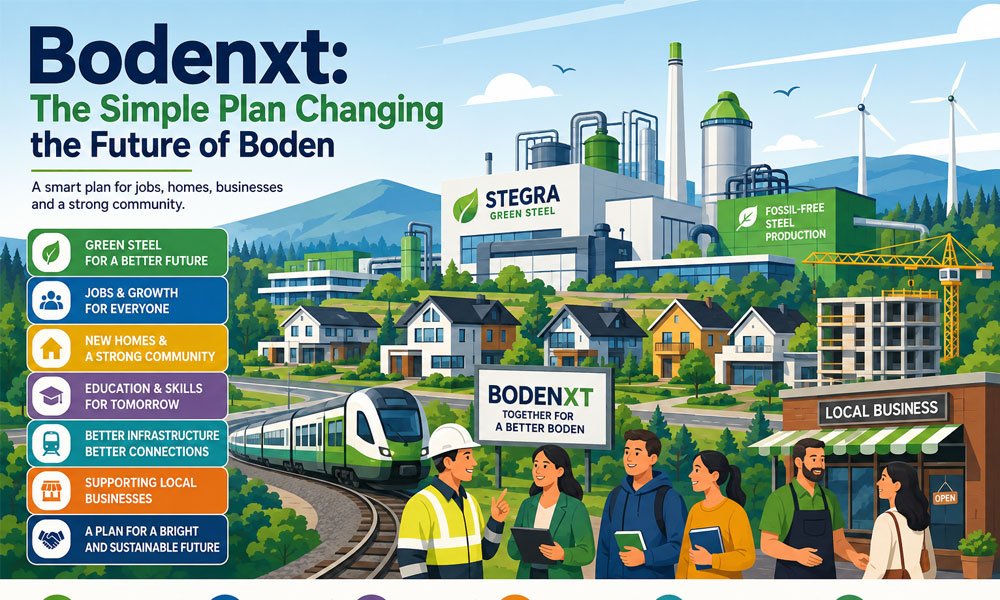
Bodenxt is Boden Municipality’s platform for handling the fast change taking place in the town. It is not a private company. It is also not one factory, new neighborhood, or building project. Instead, it brings many parts of Boden’s growth together.
Think about what happens when a large company opens a factory near a small town. The company may hire thousands of people. Those workers need homes. Their children may need schools. Families need shops, healthcare, roads, water, and other daily services. One new factory can change almost every part of town life.
This is the kind of change Bodenxt is made to handle. Boden Municipality has described the situation as doing about 20 years of growth in only a few years. Bodenxt helps the town plan this growth so that homes, skills, businesses, roads, and public services can grow along with industry.
Why Bodenxt Was Started
Bodenxt became important because large green projects started bringing major investment to Boden. The biggest example is the green steel plant being built by Stegra. The company was once called H2 Green Steel. Its large project has brought worldwide attention to this part of Sweden.
A project this large creates more than factory jobs. Construction workers arrive first. Later, engineers, machine workers, office staff, and many other people are needed. Local shops and service companies can also become busier. This can be good for a town, but it also creates pressure.
Imagine hundreds or thousands of people looking for homes around the same time. Roads become busier. Schools may need more space. Water and power systems must serve more people. Bodenxt was created to help Boden prepare for these needs instead of waiting for problems to appear.
Bodenxt and Stegra: What Is the Difference?
It is easy to mix up Bodenxt and Stegra because the two names often appear in the same story. However, they are not the same thing. Stegra is a private company. It is building a large green steel plant in Boden Industrial Park.
Bodenxt has a much wider role. It belongs to the work led by Boden Municipality. Its focus is on what happens around the industrial growth. This includes homes, workers, local businesses, roads, rail links, water systems, and other services that a growing community needs.
A simple example makes the difference clear. Stegra can build and run its steel plant. But it does not run Boden’s schools or plan the whole town’s housing needs. Those wider needs involve the municipality and other groups. Bodenxt helps connect these different parts of the change.
How Green Steel Is Driving Bodenxt
Steel is found almost everywhere. It is used in cars, buildings, bridges, tools, and machines. But normal steel production can create a lot of carbon emissions because it often depends on coal. Green steel aims to make steel in a cleaner way.
Stegra plans to use hydrogen made with fossil-free electricity as an important part of its production process. The company says this method could cut carbon dioxide emissions by up to 95% compared with steel made through a common coal-based blast furnace process. This is one reason the Boden project has gained so much attention.
The size of the project also matters for Bodenxt. Plans include more than 700 megawatts of electrolysis capacity and over 100,000 tonnes of green hydrogen production each year. A project on this scale needs workers, transport, power, suppliers, and many other services. Its effects can therefore spread far beyond the factory gates.
The Five Main Parts of Bodenxt
Bodenxt becomes much easier to understand when we look at its five main working areas. These are skills supply, living and housing, business development, infrastructure above ground, and infrastructure below ground. Each part deals with a different need created by fast growth.
Skills supply is about having enough people for new jobs. Living and housing is about giving workers and families good places to live. Business development helps local companies take part in the new economy. Above-ground infrastructure includes things such as roads and rail links.
Below-ground infrastructure may be less visible, but it is just as important. A growing town needs water, wastewater systems, power links, drainage, fiber, and other basic systems. Bodenxt connects these needs because one part cannot work well without the others. New homes, for example, are not very useful if the water or road systems cannot support them.
You may also read: Dworo.io: Everything You Need to Know in 2026
Bodenxt and New Jobs in Boden
Jobs are one of the biggest reasons people are watching Boden’s growth. Municipal plans have pointed to around 10,000 direct and indirect jobs across the wider region. Around 2,000 jobs have also been linked to Stegra’s development. These numbers show how one major investment can affect a much larger area.
Not all of these jobs are about making steel. Boden also needs construction workers, drivers, technicians, teachers, healthcare staff, shop workers, and people who keep public services running. Local companies may need more workers as demand for food, transport, repairs, housing, and other services rises.
Education is therefore an important part of Bodenxt. Boden needs to help local people gain skills that match the new jobs. One example is the Upper Secondary Engineering Programme at Björknäsgymnasiet, planned to begin in autumn 2026. Links between schools and employers can help young people see a clear path from learning to work.
How Bodenxt Is Changing Homes and Daily Life
A new job is useful only if a worker can build a life around it. This makes housing one of the most important parts of Boden’s change. New workers may want to move to the town with partners or children. They need homes that are close enough to work, schools, shops, and other daily services.
Boden Municipality has planned for more population growth and has enabled around 1,300 apartments through development plans. The town ended 2025 with 28,624 registered residents. At the same time, many temporary workers connected with large building projects may be living in the area without being part of the registered population.
This creates a difficult problem for Bodenxt. In 2026, available rental housing has been very limited. If people find a good job but cannot find a home, they may choose to live somewhere else. That is why housing is not a small side issue. It may decide whether Boden’s new jobs lead to lasting population growth.
Daily life matters too. Families need schools. Workers need transport. People need places to shop, meet, and relax. The real test of Bodenxt is not simply how many factories or homes are built. It is whether Boden can grow while still being a good place to call home.
Bodenxt and the Growth of Local Businesses
Big industry can also create new chances for small businesses. When more workers and families come to Boden, they need many daily services. They buy food, use transport, visit shops, repair their homes, and spend money in the local area. This can help existing businesses grow.
Bodenxt also creates chances for companies that work with large industrial projects. Local builders may find more work. Transport firms can move goods and equipment. Repair teams, cleaning firms, electricians, and other service companies may also see more demand.
The goal is to make sure growth reaches more than one large company. A strong local business community can create more jobs and keep money moving inside Boden. This is important for the future because the town needs different kinds of businesses, not only companies linked to steel.
Roads, Rail, and Infrastructure Under Bodenxt
Fast growth needs good transport. Workers must reach their jobs, and companies need to move large amounts of goods. This is why roads and rail links are an important part of Bodenxt. Without them, even a modern factory could struggle to work well.
One major project is the new railway connection to Boden Industrial Park. The railway is about six kilometers long and includes nine bridges. It can support trains up to 1,000 meters long. It also connects the industrial area with Sweden’s wider rail network.
But not all important infrastructure can be seen. Water pipes, wastewater systems, electricity, drainage, and fiber are also needed. Imagine building hundreds of new homes without enough water or power. It would quickly cause problems. Bodenxt tries to plan these basic systems before growth becomes too large for them.
What Bodenxt Has Achieved So Far
By 2026, Boden’s change is no longer just an idea on paper. New infrastructure has been built, people have moved to the area, and plans for more homes are moving forward. The new railway to Boden Industrial Park is one clear example of this progress.
Population numbers also show signs of change. Boden had 28,624 registered residents at the end of 2025. The town finished the year above its population forecast. Stegra-related moves have also brought workers and their families into the community.
Education is changing as well. The new engineering program planned for autumn 2026 is one example. The Boden Sustainability Center is another project linked with long-term teamwork between the town, businesses, schools, and other groups. These steps show that Bodenxt is about building a community around the new industry.
Still, it is important to separate completed work from future plans. Some projects are finished, while others are still being built or planned. Boden’s transformation will take years. The progress is real, but there is still a lot of work ahead.
You may also read: Magfusehub Com: What It Is and How the Website Works
The Biggest Challenges Facing Bodenxt
Fast growth can bring exciting changes, but it can also bring difficult problems. Housing is one of the clearest examples. In 2026, finding an available rental home in Boden can be difficult. More workers may want to move to the town, but they need somewhere suitable to live.
Finding enough skilled workers is another challenge. Green steel and modern industry need engineers, technicians, builders, and many other trained people. At the same time, a growing town needs teachers, healthcare workers, drivers, and public workers. Bodenxt must help support all of these needs.
Money is another important issue. Roads, schools, water systems, housing areas, and other services can cost a lot to build. The town must plan carefully so that today’s fast growth does not create difficult costs later.
There is also a wider risk. Stegra is a major reason for Boden’s current growth. Large industrial projects can face delays, higher costs, or changes in the market. This is why Boden needs other businesses and jobs too. A stronger mix of companies could make the local economy safer over time.
What Is Next for Bodenxt and Boden?
The years leading to 2030 could be very important for Boden. The municipality has planned for thousands of new residents and many new jobs across the wider region. More homes, services, and business activity will be needed if those plans become real.
Stegra’s project will remain an important part of the story. Its progress can affect jobs, housing demand, suppliers, and local investment. But the bigger goal of Bodenxt is to create growth that can last beyond one project. That means attracting other companies and helping people build permanent lives in Boden.
Population numbers will also be worth watching. Temporary workers can make a town feel busy for a few years. The bigger success comes when people decide to stay. They may buy homes, raise families, open businesses, and become part of the local community.
Other towns can learn something from Boden too. When a huge project arrives, building the factory is only one part of the job. Homes, roads, schools, workers, businesses, water, and public services must grow with it. Bodenxt shows why all of these parts need to be planned together.
Conclusion
Bodenxt is much more than a name connected with green steel. It is Boden Municipality’s way of dealing with one of the fastest periods of change in the town’s history. It brings housing, skills, businesses, transport, utilities, and community needs into the same wider plan.
Stegra’s green steel plant is a major reason this change is happening so quickly. But a factory alone cannot create a strong town. People need homes. Children need schools. Businesses need roads. Families need services. Workers need reasons to stay after they arrive.
That is what makes Bodenxt interesting. Its success will not be measured only by steel or new buildings. It will also depend on whether Boden becomes a good place for people to live, work, learn, and build their future.
Boden is still in the middle of this journey in 2026. There are real challenges ahead, especially with housing, workers, and the speed of growth. But the next few years could show whether a small northern Swedish town can turn a huge industrial change into lasting community growth. That is why Bodenxt is a story worth watching.
You may also read: Miuzo: The New Digital Tool You Should Know About in 2026