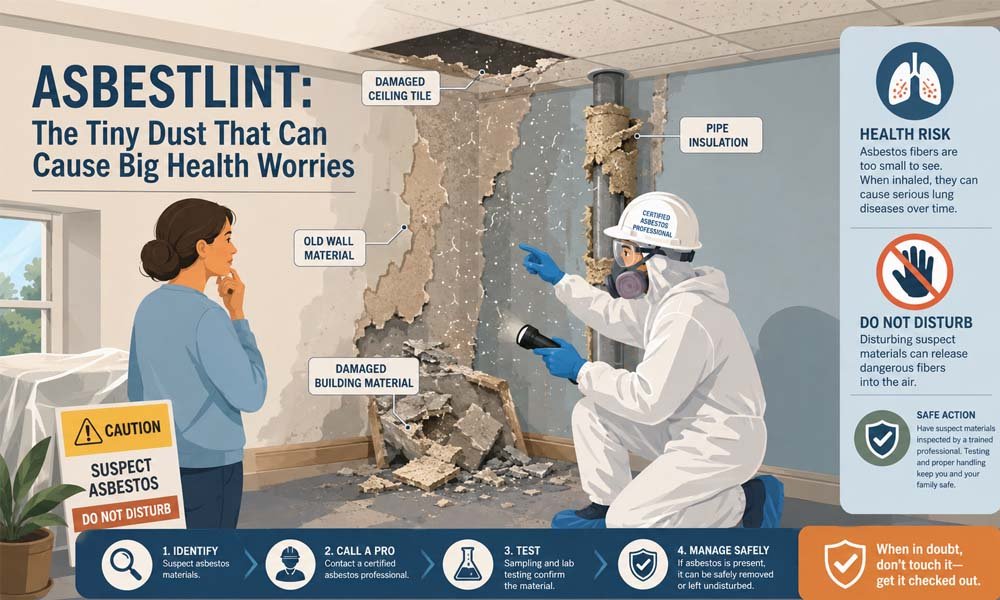
A small bit of dust may not look scary. You may see it near an old wall. You may see it near a pipe. You may think it is just normal dirt.
But some dust needs more care. This is true when dust comes from old building parts. Some old materials may contain asbestos. When they break, tiny fibers can get into the air.
This is where the word asbestlint comes in. It is not an official safety word. It is an informal word people use online for fine dust that may contain asbestos fibers.
In this article, we will talk about asbestlint in very easy words. We will learn what it means, why it matters, where it may come from, and how it can get into the air.
What Is Asbestlint
Asbestlint means fine dust or soft lint-like debris that may be linked to asbestos. It may look like normal dust. But if asbestos fibers are inside it, it can be unsafe.
Experts do not usually use the word asbestlint. They use words like asbestos dust, airborne asbestos fibers, or asbestos-containing material. These words are more proper in safety reports.
The important thing is simple. The name is not the biggest issue. The real issue is whether the dust has asbestos fibers. If those fibers float in the air, people may breathe them in.
Asbestos was used in many older building materials because it was strong and could handle heat. The EPA says asbestos was used in building materials for insulation and fire safety because of its fiber strength and heat resistance.
So, when someone says asbestlint, they may be talking about dust from an old material that could contain asbestos. This does not mean every bit of dust is dangerous. But it does mean people should be careful.
Why Asbestlint Can Be Risky
Asbestlint can be risky because it may carry very tiny asbestos fibers. These fibers can be much smaller than normal dust. You may not see them in the air.
The UK Health and Safety Executive says asbestos fibers can be released when materials that contain asbestos are damaged or disturbed. This can happen during repair work or when old materials break down.
Think about an old ceiling tile. It may look safe for years. But if someone cuts it, drills it, or breaks it, dust may come out. That dust may carry fibers.
The hard part is that people may not know they are breathing them in. There may be no smell. There may be no clear sign. The room may look clean, but the air may still have fibers.
This is why asbestlint should not be treated like normal house dust when it is near old or damaged building parts. It is better to stop and ask for expert help.
Where Asbestlint May Come From
Asbestlint may come from older building materials. It is more likely in older homes, schools, factories, offices, and work sites. The risk depends on the age of the building and the materials used.
It may come from old pipe insulation. It may come from boiler covers. It may come from old floor tiles, tile glue, ceiling boards, wall panels, roof sheets, or air ducts.
The HSE says asbestos-containing materials may still be present in buildings. It also says some materials can release fibers when disturbed or damaged.
A homeowner may see strange dust during a small repair. A worker may see dust while opening a wall. A family may notice old insulation in an attic or basement.
But here is the key point. You cannot know by looking. Dust near an old pipe does not always mean asbestos. Dust near a wall does not always mean danger.
Still, if the dust comes from a damaged old material, it is smart to be careful. Do not touch it. Do not brush it away. Do not start cleaning it like normal dust.
How Asbestlint Gets Into the Air
Asbestos can stay trapped inside a material when that material is in good shape. In that case, the risk can be much lower. The EPA says asbestos material in good condition and not disturbed usually will not release fibers.
The problem starts when the material is damaged. It may crack. It may tear. It may get wet. It may break during repair work.
Simple work can cause trouble if the material contains asbestos. Drilling, cutting, sanding, scraping, or pulling old materials apart can send tiny fibers into the air.
For example, imagine someone removing old floor tiles. The tiles may break. The glue under them may crumble. Dust may rise. If asbestos is present, that dust can become unsafe.
Airflow can also move dust. A fan, heater, or air duct may carry tiny fibers from one area to another. This is why one small damaged spot can become a larger concern.
This does not mean people should panic. It means they should pause before doing work on unknown old materials. Testing and expert advice can stop a small problem from becoming bigger.
Asbestlint in Old Homes and Buildings
Old homes and buildings need extra care. Many older buildings were built before today’s asbestos safety rules were strong. Some of those buildings may still have asbestos materials inside them.
Asbestlint may be linked to hidden places. It may be inside walls. It may be above ceilings. It may be near pipes. It may be in attics, basements, or service rooms.
Schools, hospitals, factories, and older offices may also have asbestos materials. These places may look clean and safe. But some old parts may still need proper checks.
The EPA says people are generally exposed when asbestos-containing material is handled or damaged in a way that releases fibers into the air. This is why repair work can be a key risk.
A family may live in an old home for years with no issue. But then they start a renovation. They remove old tiles or open a ceiling. That is when hidden materials may be disturbed.
So the best rule is simple. If a building is old, check before you break, cut, drill, or remove unknown materials. It is much safer to test first than to worry later.
Health Worries Linked to Asbestlint
The main worry with asbestlint is breathing in asbestos fibers. These fibers may go deep into the lungs. Once they are inside, the body may not remove them easily.
Health problems from asbestos often take a long time to show. A person may feel fine for many years. Later, serious illness may appear.
The World Health Organization says all types of asbestos can cause lung cancer, mesothelioma, cancer of the larynx and ovary, and asbestosis.
Asbestosis is a lung disease. It can make breathing harder. Mesothelioma is a rare cancer linked strongly to asbestos. Lung cancer risk can also rise after asbestos exposure.
This is why asbestlint is often called a silent concern. It may not hurt right away. It may not cause pain today. But the risk can grow over time.
That does not mean every old building is unsafe. It also does not mean every dust patch is asbestos. The real danger comes when asbestos fibers are released and breathed in.
This is the right place to pause. In the second half, we will look at how to spot warning signs, what to do if you suspect asbestlint, and how experts handle it safely.
Can You See Asbestlint
Many people ask if they can see asbestlint with their eyes. The simple answer is no. You may see dust. But you cannot know if that dust has asbestos fibers inside it.
Some dust may look grey. Some may look soft. Some may look like lint from clothes. But looks do not prove anything. Safe dust and risky dust can look the same.
This is why guessing is not safe. Do not touch old dust to “check” it. Do not rub it between your fingers. If it came from old damaged material, treat it with care.
Signs You Should Be Careful
There are some signs that should make you stop and think. Dust near old pipes can be one sign. Dust near broken tiles can also be one sign. Old ceiling boards can also be a warning.
You should also be careful around damaged insulation. This can be found in attics. It can be found in basements. It can be found around boilers and heating pipes.
These signs do not prove asbestlint is there. But they do mean you should not disturb the area. The safe step is to keep away and call someone trained.
What To Do If You Find Asbestlint
If you think you found asbestlint, stay calm. Do not panic. But do not touch it either. The safest first step is to leave the dust alone.
Do not sweep it. Do not use a normal vacuum. Do not blow air on it. These actions can spread tiny fibers into the air if asbestos is present.
Keep children and pets away from the area. Close the room if you can do it safely. Then call an asbestos expert. They can test the dust and tell you what to do next.
Asbestlint During Renovation Work
Renovation is one of the biggest times when asbestlint can become a problem. Many people start home work without checking old materials first. That can be risky in old homes.
For example, someone may remove old floor tiles. Another person may drill into a wall. Someone else may pull down an old ceiling panel. These jobs can release dust from hidden materials.
This is why checking before work is smart. In 2026, many people still fix old homes. But safety should come first. Test unknown old parts before cutting, sanding, or breaking them.
How Experts Check Asbestlint Safely
Experts do not guess by looking. They use proper tests. They may take a small sample from the material. They may also test the air in the room.
The sample is sent to a lab. The lab checks if asbestos fibers are present. This is much safer than trying to decide by color, smell, or touch.
A trained expert also knows how to take the sample safely. This matters because wrong handling can spread dust. Professional testing gives a clear answer without adding more risk.
Safe Ways to Handle Asbestlint
If asbestos is found, experts choose the safest plan. Sometimes the material is sealed. This is called encapsulation. It helps stop fibers from getting into the air.
Other times the material must be removed. Removal is more serious. The area may need to be sealed. Workers may wear special suits and masks. They may use special vacuums and wet cleaning.
Removal is not always needed. If the material is in good shape, experts may say it can stay in place. The right choice depends on damage, location, and future repair plans.
How to Prevent Asbestlint Problems
The best way to prevent asbestlint problems is simple. Do not break unknown old materials. This rule is very important in old homes and old work sites.
Before you start a big repair, ask about asbestos testing. This is helpful before removing old tiles, ceilings, pipe covers, roof sheets, or wall boards.
Also keep old materials in good shape. Watch for cracks, water damage, or loose pieces. If something looks damaged, do not fix it by guessing. Get safe advice first.
Conclusion
Asbestlint is an informal word. But the safety issue behind it is real. It means dust or lint-like debris that may contain asbestos fibers.
The biggest danger comes when tiny fibers get into the air. You may not see them. You may not smell them. But you may breathe them in without knowing.
So the rule is simple. If strange dust is near old damaged building material, do not touch it. Do not clean it like normal dust. Stay safe and call a trained asbestos expect.
You may also read: Aguaris Review: A Modern Water System for Better Daily Life Select 90 more words to run Humanizer.