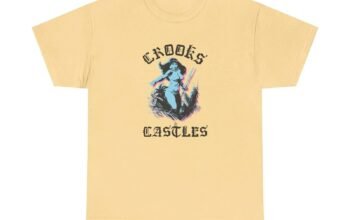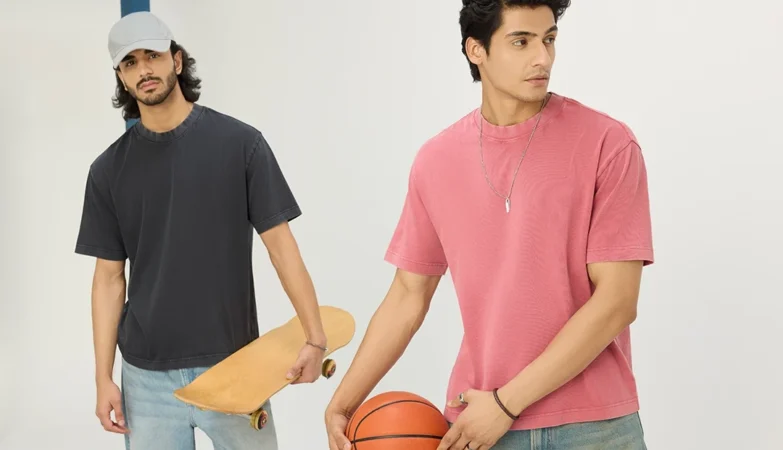
When developing acid wash t-shirts, choose the base fabric, color, wash intensity, and print sequence together. Approve a physical washed sample and agree on acceptable variation before bulk production. UNIT-100’s November 2026 estimates are 14–18 days or longer for a washed sample and about 20–30 days for acid-wash bulk production, with shipping separate.
But a washed finish is a design decision as much as a production one. Wash intensity, base color, fit, and graphics all interact, and the combination decides whether a shirt looks deliberately aged or simply damaged. This guide approaches the product from the design side, then covers what to settle with an acid wash t-shirt manufacturer before bulk production.
Quick Answer: What Is an Acid Wash T-Shirt?
An acid wash T-shirt has a deliberately uneven, faded or mottled appearance created through a finishing treatment. Results can vary between garments and batches. The term alone does not specify a single recipe or acceptance standard: agree on the fabric, treatment, reference sample, acceptable variation, and measurements with the manufacturer.
Why the Look Works for Brands
Washed finishes carry a story that plain garments don’t. They suggest history, comfort, and character, which is why they work across several lines:
Streetwear and graphic tees. The weathered surface gives prints a lived-in backdrop and supports retro or grunge-inspired themes.
Merchandise. Music, events, and entertainment brands use faded looks to evoke an authentic vintage feel without sourcing real vintage stock.
Premium basics. A subtle wash adds depth to a plain tee, differentiating it from flat-dyed competitors.
Seasonal drops. Washed colorways can refresh a core style without changing the pattern.
The same variation that makes the look appealing is also what requires careful planning. Customers expect character, not chaos.
Design Decision 1: Choose the Base Color
The starting color influences the contrast of the washed result. Black, charcoal, or navy can be useful starting points for a faded dark tee, but the actual result must be checked on the selected fabric. Do not approve a wash color from a screen image alone.
If you are considering olive, burgundy, brown, or a lighter base, sample each proposed color separately. Ask the factory which existing fabric colors are available and how they respond to the planned treatment. A similar-looking base fabric may not produce the same washed shade.
Test your colorways individually. The same treatment can look quite different from one base color to the next, and a palette that works on paper may need adjustment on fabric.
Design Decision 2: Pick the Wash Intensity
Intensity ranges from a light, gentle fade to a heavy, high-contrast marbling. A light wash feels contemporary and wearable, appealing to customers who want character without a strong statement. A heavy wash feels bolder and more retro, and it makes a clear style claim.
Offering both can widen your audience, but plan production carefully. Each intensity level is its own sample, with its own approval and reorder reference. Photograph approved pieces under consistent lighting so you can describe the standard to the factory later.
Design Decision 3: Match Fit to Finish
Washed fabric and relaxed silhouettes complement one another. Boxy and oversized cuts give the faded surface more area to show and echo the vintage references the finish borrows from. Slim fits can work, but the effect tends to feel more fashion-forward than nostalgic.
Fabric choice matters as much as weight. UNIT-100 recommends pure cotton for acid-wash and snow-wash effects and notes that the polyester portion of cotton-polyester blends can turn whitish after treatment. Confirm composition and the intended finish together. For GSM, compare the actual washed garment rather than treating a heavier fabric as proof of a better result.
Design Decision 4: Plan the Graphics
Plan the print-and-wash sequence before sampling. UNIT-100’s workshop guidance is to print large artwork before washing; small prints may be applied after the wash. The order can change the artwork’s appearance, so confirm the proposed sequence for the actual design and fabric.
Bold, high-contrast designs usually read well against a mottled background. Fine detail can get lost in busy marbling, so test artwork placement on a sample. Distressed or vintage-style graphics tend to suit the finish naturally.
Ask your supplier which sequence they recommend for your artwork and what results to expect, then approve it on a physical piece.
Managing Variation: The Part Brands Underestimate
Variation is part of a washed effect, but it needs an agreed limit. UNIT-100 cautions that acid-wash and snow-wash bulk results cannot be guaranteed identical to the sample because treatment and fabric batches vary. Discuss what is acceptable before production; a general description such as “vintage” is not a complete approval.
The practical approach is to define an acceptable range instead of a single target. Approve a few reference samples that represent the lightest and darkest acceptable results, and use them to judge bulk production. Share those references with the factory and keep your own copies.
Product descriptions should explain that wash placement and shade may vary within the approved range. This helps set expectations, but it does not replace inspection or guarantee that returns will be avoided.
Factory Example: Matching an Acid-Wash Reference
In an acid-wash hoodie order described by UNIT-100, a customer wanted the bulk finish to match the sample closely. The factory worked with the fabric supplier on the closest base fabric at both sampling and bulk stages to reach the customer’s desired effect. This was a hoodie case, not a T-shirt test; it illustrates why the starting fabric also needs attention when developing a washed product.
Buying Guide: What to Confirm With Your Manufacturer
| Factor | What to Confirm |
| Wash process and production setup | Who performs the wash, who follows up, and examples of comparable work |
| Base fabric | Fiber composition and suitability for the chosen treatment |
| Acceptable variation | Physical references for shade, contrast, and wash distribution |
| Fabric condition | Inspection of the neckline, seams, hem, and other areas affected by treatment |
| Print sequence | Which artwork goes on before washing and which may go on afterward |
| Shrinkage and sizing | Finished measurements, home-laundering checks, and agreed tolerances |
| Colorways | A sample of each selected base fabric and wash combination |
| MOQ and timing | Quantity per style and color, washed sampling, bulk processing, and shipping separately |
Request photos or physical examples of previous acid wash work, not only a single polished sample.UNIT-100 reports inspecting washed pieces individually. It pays particular attention to the neckline, seams, and hem, where treatment can damage fibers around layered fabric. Repairable pieces are repaired; pieces that cannot be repaired are treated as rejects. Agree how damage and acceptable distressing will be distinguished for your order.
Common Mistakes to Avoid
Expecting identical pieces. The process creates natural variation, so plan for it.
Skipping physical samples. Fade patterns can’t be judged accurately from photos or descriptions.
Ignoring fabric choice. Check the fiber composition and washed sample. A blend may react differently from pure cotton, even when the two fabrics have similar GSM.
Forgetting about measurements. Washing can change dimensions, so check sizes after treatment.
Applying graphics without testing. Artwork can look different on a mottled surface than on a flat mockup.
Not documenting the approved look. Without reference samples, matching a reorder becomes guesswork.
Rushing the timeline. Treated garments may need extra processing time, so build in a buffer.
Expert Tips
Photograph approved samples front and back, in daylight, next to a color reference. Those images become your quality benchmark.
Start with a sample of a new colorway before committing to bulk. If you need a pilot batch, confirm its quantity and price with the factory; do not assume that a trial removes the normal MOQ. UNIT-100’s full custom minimum starts at 100 pieces per style, per color.
Agree on care instructions for the selected fabric, wash finish, and decoration. Test the sample using that wash and drying method and compare it with the approved condition before finalizing the label.
Ask whether the supplier can provide a mix of intensities within an order if you want a range, and how that affects the minimum.
Review a washed and re-washed sample. If the finish changes dramatically after laundering, you’ll want to know before customers find out.
UNIT-100: Acid Wash Production, MOQ and Lead Times
UNIT-100 is the brand of Guangzhou Vision Clothing Co., Ltd., a family business founded in 2001. It owns a sewing factory and a print shop in Zhongshan, China. Acid washing and other garment-wash treatments are handled by partner factories, as are embroidery and garment dyeing. Some sewing is also assigned to partners when its own lines are full. Kenneth, the second-generation owner, had eight years of experience in the business as of November 2026.
Full custom acid-wash T-shirts start at 100 pieces per style, per color, with sizes mixed within that quantity. Confirm the exact minimum for the chosen fabric in the quote. UNIT-100 also offers stock blanks with decoration from 50 pieces per style, but that general stock service does not establish that the requested acid-wash finish is available from stock.
For this product, use the washed-garment schedule rather than the plain-sample schedule. UNIT-100’s estimates as of November 2026 are:
| Stage | Planning estimate |
| Washed sample | 14–18 days or longer |
| Acid-wash bulk production | About 20–30 days, scheduled after sample approval |
| Custom neck and care labels, if required | About 8–10 additional days of preparation; 500 of each minimum |
| Shipping | Quoted separately for the destination and method |
Confirm fabric and trim readiness, the approved wash reference, the print sequence, and the final schedule before placing the bulk order. Ask which preparation tasks can overlap rather than simply adding every estimate into a promised arrival date.
FAQs
What gives acid wash t-shirts their look?
A finishing treatment creates an uneven, faded or mottled appearance. The result depends on the selected fabric, starting color, and treatment, so approve a physical reference and an acceptable range of variation before bulk production.
Which colors work best for acid wash?
Start with the contrast you want, then test the chosen base colors on actual fabric. Dark colors can be considered for a faded dark look, but the washed result is not guaranteed by the color name. Approve each colorway separately.
Will every shirt look the same?
No. Variation is part of the style. Agree a range of acceptable results with your manufacturer using reference samples.
Can acid wash shirts be printed or embroidered?
UNIT-100 can arrange printing and embroidery for washed garments, but the design and sequence need approval on a sample. Its guidance is to print large artwork before washing; small prints may go on after the wash. Embroidery is handled by partners, and its sequence should be confirmed for the design.
Do acid wash t-shirts shrink?
Treatment and later laundering can change measurements. Approve the finished garment measurements and agree on a home-wash and drying check with the factory. Do not assume that a factory-washed garment has zero remaining shrinkage.
What is the MOQ for acid wash t-shirts?
UNIT-100’s full custom starting point is 100 pieces per style, per color, with sizes mixed. Confirm the selected fabric and wash in the quote. Its general 50-piece stock-blank service is a separate option and does not confirm availability of a particular acid-wash style.
How long does production take?
UNIT-100’s November 2026 estimate for a washed sample is 14–18 days or longer. Acid-wash bulk production takes about 20–30 days after sample approval, with materials and trims confirmed. Revisions and shipping need separate allowances; these are estimates, not guaranteed arrival dates.
Conclusion
To develop acid wash t-shirts, approve the base fabric, colorway, wash effect, finished measurements, and print sequence together. Send an acid wash t-shirt manufacturer your reference images or garment, artwork, sizes, and quantities by style and color. Agree on the acceptable variation and inspection criteria, then confirm the schedule for the actual washed product.