Three injuries in one moment
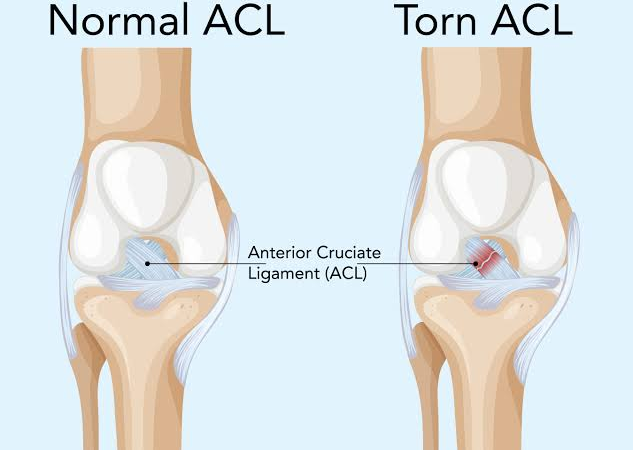
A footballer plants their foot to turn, an opponent crashes into the outside of the knee, and the knee buckles inwards. In that single moment, three important structures can be damaged at once: the anterior cruciate ligament (ACL) in the centre of the knee, the medial collateral ligament (MCL) on the inner side, and a meniscus, one of the two cartilage cushions inside the joint.
This combination is known as the “unhappy triad”, a name first used in the 1950s. It’s one of the more serious knee injuries in sport, but with the right sequence of treatment, most people regain a stable, functional knee.
The unhappy triad describes a combined injury to the ACL, MCL and a meniscus, usually caused by a blow to the outside of the knee or a twisting movement that forces the knee inwards. Treatment is typically staged: the MCL often heals with bracing and rehabilitation, the ACL usually needs reconstruction if you want to return to pivoting sports, and the meniscus is repaired or trimmed depending on the tear. Recovery takes many months, but the outlook is generally good.
How the injury happens
The classic mechanism is a force to the outer side of the knee while the foot is planted, as in a tackle in football or rugby, or a fall in martial arts. The knee is pushed inwards (into valgus) and often twisted at the same time.
- The MCL, on the inner side, is stretched as the knee bends inwards and tears partly or completely.
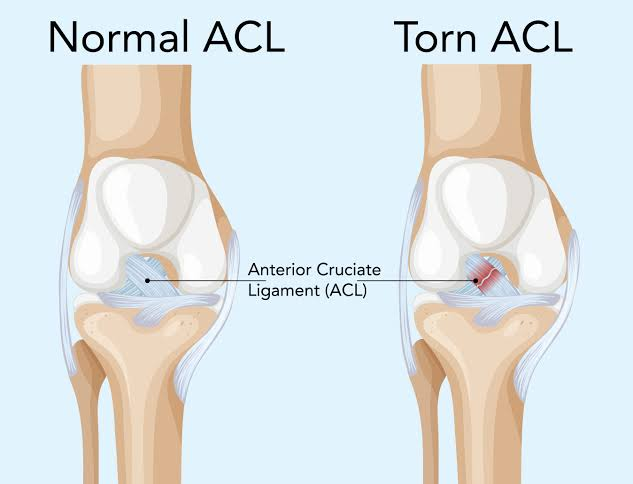
- The ACL, which controls forward movement and rotation of the shin bone, tears as the knee twists and shifts.
- A meniscus is squeezed and twisted between the bones and tears.
Many people describe hearing or feeling a pop, followed by pain on the inner side of the knee, rapid swelling and a sense that the knee is unstable or won’t take weight.
The “triad” revisited
The original description linked the injury to the medial (inner) meniscus, because the MCL and the inner meniscus are attached to each other. Later research, using arthroscopy and MRI, found that in acute injuries the lateral (outer) meniscus is often torn instead, or as well. Bone bruising, cartilage damage and injuries to other ligaments can also be part of the picture.
That’s why the term is now used more loosely to describe a combined ACL and MCL injury with meniscus damage, and why a careful examination and MRI scan are essential. The exact pattern of damage decides the treatment plan.
Three structures, three healing stories
The key to understanding treatment is that each structure heals differently.
| Structure | Can it heal on its own? | Usual approach |
| MCL | Often yes, because it has a good blood supply | Bracing and rehabilitation for most tears. Surgery is considered for severe tears, injuries at certain sites or when the knee remains loose on the inner side |
| ACL | Rarely, once fully torn | Reconstruction with a tendon graft for people who want to return to cutting and pivoting sports, or whose knee keeps giving way |
| Meniscus | Depends on where the tear is. Outer-edge tears have better blood supply and healing potential than inner tears | Repair where possible to preserve the meniscus. Trimming of unrepairable torn tissue |
The usual order of treatment
Because the MCL often heals well without surgery, treatment for an unhappy triad is commonly done in stages rather than all at once. A typical path looks like this:
- Calm the knee. In the first days and weeks, the focus is on controlling pain and swelling, protecting the knee in a hinged brace, and using crutches if needed.
- Let the MCL heal and restore movement. Over several weeks, guided physiotherapy restores the knee’s ability to straighten and bend, and reactivates the thigh muscles. Operating on a stiff, swollen knee raises the risk of long-term stiffness.
- Reassess. Once the MCL has stabilised and the knee moves well, the surgeon checks the ligaments again and reviews the MRI to plan surgery.
- Reconstruct the ACL and treat the meniscus. ACL reconstruction is usually done in the same operation as meniscus repair or trimming. If the MCL hasn’t healed adequately, it may be repaired or reconstructed at the same time.
- Rehabilitate in phases. Rehab then follows the familiar ACL pathway: protecting the graft and any meniscus repair, rebuilding strength, then retraining running, cutting and jumping.
There are exceptions. A meniscus tear that locks the knee, or a displaced tear that’s at risk of getting worse, may need earlier surgery. Your surgeon will tailor the timing to your injury.
Recovery: what to expect
Recovery from an unhappy triad takes longer than from an isolated ACL tear, because more structures need to heal and the knee has more to recover from. Most people need several months before returning to running and around nine months to a year or more before returning to cutting and pivoting sports, guided by strength and movement testing rather than the calendar alone. A meniscus repair may mean extra restrictions on deep bending and weight-bearing in the early weeks.
Two things have a big influence on the long-term outcome:
- Preserving the meniscus. Keeping as much meniscus as possible helps protect the joint surfaces from wear over the following decades.
- Restoring stability. A knee that continues to give way can damage the meniscus and cartilage further, so a stable knee is the foundation of long-term joint health.
Signs you may have injured more than one structure
After a knee injury, these signs suggest a combined injury and the need for prompt assessment:
- A pop at the moment of injury, followed by rapid swelling within hours
- Pain and tenderness along the inner side of the knee
- A feeling that the knee is loose or shifts when you try to turn or stand on it
- Locking, catching or being unable to fully straighten the knee
- Difficulty putting weight on the leg
Is surgery always needed?
Not everyone with this injury pattern ends up having an operation. Some people, particularly those who don’t play cutting or pivoting sports, choose a structured rehabilitation programme first. If the MCL heals well, the meniscus tear is small or stable, and the knee feels steady during everyday activities, they may manage well without ACL reconstruction.
The trade-off is the risk of the knee giving way later. Each episode of instability can damage the meniscus and cartilage further, so people who take the non-surgical route need regular review and should return to their surgeon if the knee starts to feel unreliable. Your age, activity level, job and the exact pattern of damage on your MRI all feed into this decision, which is best made together with your surgeon after the initial swelling has settled.
A complex injury with a clear path forward
The unhappy triad sounds daunting, and it is a significant injury. But the treatment path is well established: let the healable parts heal, rebuild what can’t heal on its own, protect the meniscus wherever possible and rehabilitate patiently. With that approach, most people regain a stable knee and return to an active life, and many return to the sports they love.
This article is for general information and does not replace a medical assessment.