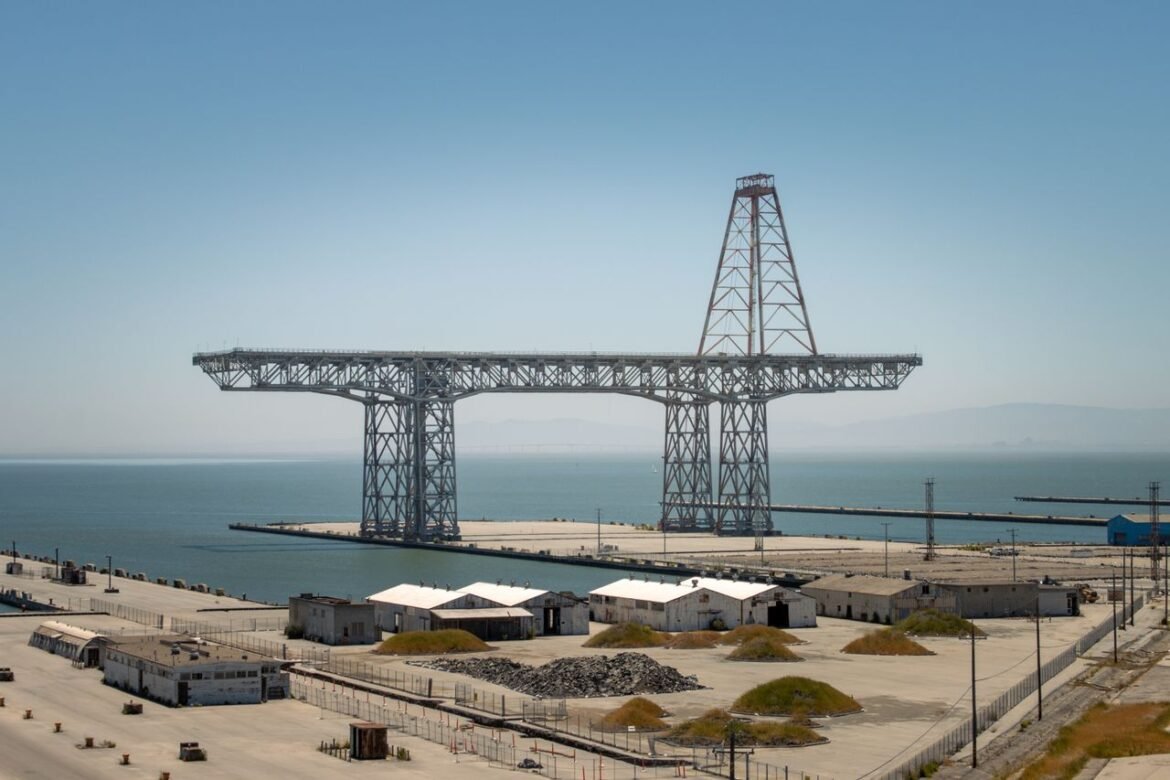
Concord is building a city inside itself. Developer Brookfield Residential and planning firm HOK have planned the redevelopment of the 2,275-acre decommissioned Naval Weapons Station in Concord. It is the largest redevelopment undertaking in the East Bay.
The plan promises over 12,200 homes, 886 acres of parks and recreational space, and 120 acres set aside for a campus district.
Concord has spent nearly two decades developing this project. A recent financial agreement with the Navy has finally moved it from planning into action. For a region facing a persistent housing shortage, a project of this scale matters. It could reshape where East Bay residents live, work, and shop in the years ahead.
That scale becomes clearer when you look at the numbers behind the redevelopment plan.
One of California’s Largest Redevelopments Moves Forward
The redevelopment covers 2,275 acres, the site of the former Concord Naval Weapons Station near the North Concord/Martinez BART station. HOK, working with Brookfield Residential, built the master plan around transit access and open space instead of a traditional suburban layout.
City officials say the project could bring more than 12,200 housing units to Concord. The timing is significant, as Houzeo’s Concord housing market data shows just 0.8 months of housing supply.
Out of these 12,200 units, 25% are designated as affordable housing to further support the local population. This project could also generate nearly 17,000 jobs across various sectors.
The plan calls for a mixed-use core with retail and office space, along with a citywide park anchored by tournament sports facilities. An early Campus District is meant to attract a satellite university campus or a major research facility. This would bring daytime activity and jobs before most of the housing is finished, according to the Diablo Gazette.
These figures point to a shift in scale. Concord isn’t adding a subdivision. It’s adding a district that can function independently. The latest deal took two years of planning and negotiation, but the redevelopment plan has been in the making for decades.
Why Concord Is Redeveloping the Former Naval Base
The Navy closed the Concord Naval Weapons Station in 2005, leaving thousands of acres largely unused, per an ABC7 News report. Concord approved an initial reuse plan between 2006 and 2010, then finalized an area plan by 2012. Planning and zoning work resumed in 2024 and is expected to continue through 2027.
Guy Bjerke, Concord’s economic development director, said the city had never before reached an agreement with the Navy over payment terms. That changed when the city signed a deal on May 18, 2026. Under that agreement, Brookfield will pay the Navy $628 million over 30 years for the 2,275-acre property.
According to Mayor Laura Nakamura, the agreement is a win two decades in the making, one that will change the landscape of Concord and the surrounding region.
Council Member Pablo Benavente went a step further. He said the vote could rank among the most significant the Concord City Council has made in more than 30 years. That agreement is now setting the pace for everything that follows.
The Market Is Already Preparing for the Transformation
Brookfield and the City of Concord have already signed a Project Labor Agreement with the Contra Costa County Building and Construction Trades Council. The agreement commits the build-out to local union labor and apprenticeship programs, keeping construction spending in the local economy.
Infrastructure comes before housing. According to the Concord BP Project, Brookfield has budgeted $1.67 billion for infrastructure and environmental remediation across the site.
Separately, $336 million is earmarked for habitat mitigation and restoring Mt. Diablo Creek. Meanwhile, more than $495 million will fund a citywide park, library, community center, schools, fire stations, and affordable housing subsidies.
The first construction phase follows a transit-first strategy. Rather than building outward from the edges, the way most suburban developments do, Brookfield plans to start at the North Concord/Martinez BART station and expand from there.
This allows the project to focus early on housing, retail, and the Campus District. Through this model, each phase generates its own activity before the next one begins, helping to manage redevelopment costs.
The effects of these changes are already visible on Concord’s real estate market.
If you take a look at Concord listings on Houzeo right now, the median price sits at $824,000 as of June 2026. This is up 8.74% from last year.
Those early investments are laying the groundwork for more than a construction project. They are setting up a long-term shift in how Concord functions as both an employment center and a housing market.
What It Means for Concord’s Housing Market
Concord has functioned as a bedroom community for San Francisco and Oakland for roughly 40 years. Most residents commuted out of Concord for work, even as local employment grew slowly over the same period.
BevMo is headquartered in the city, and the Sunvalley Shopping Center was once ranked among the 50 largest malls in the country. Concord is also home to one of the last five Sears stores in the United States and the last Fuddruckers in California.
The redevelopment could change that pattern and introduce modern, mixed-use developments. Brookfield plans to add housing in stages, starting with a first wave of homes near the BART station and expanding outward in the years that follow.
Denver’s Stapleton redevelopment offers a useful comparison. Built on a former 4,700-acre airport site, Stapleton added more than 12,000 homes. It also added millions of square feet of retail and office space, plus hundreds of acres of parks. Like Concord’s plan, it functioned less like a subdivision and more like a self-contained city built inside an existing metro area.
However, a new city cannot be built overnight. City leaders say several more years of planning are needed before construction begins in 2030.
While long-term infrastructure takes shape, homeowners and investors aren’t waiting for 2030 to make moves. Sellers looking to capitalize on current buyer demand in Contra Costa County are increasingly utilizing flat-fee MLS platforms like Houzeo to list their homes directly, saving on commission while taking advantage of Concord’s rising median prices.
The Biggest Change Won’t Arrive Overnight
The San Francisco Chronicle reports the first phase includes 1,696 market-rate units and 562 affordable homes. This brings the first phase to roughly 2,258 units.
The full build-out unfolds across five phases, moving from the transit-connected flatlands near BART toward the site’s more complex, higher-elevation terrain later on.
Council members have acknowledged the plan isn’t finished. Responding to questions from Vice Mayor Dominic Aliano, Bjerke warned that rejecting the Navy agreement would have sent the project back to the starting point, with no deal at all.
Environmental hurdles remain part of the timeline. Endangered species protections, remediation work, and contamination cleanup must receive clearance before major construction can proceed.
Brookfield’s phased, transit-first approach is meant to avoid the stalled, half-built look that has slowed other large redevelopments. For example, the Candlestick Point and Hunters Point Shipyard Redevelopment Project in San Francisco was delayed by the sheer scale of the project.
Still, with years of groundbreaking ahead, the pace will test the patience of anyone expecting fast results.
A New Chapter for Concord
Concord’s naval base redevelopment won’t transform the city overnight. The groundbreaking is years away, and the complete build-out will take decades to reach the market.
But the direction is already set. A city long known as a commuter suburb of San Francisco and Oakland is now planning its own transit hub and its own employment base. Stapleton in Denver shows what a similar project can become after sustained, phased investment. Concord’s version is still in its early stages. That is exactly why buyers and investors are watching now.
Waiting for the project to finish means missing the years when land, housing, and infrastructure decisions are still being made.