Hearing that breast cancer has happened in your family can bring many questions. You may wonder if your own risk is higher. You may also wonder if you should get checked sooner. These feelings can make a simple family story feel much bigger.
This is where FRABOC once helped in Australia. It gave health workers a clear way to look at family cancer history. It did not tell someone that they had cancer. Instead it helped show whether their family history could point to higher risk.
Today FRABOC is no longer available. Newer tools such as iPrevent are now used to support breast cancer risk talks. In this guide we will explain what FRABOC was and how it worked. We will also look at family history and BRCA genes.
What Is FRABOC?
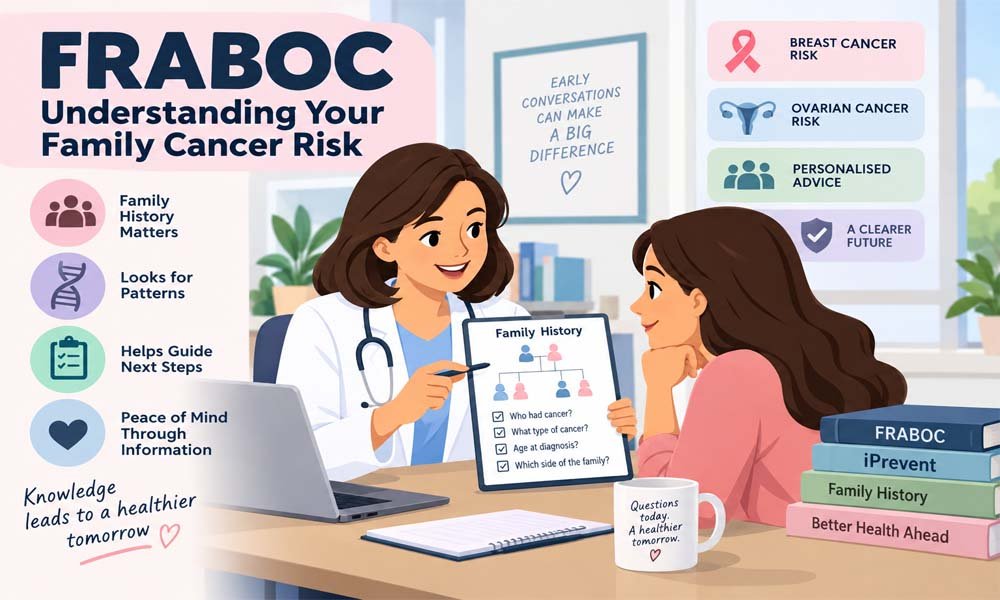
FRABOC stands for Familial Risk Assessment – Breast and Ovarian Cancer. It was an online tool in Australia. It was made for health workers such as GPs and nurses who needed to assess cancer risk based on a person’s family history.
Think of FRABOC as a guide rather than a medical test. A doctor could ask about cancer in your family. The answers could then help the doctor understand whether your family history showed signs that needed more attention.
That difference is important. FRABOC could not tell someone whether they had breast or ovarian cancer. It was a risk assessment tool. Its job was to help make family history easier for health workers and patients to understand.
How Did FRABOC Work?
FRABOC focused strongly on family history. A health worker needed to know which relatives had cancer. The type of cancer was important too. The age when each relative was diagnosed could also change how the family pattern was understood.
Imagine that one woman had an older aunt who developed breast cancer. Another woman had several close relatives who developed breast or ovarian cancer at younger ages. Those two family stories could point to very different levels of concern.
This is why FRABOC did more than ask one simple question. It helped health workers look for a pattern. Current Cancer Australia advice also says that the number of relatives affected and younger ages at diagnosis can make family history more important.
FRABOC and Family Cancer History
Cancer appearing in a family does not always mean there is an inherited gene change. Cancer Australia says most women who develop breast cancer do not have a family history of the disease. Cancer can appear in families for several different reasons.
This is why the FRABOC approach looked at the wider story. Several relatives with cancer may be more important than one case alone. The ages of those relatives matter as well. Breast and ovarian cancer appearing together can also be useful information.
Family history can still be important today. Cancer Australia says around 5% of breast cancers can be explained by an inherited gene fault. A strong family history may lead a doctor to suggest a more detailed assessment at a family cancer clinic.
Why Both Sides of Your Family Matter
People sometimes think only their mother’s family matters when talking about breast cancer risk. That is not true. Your father’s family history can matter too. Cancer Australia says family history on either parent’s side can affect breast cancer risk.
For example a grandmother or aunt on your father’s side may have had breast or ovarian cancer. That information should not be left out simply because it comes through your father. A doctor needs the clearest family picture possible.
This is a useful lesson from FRABOC that still matters in 2026. When collecting family history look at both sides. Include parents and grandparents. Also think about siblings and other close blood relatives where their health history is known.
You may also read: Byron Thomas Williams Vehicle Licensing Penalties: The Full Story Behind the UK Transport Case
FRABOC and BRCA Gene Changes
BRCA1 and BRCA2 are genes found in everyone. Certain harmful changes in these genes can raise the chance of developing some cancers. These gene changes can be passed down through either the mother or the father.
A BRCA gene change does not mean cancer will certainly happen. Cancer Australia clearly notes that inheriting a faulty BRCA1 or BRCA2 gene does not guarantee that a person will develop cancer. Other factors also affect cancer risk.
A known BRCA result in a family can therefore be useful information for a doctor. Yet genetic testing is not needed for every person with cancer in their family. A family cancer clinic can assess the history and explain whether testing may be useful.
The Three FRABOC Risk Categories
The older family risk approach used broad groups to help health workers understand how much a family history might matter. These groups helped turn a long family story into information that could guide the next medical conversation.
The broad levels were close to average risk then moderately increased risk and potentially high risk. A higher group did not mean that someone had cancer. It meant that their family history could need closer attention or a more detailed assessment.
Current tools still use risk groups but the methods are more detailed. For example iPrevent can place breast cancer risk into average moderate or high groups after looking at several risk factors. It also gives individual risk estimates.
This is a good point to stop the first half. We now know what FRABOC was and why family history mattered. In the second half we can follow what happened after an assessment and see why newer tools such as iPrevent are used today.
What Happened After a FRABOC Assessment?
A FRABOC result was not the end of the story. It helped a health worker decide what should happen next. For many people this simply meant talking about their family history and following normal health advice.
If the family pattern looked stronger a doctor could suggest a closer risk check. Some people could also be sent to a family cancer clinic. These clinics can give a more detailed risk check and explain whether genetic testing may be useful.
This is still important in 2026. Cancer Australia says people with a strong family history may be sent to a family cancer clinic. The clinic can give personal advice based on the person’s own family story.
Why FRABOC Is No Longer Available
FRABOC was useful because it gave doctors a simple way to study family cancer history. But our knowledge of breast cancer risk has grown. Doctors can now look at more than family history when they study someone’s risk.
The old Cancer Australia guidance shows that FRA-BOC was used to estimate breast and ovarian cancer risk from family history. Current Cancer Australia pages instead point people toward iPrevent when they want to assess breast cancer risk.
This change does not mean the ideas behind FRABOC became useless. Family history still matters. The difference is that newer tools can combine that history with more information and give a more personal picture of risk.
You may also read: Witelovers: The Complete Guide to This Popular Online Trend
FRABOC vs iPrevent
iPrevent is a breast cancer risk tool used today. Cancer Australia describes it as a tool that can support talks between women and doctors about breast cancer risk. It can also help with talks about prevention and screening.
This makes iPrevent broader than the old FRABOC approach. A modern risk check can look beyond the number of relatives who had cancer. Personal details and other known risk factors can also become part of the picture.
Still these tools should not be confused with a cancer diagnosis. A risk result is about the chance of cancer in the future. It does not tell a person that cancer is already present. A doctor can help explain what the result means.
Other Family Cancer Risk Tools
iPrevent is not the only tool used to study cancer risk. Another tool is CanRisk. It is made for health professionals and can estimate future breast and ovarian cancer risk using family history and other information.
CanRisk uses models called BOADICEA. It can include family cancer history and genetic test results. It can also use personal factors and breast density when suitable. This can help specialists study a more complex family story.
CanRisk is not meant to be a simple home test. Its current guide says it should be used by qualified health professionals. So if you find different cancer calculators online do not treat every number as a final answer.
How to Prepare for a Family Cancer Risk Check
You can make a doctor visit easier by collecting family information first. Write down which blood relatives had cancer. Try to find the type of cancer and the age when each person was diagnosed.
Do this for both sides of your family. Your father’s side matters just like your mother’s side. Cancer Australia says breast cancer family history can come from relatives on either parent’s side.
If someone in your family has already had genetic testing tell the doctor. Bring a copy of the result if your family has it. You can also draw a small family tree. Even simple notes can make the conversation much clearer.
FRABOC and the Worry Around Cancer Risk
Learning about cancer in your family can feel scary. You may start wondering what every family diagnosis means for you. But having cancer in your family does not mean that you will develop the same disease.
Cancer Australia says less than 5% of breast cancer cases are caused by an inherited gene fault. Family history can still raise risk. Yet it is only one part of a much larger health picture.
Clear information can make the subject easier to handle. Instead of guessing you can collect the facts and speak with a health professional. That was one useful idea behind FRABOC and it remains useful today.
What to Do If Cancer Runs in Your Family
Start by learning what actually happened in your family. Ask trusted family members about cancer diagnoses when it feels right. Write down the cancer type and age at diagnosis if those details are known.
Next speak with a GP or another qualified health professional. A doctor can look at the whole picture. If the family history appears strong they may suggest a more detailed assessment or referral to a family cancer clinic.
Also remember that risk is personal. Your friend’s family story is not your family story. An old FRABOC category or an online number should not replace current medical advice made for your own situation.
Final Thoughts on FRABOC
FRABOC gave Australian health workers a structured way to look at breast and ovarian cancer in families. It helped turn names ages and cancer diagnoses into a clearer picture of possible family risk.
Today the tools have changed. Cancer Australia now points to iPrevent for breast cancer risk assessment. Specialists may also use tools such as CanRisk when they need a detailed look at family history and other risk factors.
The main lesson from FRABOC is still simple. Family history is useful information but it is not a diagnosis. Gather what you know. Include both sides of your family. Then discuss your questions with a qualified health professional who can explain what they mean for you.
You may also read: Trideltathon: Everything You Need to Know About the Historic Race