
If you’ve been waking up with a scratchy throat, noticing static shocks every time you touch a doorknob, or watching your hardwood floors develop tiny cracks, you’re not imagining things. Your house is genuinely drier in winter, and it’s not just because the air outside feels crisp. Indoor humidity can plummet to levels drier than the Sahara Desert once your heating system kicks in.
The good news? This is a solvable problem. Understanding why it happens, what it does to your body and home, and how to monitor it properly puts you in control. Here’s what you need to know, plus a straightforward tool that takes the guesswork out of maintaining a comfortable indoor environment.
Why Winter Air Turns Your Home Into a Desert
The explanation comes down to basic physics. Cold air holds very little moisture. When that cold outdoor air seeps into your house through windows, doors, and gaps, your heating system warms it up. But here’s the catch: warming air doesn’t add moisture, it only expands the air’s capacity to hold water. The relative humidity drops dramatically as a result.
Consider this: air at 70°F can hold about sixteen times as much water vapor as air at 0°F. So if outdoor air at 10°F with 50% relative humidity gets drawn inside and heated to 72°F, that same air ends up with a relative humidity of roughly 4%. That’s drier than most deserts. Unless you’re actively adding moisture to the air, your furnace is essentially running a dehumidification cycle all winter long.
What Low Humidity Actually Does to You and Your Home
The effects go far beyond chapped lips. When indoor humidity drops below 30%, your body’s natural defenses take a hit. The mucous membranes in your nose and throat dry out and crack, weakening their ability to trap viruses and bacteria before they reach your lungs. This is one reason cold and flu season coincides so neatly with dry indoor air season.
Your skin suffers too. Dry air pulls moisture from your skin, leading to itching, flaking, and a compromised skin barrier that’s less effective at keeping out irritants. Eye dryness, nosebleeds, and that persistent morning sore throat are all classic signs of an overly dry home.
Your house feels it as well. Wood flooring and furniture can crack or separate at the seams. Wallpaper peels. And those static electricity shocks? They’re most common when humidity falls below 40%.
There’s even a comfort angle that affects your wallet. Dry air makes you feel colder than you actually are, which means you’re tempted to crank up the thermostat. Raising humidity to a comfortable level can let you feel warm at a lower temperature, potentially saving on heating costs.
What Indoor Humidity Should Be in Winter
HVAC professionals and health organizations generally recommend keeping indoor relative humidity between 30% and 50% during winter. Some sources suggest a slightly tighter winter range of 30-35% to prevent condensation on cold windows and walls, which can lead to mold and moisture damage.
Below 30%, you’re in dry territory with all the discomfort that brings. Above 50% in winter, you risk condensation on cold surfaces, which can foster mold growth and damage your home’s structure. The goal is balance, enough moisture for comfort and health, but not so much that it creates new problems.
How to Actually Monitor Your Indoor Humidity
You can’t manage what you don’t measure. Most people have no idea what their indoor humidity is until they have an indoor hygrometer thermometer, a simple device that measures relative humidity and temperature. Many modern thermostats include humidity sensors, but they’re not always accurate, and they typically only report conditions near the thermostat itself.
A dedicated, portable hygrometer thermometer gives you a clearer picture. You can move it from room to room to identify problem areas, the bedroom that feels stuffy, the basement that’s damp, or the living room where your plants are struggling. For most households, a basic digital hygrometer is an inexpensive and genuinely useful addition to the home toolkit.
If you’re looking for a no-fuss way to keep tabs on your indoor environment, the TempPro TempAir CORE TP50 Digital Indoor Thermometer Hygrometer is a practical choice. It’s compact, battery-powered, and designed for exactly this purpose: giving you clear, real-time readings of both temperature and humidity so you can make informed adjustments.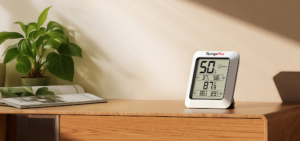
What makes it useful for winter humidity monitoring:
The TempPro TempAir CORE TP50 displays humidity and temperature with a simple comfort indicator, a quick glance tells you whether the air is dry, comfortable, or too humid. You don’t need to memorize target numbers or interpret complex data. It also tracks high and low records for both temperature and humidity, which is helpful for spotting patterns, like how low your bedroom humidity drops overnight.
Accuracy matters when you’re making decisions about humidifiers or ventilation. The TempPro TempAir CORE TP50 offers humidity accuracy of ±2% RH and temperature accuracy of ±1°F, with readings refreshing every 10 seconds. That’s reliable enough for everyday home use without being overly complicated.
Placement is flexible thanks to the built-in stand and magnetic back. You can set it on a nightstand, and stick it to the fridge. It runs on a single AAA battery and is designed to be set-and-forget, so it won’t add another charging chore to your routine.
Practical Steps to Fix Dry Winter Air
Once you know your humidity levels, here’s what actually helps:
Use a humidifier, but measure first. A portable or whole-house humidifier can add moisture effectively, but only run it until you hit the 30-50% range. Over-humidifying creates its own set of problems, including condensation and mold risk.
Take advantage of daily activities. Cooking, showering, and even air-drying laundry add moisture to the air. Keep bathroom doors open after showers and let pasta water steam into the kitchen.
Ventilate strategically. Running your bathroom fan during and after showers pulls moisture out which is good for mold prevention but works against humidity goals. Use exhaust fans sparingly in winter.
Watch for leaks and drafts. Sealing gaps around windows and doors keeps cold, dry air from infiltrating and reduces the workload on your heating system.
Final Thoughts
Winter dryness affects your comfort, health, and the condition of your home. The fix starts with awareness. A simple hygrometer like the TempPro TempAir CORE TP50 gives you the data you need to act, whether that means running a humidifier, adjusting your habits, or simply knowing that your indoor air is in the healthy range. For a small investment, it’s one of the most practical tools you can add to your winter home maintenance routine.