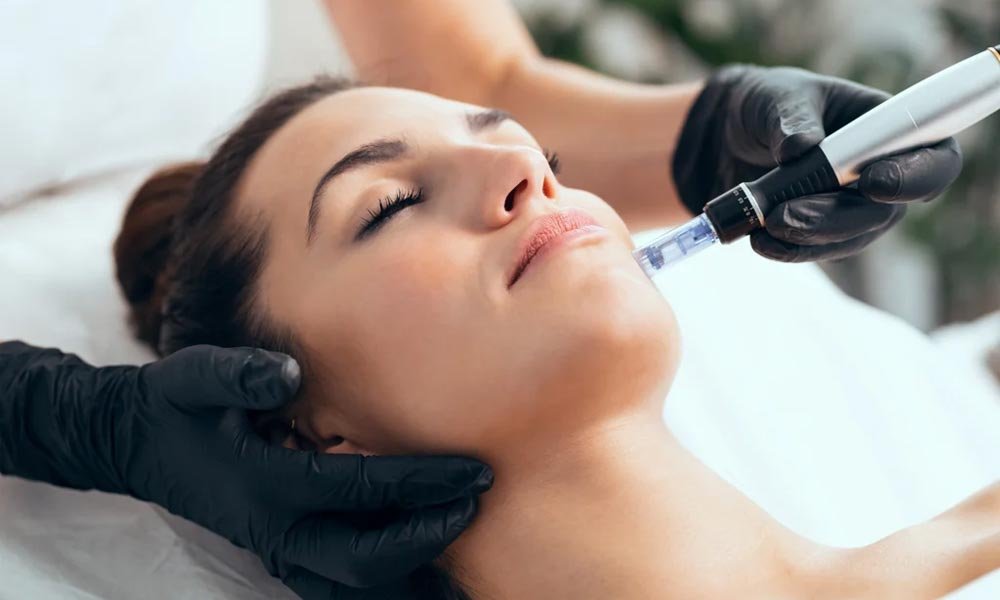
Acne scars that refuse to fade away, fine lines that grow more prominent every year, and skin that no longer feels as smooth as it used to. These are things that lead people to consider professional skincare treatments. A microneedling treatment can help address a few of these concerns by stimulating your skin to produce more collagen. A microderm treatment is similar but works on the topmost layers of your skin.
But what is microneedling good for? Is it strictly for acne scars, or can it genuinely help reduce wrinkles, enlarge pores, and more?
There’s quite a lot it can help with, although some skin concerns respond to it better than others. Here’s an overview of what the treatment can do, where it tends to work better, and what you should know before getting one.
What Is Microneedling and How Does It Work?
The thought of puncturing your skin may seem odd, but there’s a reason a lot of dermatologists have been using this therapy for years.
Microneedling, also known as collagen induction therapy, makes use of a tool with fine needles to make micro-injuries in your skin.
Your body’s natural healing process will kick in to repair the damage, which results in the production of collagen and elastin.
Collagen and elastin are proteins that give your skin its structure, firmness, and elasticity. Production of these proteins slows down as you age, which contributes to wrinkles and changes in skin texture.
What Is Microneedling Good For? 7 Major Skin Benefits
One reason microneedling is so popular is its versatility. It’s not strictly for one concern.
Here are seven microneedling benefits that you should know about.
1. Reducing the Appearance of Acne Scars
If you’ve had acne breakouts, then chances are you know that treating the pimples only gets you halfway there.
There are a few types of acne scars, and not all of them require the same type of treatment.
Atrophic scars form when the skin doesn’t produce enough collagen during the healing process and tend to look like indentations. Microneedling can be particularly helpful for this type, especially if they appear as rolling or boxcar-shaped scars. However, deep and severe ice-pick scars will likely require alternative treatment, such as specialized chemical procedures to improve the appearance of scars.
The American Academy of Dermatology notes that multiple sessions of microneedling can be extremely beneficial for treating acne scars in suitable candidates. One important point to note is that microneedling is typically not recommended when the person still has active acne breakouts. It’s best to consult a professional about the right time to get microneedling treatments done since treating inflamed pimples can do more harm than good.
2. Softening Fine Lines and Wrinkles
Fine lines may appear as creases around your eyes or other parts of your face. They’re a common sign of aging, especially as collagen and elastin levels in your skin start to drop.
Microneedling may be beneficial in reducing the visibility of fine lines, although the effects are gradual and not dramatic.
This is one of those microneedling benefits that will keep your skin looking younger, but it likely won’t transform your face completely and make you look a decade younger. If you’re starting to notice fine wrinkles, then it may be a good idea to speak with a professional about microneedling treatments.
3. Improving Uneven Skin Texture
There are days when you feel your skin is perfect, right down to every pore on your face. Other days, it feels like your skin isn’t cooperating, whether it’s breaking out, feeling rough, or being generally unappealing.
Microneedling may be helpful in cases where a person’s skin texture is uneven, bumpy, or a combination of these issues.
It’s particularly useful when it’s caused by shallow scarring, which is often the case.
However, if it’s caused by flakes of dead skin sticking to your skin, then there are likely more gentle treatments that can help instead.
4. Making Enlarged Pores Less Noticeable
Pores are a normal part of healthy skin, as they help your skin get rid of oil and sweat. They appear as small holes on your face, typically concentrated around your cheeks and chin, but everyone has them. Unfortunately, there isn’t a treatment that can completely get rid of your pores, but there are some options for minimizing their appearance if you’re not happy with how noticeable they are.
Pores can become more prominent due to genetics, oily skin, sun damage, and decreased collagen production as you age.
Microneedling can improve the appearance of large pores by helping your skin generate more collagen.
5. Improving Certain Types of Hyperpigmentation
Widely varying skin pigmentation can be unpleasant to look at, especially if the dark spots are particularly noticeable. There are a number of potential causes for uneven skin pigmentation, from acne scars to sun damage.
Microneedling may be beneficial in reducing the appearance of dark spots, although the efficacy largely depends on the underlying cause.
For example, it’s often used as part of a treatment plan for melasma, which causes patches of darkened skin. However, melasma can sometimes be resistant to treatment altogether or may require an alternative method for reducing pigmentation. This shows the importance of identifying the cause of dark spots and working with an experienced dermatologist to develop a treatment plan, instead of assuming that any given skincare procedure will be effective.
6. Making Stretch Marks Less Visible
It’s not just pregnant women who get stretch marks. In fact, anyone can develop them, although they’re more common in women due to pregnancy and hormonal changes.
While some people are more predisposed to them, developing them also has a lot to do with the rapidity of weight gain and whether there’s enough collagen in your skin to prevent your skin from stretching.
Microneedling may help reduce the appearance of stretch marks by encouraging your skin to produce more collagen, particularly in the affected area.
Treatments are often more effective on newer stretch marks, although there’s a degree of variability depending on how severe they are and what their underlying cause is.
However, keep in mind that while older stretch marks can be made less noticeable, there’s a limit to how much they can be improved. Additionally, a lot of treatments, including microneedling, are ineffective for very dark stretch marks.
7. Improving the Appearance of Certain Surgical Scars
Microneedling isn’t just for facial treatments. In fact, a lot of people opt for it to help reduce the appearance of scars, particularly if they’re old and minimally noticeable. There are a number of surgical scars that can potentially benefit from microneedling, but the results are typically more prominent in those that are flat.
By encouraging the formation of new collagen, microneedling can gradually improve the appearance of most surgical scars over a series of treatments. However, it’s not an effective method for raising scars such as keloids. Additionally, people with a history of easy scarring should be aware that microneedling can potentially aggravate their skin, leading to further complications. Lastly, it’s vital to consult a professional before undergoing treatment to address any surgical scars, as they will need to assess the situation before determining whether microneedling will be an appropriate option.
What Happens During a Microneedling Session?
If you’re considering a microneedling session but have no idea what to expect, then this is probably the most crucial section to read. Going through treatment for the first time can be stressful, especially if you’re unfamiliar with the entire process.
There are several steps that are typically involved in a microneedling session, including an initial skin assessment and a few precautions to take before and after the treatment.
Before the Treatment
Your skin will be assessed to make sure that it’s suitable for microneedling, and you’ll discuss your medical history with the person administering the treatment.
You may also be instructed to avoid certain medications or skincare products before the treatment. In some cases, a numbing cream may be applied to reduce discomfort during the procedure.
During the Treatment
The person administering the treatment will pass over the microneedling device over the desired area, making sure to puncture the skin at an appropriate depth.
You may feel a combination of pressure, vibration, and an occasional scratching sensation, although the level of discomfort varies from person to person.
Some areas might feel more sensitive than others, particularly the forehead, and a topical anesthetic may be recommended if this is the case. Most microneedling sessions only last for around 15 to 30 minutes, but this depends on the area being treated.
After the Treatment
Your skin may appear red and inflamed immediately after the procedure, similar to a sunburn, and may even be slightly warm to the touch.
These effects should subside after a day or two, although some people may experience irritation for up to a week in rare cases.
Final Thoughts: What Is Microneedling Good For?
So, what is microneedling good for? Quite a few things, actually. Acne scars, fine lines, uneven skin texture, large-looking pores, and certain types of pigmentation are among the concerns it may help improve.
But the results aren’t instant, and they aren’t guaranteed.
Someone with a few minor acne scars might see a noticeable improvement after a series of treatments, while someone with deep scars may need a longer course of treatment to see improvement.
The best way to find out if it’s suitable for you and what results to expect is to get in touch with an experienced dermatologist and go over your concerns.
Microneedling can be an extremely beneficial tool in cosmetic dermatology, but like any other medical procedure, it has its risks and limitations. It may not be appropriate for certain types of skin conditions or sensitive skin, in which case other alternative treatments may be a better option.