A well-made piece of accessory can still look relevant even many seasons after its debut. A gold bracelet passed on from one’s grandmother, a bag with a unique vintage shape or a mechanical watch from another generation can add something personal to the outfit that is otherwise modern. Vintage accessories have recently become popular among women interested in fashion that does not necessarily follow all the latest trends but is more personalized.
Vintage accessories’ popularity does not imply merely their imitation of the past. It shows a growing recognition of well-crafted items that have their unique design and stories. Watches and jewelry are especially notable in this case as their designs usually tell a lot about artistic features and accomplishments of their era.
Contemporary collecting and fashioning with accessories is an opportunity to create one’s own style and learn how heritage relates to modern luxury.
Why Vintage Accessories Are Gaining Attention in 2026
Fashion regularly revisits earlier decades, but the latest interest in vintage accessories extends beyond clothing silhouettes. Jewellery, traditional watches and carefully preserved accessories are increasingly being considered as individual pieces rather than additions chosen to match a particular outfit.
British Vogue’s January 2026 jewellery trends report highlighted growing interest in statement pieces, including designs influenced by vintage and heirloom jewellery. The publication noted that some consumers are moving away from heavily layered accessories towards distinctive pieces that can command attention independently.
Its March 2026 coverage of vintage jewellery also explored the appeal of historical pieces among fashion editors, particularly accessories valued for their individual character and unusual craftsmanship.
This interest reveals an important distinction between wearing something because it is fashionable and choosing it because its design remains personally appealing.
An accessory from the 1960s or 1970s can look contemporary when combined with modern tailoring. Equally, traditional jewellery may introduce warmth and character to minimalist clothing. The result depends less on following a particular decade and more on understanding how different designs complement one another.
How Women’s Relationship With Luxury Watches Is Changing
Wristwatches have occupied an interesting position in women’s fashion for generations. They are practical instruments, expressions of personal style and, in some cases, objects of considerable mechanical and artistic complexity.
Historically, women’s watches were frequently designed around smaller cases, decorative bracelets and jewellery inspired details. These characteristics reflected the fashion conventions of their time, but they never represented the full range of possibilities within watchmaking.
Today, women are increasingly approaching watches according to personal preference rather than accepting traditional distinctions between masculine and feminine designs.
Deloitte’s Swiss Watch Industry Study 2025, based partly on research involving 6,500 consumers across major international markets, identified female consumers as an important growth opportunity for the traditional watch industry. Its findings also indicated that willingness to purchase conventional watches was strong among both women and men.
Meanwhile, Vogue’s 2026 assessment of the watch industry highlighted how female enthusiasts are showing greater interest in mechanical movements and designs historically marketed towards men.
These developments suggest that women’s watch preferences cannot be reduced to one case size, material or decorative style.
A collector might appreciate a compact gold watch because of its elegance, while another may favour the engineering and wrist presence of a larger steel timepiece. Both choices can reflect an informed appreciation of horology.
The Historical Connection Between Watches and Jewellery
The relationship between watchmaking and jewellery has existed for centuries. Before wristwatches became commonplace, decorative timepieces were often incorporated into pendants, brooches and other personal accessories.
As wristwatches gained popularity, manufacturers experimented with different ways of combining practical timekeeping with decorative craftsmanship. Precious metals, unusual case shapes, gemstone settings and intricate bracelets became important features of many traditional women’s watches.
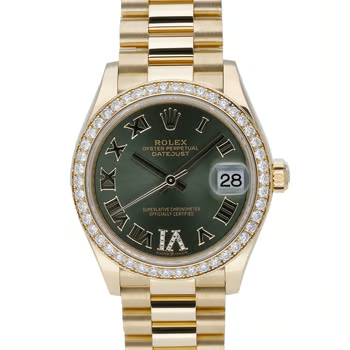
Rolex introduced the Lady Datejust in 1957, building upon the Datejust design first introduced in 1945. According to the manufacturer’s official history, the original Lady Datejust measured 25 millimetres, reflecting the compact proportions associated with women’s wristwatches during that period.
The significance of such designs extends beyond their dimensions. They demonstrate how watchmakers adapted established mechanical concepts to changing expectations of style, comfort and personal expression.
For contemporary fashion enthusiasts, older timepieces can provide a connection to these design traditions. Someone interested in vintage jewellery might naturally develop an appreciation for mechanical watches with carefully finished bracelets, decorative dials or historically distinctive cases.
This connection also explains why collectors exploring accessories such as used womens rolex watches may be interested in broader questions of design heritage, craftsmanship and the evolution of women’s personal style.
The attraction is not necessarily associated with a particular fashion movement. It can arise from an appreciation of how traditional watchmaking and jewellery design developed alongside one another.
Why Smaller Watches Are Being Reconsidered
The proportions of watches have been varied in their history as wristwatches. Designs that were once deemed wearable in day-to-day life can be found quite small compared to many watches produced today. However, smaller watches allow for a design opportunity that is still relevant for present-day attire. The small-sized case could fit under a shirt cuff, be harmonious with jewelry or contrast with fitted clothes. It is usually rather subtle and draws attention not to the size of the item but to its appearance as a whole.
Larger watches make another statement. They accentuate the mechanics of the watch, add a bold visual statement or cater to the taste of professional watches enthusiasts. Neither option is better by itself. What matters is the balance between case proportions, proportions of a wrist, bracelet design and tastes of the individual. It is especially useful when dealing with vintage timepieces as each period of production brings a new perspective on the same designs. Knowledge of these different perspectives allows collectors to understand historical proportions without treating them as a fashion dogma.
The Appeal of Accessories With a Personal History
Another element that makes vintage accessories appealing is the element of previous ownership. For example, a watch handed down from one family member can evoke memories of him/her. A piece of jewelry given on the occasion of some achievement can still keep the emotional attachment even years later. In contrast to other things that appeal due to current fashion, this feature distinguishes personal property.
The provenance factor can make an accessory collectible too. Provenance is a documented history of an item and information about its origin and associations. If the record exists, it can help to authenticate an accessory as well as understand the way in which it was maintained.
Still, provenance and historical interest must not be mixed with condition. An old mechanical watch might need special maintenance and the same applies to vintage jewelry with respect to setting, clasp and other parts.
That is why appreciation of vintage items is connected not only with aesthetics but with certain duties too. The best accessories are those that correspond to all these aspects.
How to Incorporate Vintage Accessories Into Modern Style
Wearing vintage accessories does not require recreating an entire historical outfit. In many cases, the most effective approach is to introduce an older piece into otherwise contemporary clothing. A traditional watch can complement a modern suit, while an antique ring may add individuality to simple evening wear. A structured vintage handbag can also provide contrast when paired with relaxed tailoring or understated fabrics.
The relationship between materials deserves attention. Yellow gold can introduce warmth alongside neutral clothing, while stainless steel offers a restrained appearance that works with a wide range of colours and textures. Combining different periods can be equally effective, provided the accessories feel intentional rather than competing for attention.
There is no requirement to match every metal finish or follow a particular set of styling conventions. What matters is whether the chosen pieces contribute to a coherent personal appearance. For collectors who appreciate traditional craftsmanship, this freedom encourages experimentation without making fashion dependent on constant replacement.
Why Craftsmanship Matters Beyond Fashion Trends
The vintage appeal cannot be based only on how something looks. The manufacturing of the item can become a factor that will allow it to perform its initial function. Watches provide an example of such accessories because their mechanisms need properly working elements in order to work, which can last decades if the servicing is done right and replacement parts can be acquired.
Jewelry can also stay useful with proper care and good manufacture can also make some items repairable. It does not necessarily mean that everything old was always better than new items. There are variations in manufacturing quality and in materials used.
However, knowing about the manufacture of an accessory allows a person to have a different approach to luxury goods. Instead of looking at the item in terms of the brand name and popularity, people can analyze its manufacture, design heritage, ability to be fixed and usability for daily wear.
The Future of Personal Style May Have a Stronger Connection to the Past
The renewed appreciation of vintage accessories reflects a broader willingness to combine fashion history with contemporary individual expression. Women’s expanding interest in mechanical watches, the continued relevance of traditional jewellery and the appeal of distinctive historical designs all demonstrate that personal style need not be limited to newly released collections.
A carefully chosen accessory can become part of a wardrobe for years, acquiring personal associations while retaining the characteristics that first made it appealing. Fashion will continue to evolve, and new interpretations of luxury will inevitably emerge. Yet the enduring attraction of vintage pieces suggests that thoughtful design and craftsmanship have a place beyond the trends of any particular season.
Ultimately, timeless style is not about remaining unchanged. It is about choosing possessions whose character, quality and personal significance continue to matter as individual preferences develop.