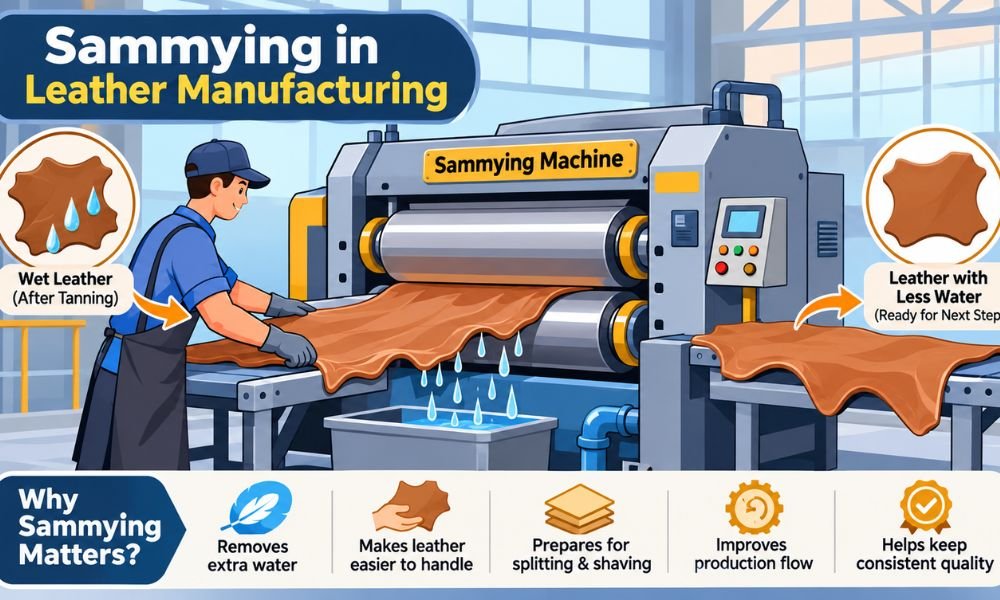
Have you ever thought about how wet animal skin turns into strong and useful leather? Leather goes through many steps before it becomes ready for use. One important step is called sammying. It helps remove extra water from wet leather.
Sammying makes leather easier to handle during production. It uses special machines to press water out without making the leather fully dry. This helps workers prepare the material for the next steps and keeps the leather soft.
In this article we will explain what sammying means and how it works. We will also explore the machines used in this process. You will learn why this step matters and how it helps leather factories in 2026.
What Is Sammying?
Sammying is a process used in leather making to remove extra water from wet animal hides and skins. After tanning the leather still holds a lot of water. This water must be reduced before some other steps can begin.
The process uses a special machine with strong rollers. These rollers gently press the wet leather and squeeze out extra water. Unlike drying with heat or air this method removes water through pressure. The leather stays soft and flexible.
Sammying is also called samming in some leather factories. Both names describe the same basic process. It is often used after tanning and before shaving or splitting. The main goal is to prepare leather for further work.
Why Is Sammying Important in Leather Making?
Wet leather can be heavy and difficult to move. Workers may find it hard to spread or handle large wet hides. Sammying removes some of this extra water. This makes the material lighter and easier to manage.
Another reason sammying matters is leather quality. Too much water can make later work harder. When extra water is removed in a controlled way the leather becomes easier to process. This can help workers get more even results.
Sammying can also help factories save time. Less water may mean less work during later drying. It can also make moving leather between machines easier. These benefits help factories keep their work smooth and well planned.
How Does the Sammying Process Work?
The sammying process begins with wet leather that has already passed through tanning or another water-based step. Workers first check the leather for folds and wrinkles. They spread it properly so it can move smoothly through the machine.
Next the leather enters the sammying machine. Strong rollers press the material while special felt belts help carry it forward. The pressure pushes extra water out of the leather. This water then flows into a collection or drainage system.
After pressing the leather leaves the machine with less water inside. Workers check whether it is smooth and ready for the next step. The leather is still wet enough for further work. Sammying does not make it completely dry.
Continue reading: Patricia Azarcoya Schneider: The Full Story of Rob Schneider’s Ex-Wife
What Is a Sammying Machine?
A sammying machine is special equipment used in leather factories. Its main job is to remove extra water from wet hides and skins. It works by pressing leather between rollers while keeping the material moving at a steady speed.
The machine has several important parts. Pressure rollers squeeze out water while thick felt belts support the leather. Many machines also use a hydraulic system. This system helps control how strongly the rollers press the wet material.
Modern sammying machines may have speed controls and automatic belt tracking. These features help workers manage different leather types. In 2026 such controls remain useful because factories need steady results while keeping leather safe from damage.
Different Types of Sammying Machines
Leather factories use different sammying machines based on their needs. One common type is the through-feed machine. It moves leather through rollers in a steady flow. This makes it useful for factories that process many hides each day.
Another type combines sammying with setting out. It removes extra water while helping spread and flatten the leather. This can reduce folds and save a separate handling step. It is useful when both jobs are needed during production.
Smaller sammying machines are also available for narrow skins and smaller leather pieces. They may suit factories that work with sheep or goat skins. The right choice depends on leather size and thickness as well as daily production needs.
Main Benefits of Sammying
One major benefit of sammying is better moisture control. Wet leather often holds more water than needed for the next step. Removing some of this water helps prepare the material for splitting or shaving without making it fully dry.
Sammying also makes leather easier to handle. Think about lifting a large wet hide. It can feel heavy and difficult to move. After extra water is removed the hide becomes lighter. This helps workers move it between production areas.
Another benefit is smoother factory work. Proper sammying can reduce handling problems and may lower the water load during later drying. It can also support more even results between batches when workers use suitable machine settings.
r this does not mean the leather has only 12 percent moisture.
Workers can also check different parts of the same hide. If one side stays wetter than the other the machine may need attention. More exact moisture checks can be done through testing. These checks help factories keep their results steady.
Sammying Machine Care and Safety Tips
Regular machine care is important for safe and smooth work. Workers should check the rollers and felt belts for dirt or damage. They should also keep water drains clear. Clean and well-kept machines are less likely to cause leather marks.
Safety is just as important as machine care. Sammying machines have powerful moving rollers that can cause serious injuries. Workers must keep their hands away from moving parts. Safety guards should always stay in place during normal machine use.
Before cleaning or fixing a machine it must be turned off and safely locked so it cannot start. Only trained workers should do this work. Water removed from tanned leather may also contain chemicals. Factories must collect and treat it safely.
Continue reading: MyFavouritePlaces.org: Discover Beautiful Places and Smart Travel Ideas
How to Choose the Best Sammying Machine
Choosing the right sammying machine starts with knowing the factory’s needs. A factory handling large cowhides may need a wider machine. A smaller factory working with sheep skins may need less space and a different machine size.
Pressure and speed controls are also important. A good machine should allow workers to adjust settings for different leather types. Buyers should check how easy it is to replace felts and clean rollers. Easy maintenance can reduce delays.
Machine price is not the only thing to consider. Electricity use and repair costs also matter. Buyers should check safety features and spare parts. In 2026 a suitable machine should offer steady results and dependable support from its supplier.
Conclusion
Sammying is an important part of leather making. It removes extra water from wet hides and skins without fully drying them. This helps prepare leather for later steps. It also makes the material easier to handle during production.
The process may look simple but good results need careful machine settings. Roller pressure and feeding speed must suit the leather. Clean felts and regular machine care also matter. These small steps can help prevent damage and uneven results.
In 2026 sammying remains useful in leather factories of many sizes. When done properly it can support better work and smoother production. Understanding the process helps workers and factory owners make better choices about leather care and machines.
(FAQs)
What Is Sammying in Leather Making?
Sammying is a process that removes extra water from wet leather. It uses a special machine with strong rollers. The leather stays soft and wet enough for the next steps of production.
Why Is Sammying Important in Leather Production?
Sammying makes wet leather lighter and easier to handle. It helps workers prepare leather for shaving and splitting. It can also reduce the amount of water that must be removed during later drying.
How Does a Sammying Machine Work?
A sammying machine presses wet leather between strong rollers. Special felt belts help carry the leather and drain away water. The machine removes extra liquid without making the leather fully dry or hard.
What Are the Main Types of Sammying Machines?
There are through-feed machines and combined sammying and setting-out machines. Smaller machines are also used for narrow skins. Each type serves different factory needs based on leather size and daily production work.
What Is the Difference Between Sammying and Drying?
Sammying removes water by squeezing leather with pressure rollers. Drying removes more moisture through air or heat. Sammying keeps leather wet and flexible while drying prepares it for later finishing steps.
Can Sammying Damage Leather?
Yes. Too much roller pressure can leave marks or change the leather’s shape. Poor feeding may also cause wrinkles. Workers can reduce these problems by using correct settings and keeping the machine clean.
How Much Water Does Sammying Remove From Leather?
The amount depends on leather thickness and starting moisture. Machine pressure and felt condition also matter. There is no single amount for every hide. Workers can weigh leather before and after pressing to check results.
What Types of Leather Can Go Through Sammying?
Sammying can be used for cowhide and buffalo hide. Sheep and goat skins can also go through this process. Each type needs suitable pressure and machine settings to remove water without causing damage.
How Can Workers Improve Sammying Results?
Workers should check roller pressure and feeding speed before starting. They must keep felt belts clean and properly fitted. Regular machine care and correct leather feeding can help produce more even results.
Is Sammying Still Used in Leather Factories in 2026?
Yes. Sammying remains an important step in modern leather making. Many factories use machines with adjustable pressure and speed controls. These features help remove extra water while keeping leather ready for further processing.
Continue reading: Bill Hudson: Everything About Kate Hudson’s Father and His Life Today