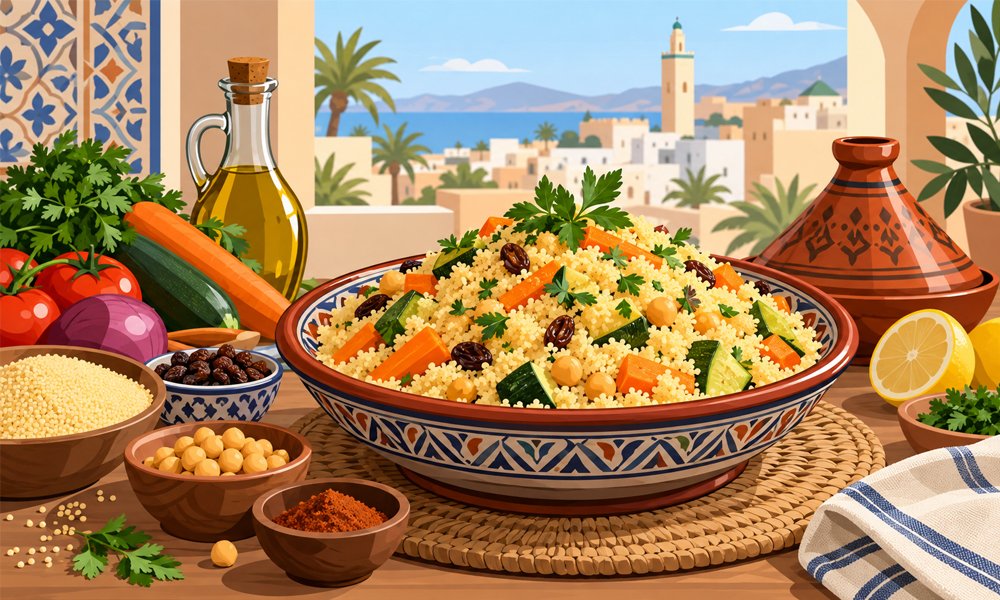
Have you ever seen tiny grains that look a little like rice but taste very different? That is what many people think when they first see kouskousi. It may look simple, but it has a long history and an important place in many homes. People have enjoyed it for hundreds of years, and it is still one of the most loved foods in North Africa.
Today, kouskousi is enjoyed in many countries. It is quick to cook, easy to serve, and works well with many foods. You can enjoy it with vegetables, chicken, seafood, or lamb. Some people even make sweet dishes with it.
In this guide, you will learn everything about kouskousi. We will explain what it is, where it came from, why it is special, how to cook it, its health benefits, and simple tips to help you make the perfect meal at home.
What Is Kouskousi?
One reason kouskousi is so popular is its light texture. When it is cooked the right way, the tiny pieces stay soft and fluffy. They do not become heavy or sticky. This makes every bite pleasant to eat.
Another reason people love kouskousi is its gentle flavor. It does not have a strong taste on its own. Instead, it takes in the flavor of the broth, herbs, spices, and sauces around it. That is why it works with so many different meals.
You may also hear people call it couscous. In many North African places, kouskousi is simply another name for traditional couscous. The name changes from one region to another, but the food is almost the same.
The History of Kouskousi
The story of kouskousi goes back more than one thousand years. Most experts believe it first appeared in North Africa among the Amazigh, also called Berber, people. They made it using simple ingredients that were easy to find.
Long ago, families made kouskousi by hand. They slowly rolled wet semolina into tiny grains and steamed them over rich stews. It took time and care, but the result was light, soft, and full of flavor.
As people traveled and traded with other countries, kouskousi spread across North Africa. Morocco, Algeria, Tunisia, and Libya each created their own recipes. Some used lamb and vegetables. Others added seafood or spicy sauces.
Today, kouskousi is enjoyed around the world. In 2020, the traditional knowledge and preparation of couscous was added to UNESCO’s Representative List of the Intangible Cultural Heritage of Humanity. This recognition shows how important this food is to the history and culture of North Africa.
Why Kouskousi Is Important in North African Culture
For many families, kouskousi is more than food. It brings people together. Parents, children, grandparents, and friends often gather around one large plate to enjoy the meal together.
In Morocco, many families traditionally eat kouskousi on Fridays after prayers. In other North African countries, it is also served during weddings, family parties, holidays, and other special days.
Making kouskousi can also be a family activity. Everyone may help prepare the vegetables, cook the stew, or steam the grains. These shared moments create happy memories that are passed from one generation to the next.
Even today, when instant versions are easy to buy, many families still enjoy preparing kouskousi in the traditional way because it keeps old customs alive.
How Kouskousi Is Made
Traditional kouskousi starts with durum wheat semolina. A small amount of water is added while the semolina is gently rolled into tiny grains. Some recipes also include a little salt or olive oil.
The grains are not usually boiled like pasta. Instead, they are steamed. This keeps them light while helping them absorb the wonderful smell and flavor of the stew cooking below.
Traditional cooks use a special pot called a couscoussier. The stew cooks in the lower pot, while the kouskousi steams in the upper pot. As the steam rises, it slowly cooks the grains and fills them with rich flavor.
Many cooks steam kouskousi two or three times. Between each round of steaming, they gently separate the grains with their hands. This extra work creates the fluffy texture that homemade kouskousi is famous for.
Today, supermarkets also sell instant kouskousi. It has already been steamed during production. You simply add hot water or broth, cover it, and wait a few minutes before fluffing it with a fork.
How to Cook Kouskousi at Home
Cooking kouskousi at home is easy, even if you have never made it before. Most people use instant kouskousi because it saves time and still gives very good results.
Start by boiling water or broth. Broth is often the better choice because it gives the grains more flavor. Pour the hot liquid over the kouskousi, cover the bowl, and let it rest for about five minutes.
After resting, gently fluff the grains with a fork. This simple step keeps them soft and separate. Using a spoon may press the grains together and make them sticky.
A good cooking tip is to use about one cup of hot broth for one cup of instant kouskousi unless your package says something different. Following the package directions is always the safest choice.
You can make your meal even better by adding a little olive oil, fresh parsley, mint, lemon juice, or your favorite herbs. These simple touches add fresh flavor without making the recipe difficult.
Different Types of Kouskousi
Not all kouskousi looks the same. Different regions make it in different sizes, and each type works well in certain dishes.
Moroccan kouskousi is the smallest and the most common. It cooks quickly and is often served with vegetables, chicken, or lamb. It is the type many people buy in supermarkets.
Algerian and Tunisian styles are similar but often come with richer sauces or spicy broths. Tunisian recipes sometimes include seafood because of the country’s long Mediterranean coast.
Lebanese couscous is much larger than Moroccan kouskousi. It has a firmer bite and is often used in filling soups and stews.
Israeli pearl couscous is another popular type. Its grains are much bigger and rounder. Although many people group it with kouskousi, it is a modern pasta that has a different texture. It works very well in salads and side dishes.
What Does Kouskousi Taste Like?
The taste of kouskousi is simple and mild. By itself, it has a gentle flavor with a light nutty taste. This is one reason so many people enjoy it.
Because it does not have a strong flavor, kouskousi easily absorbs the taste of herbs, spices, sauces, and broths. A rich tomato sauce gives it one flavor, while lemon and fresh herbs create a completely different meal.
Its texture is just as enjoyable as its taste. Well-cooked kouskousi is soft, fluffy, and light. Each grain stays separate, making every bite pleasant.
Another great thing about kouskousi is how flexible it is. You can enjoy it warm with meat and vegetables, cold in fresh salads, or even sweet with honey, raisins, and nuts. There are many ways to enjoy it without getting bored.
Kouskousi Health Benefits and Nutrition
Besides tasting good, kouskousi can also be part of a healthy meal. It gives your body carbohydrates, which provide energy for work, school, sports, and daily activities. That is why many people enjoy it as part of lunch or dinner.
It also contains plant protein, selenium, and B vitamins. These nutrients help support normal body functions. Whole wheat kouskousi contains more fiber than regular varieties. Fiber helps support healthy digestion and can help you feel full for a longer time.
The health value of kouskousi also depends on what you serve with it. A bowl filled with vegetables, lean chicken, fish, beans, or chickpeas is much healthier than one covered with heavy cream or too much butter. Small changes can make a big difference.
Traditional kouskousi is made from wheat, so it contains gluten. People with celiac disease or gluten sensitivity should choose gluten-free foods like rice, quinoa, or millet instead.
Best Foods to Serve With Kouskousi
One reason people enjoy kouskousi is because it goes well with many foods. Its light taste allows other flavors to stand out while making the meal more filling.
Lamb is one of the most traditional choices. Slow-cooked lamb with vegetables creates a rich meal that many North African families have enjoyed for generations. Chicken is another favorite because it pairs well with garlic, herbs, and lemon.
Seafood also works very well with kouskousi. Shrimp, salmon, cod, and sea bass all make light and tasty meals. A little olive oil, fresh herbs, and lemon juice are often enough to bring everything together.
Vegetarian meals are just as delicious. Roasted carrots, zucchini, peppers, onions, tomatoes, squash, chickpeas, and lentils all taste wonderful with kouskousi. You can even add toasted almonds, raisins, or dates for extra texture and a little sweetness.
Common Kouskousi Cooking Mistakes
Even though kouskousi is easy to cook, a few small mistakes can change the final result. The good news is that they are simple to avoid.
One common mistake is using too much water or broth. Too much liquid makes the grains soft and sticky. Too little liquid leaves them dry. Measuring the liquid carefully gives the best texture.
Another mistake is skipping the resting time. After adding hot liquid, let the kouskousi sit for a few minutes. During this time, the grains absorb the moisture evenly. If you fluff them too early, the texture may not be as good.
Some people also forget to season the dish. Since kouskousi has a mild flavor, it becomes much better with herbs, spices, olive oil, garlic, or fresh lemon juice. Always fluff the grains gently with a fork instead of stirring them with a spoon.
How to Store and Reheat Kouskousi
If you have extra kouskousi, you do not need to throw it away. It stores very well and can be used in more meals during the week.
Let the cooked kouskousi cool before placing it into an airtight container. Keep it in the refrigerator and try to use it within three to five days. This keeps it fresh and safe to eat.
You can also freeze kouskousi for up to three months. When you are ready to use it, let it thaw in the refrigerator before warming it gently.
When reheating, add a small splash of water or broth. This helps bring back the soft texture. Fluff the grains with a fork before serving, and they will taste fresh again.
Tips for Buying Good Kouskousi
Choosing good-quality kouskousi can make cooking easier and improve the final meal. The best products usually have clean, evenly sized grains with very little dust inside the package.
Read the label before buying. Some products are instant and ready in just a few minutes. Others are traditional and need longer steaming. Pick the one that matches your cooking style and the time you have available.
Whole wheat kouskousi is another good choice if you want more fiber. It has a slightly stronger taste but offers extra nutrition.
If you have the chance, try brands from North Africa or the Mediterranean region. Many still follow traditional methods that produce excellent flavor and texture.
Why Kouskousi Is Still Popular Today
In 2026, many people want meals that are quick, healthy, and easy to prepare. Kouskousi meets all of these needs. It cooks in just a few minutes, works with many ingredients, and fits both simple and special meals.
Another reason people love kouskousi is its flexibility. You can make a warm family dinner, a fresh salad, a seafood meal, or a vegetarian dish using the same basic ingredient. That gives you many choices without making cooking difficult.
It is also affordable and stores well. A package can stay in your kitchen for a long time, making it a handy food to keep on hand for busy days.
Most importantly, kouskousi connects people with tradition. Even today, families continue to gather around the table to enjoy recipes that have been shared for many generations.
Conclusion
Kouskousi is much more than a simple side dish. It has a rich history, deep cultural value, and a place in kitchens around the world. From its North African roots to modern family meals, it has remained popular because it is easy to prepare and enjoyable to eat.
Its soft texture and gentle flavor allow it to match many foods. Whether you enjoy it with vegetables, seafood, chicken, lamb, or beans, kouskousi easily becomes part of a balanced and satisfying meal.
It is also a smart choice for busy people. It cooks quickly, stores well, and can be used in many recipes. With just a few simple ingredients, you can create healthy meals that everyone will enjoy.
If you have never tried kouskousi, now is a great time. It is simple to cook, full of tradition, and easy to make your own. Once you discover how flexible it is, it may become one of your favorite foods.
(FAQs)
What is kouskousi made from?
Kouskousi is made from durum wheat semolina. The semolina is mixed with water, rolled into tiny grains, and then steamed until light and fluffy.
Is kouskousi the same as couscous?
Yes. In many North African regions, kouskousi is simply another name for traditional couscous. The name changes from one place to another, but the food is almost the same.
Is kouskousi healthy?
Yes. Kouskousi provides carbohydrates for energy along with some protein, selenium, and B vitamins. Whole wheat versions also provide more fiber.
How long does kouskousi take to cook?
Instant kouskousi usually takes about five minutes. Traditional versions take longer because they are steamed several times.
Does kouskousi contain gluten?
Yes. Traditional kouskousi is made from wheat, so it contains gluten. People who cannot eat gluten should choose other grains.
Can you eat kouskousi cold?
Yes. Cold kouskousi is great in salads with vegetables, herbs, olive oil, and lemon juice. It is also popular for meal prep.
What is the best way to make kouskousi fluffy?
Use the correct amount of liquid, let it rest after cooking, and fluff it gently with a fork. These simple steps help keep the grains soft and separate.
Can kouskousi be frozen?
Yes. Cooked kouskousi freezes well for about three months. Thaw it slowly and reheat it with a little broth or water.
What foods go best with kouskousi?
It tastes great with lamb, chicken, seafood, roasted vegetables, chickpeas, lentils, fresh herbs, nuts, and dried fruit.
Why is kouskousi so popular around the world?
People love kouskousi because it is quick to cook, easy to serve, affordable, healthy, and works with many different recipes. It also has a rich history that continues to bring families together.
You may also read: What Is Kovových? Learn the Meaning and Everyday Uses