Have you ever done something small that made someone’s day better? Maybe you helped a stranger carry heavy bags. Maybe you smiled at someone who looked sad. These actions may seem small, but they can have a big effect.
That simple idea is one reason the Swedish word gärning is so interesting. It is more than just a word for doing something. It is used for actions that matter. A gärning can be a kind deed that helps someone. It can also be a bad act that causes harm. The action itself is what people remember.
In this guide, you will learn the real meaning of gärning in very easy words. We will look at where the word came from, how Swedish people use it every day, why it is important in law, and how it appears in books, news, and daily life. By the end, you will understand why this simple Swedish word has such a powerful meaning.
What Does Gärning Mean?
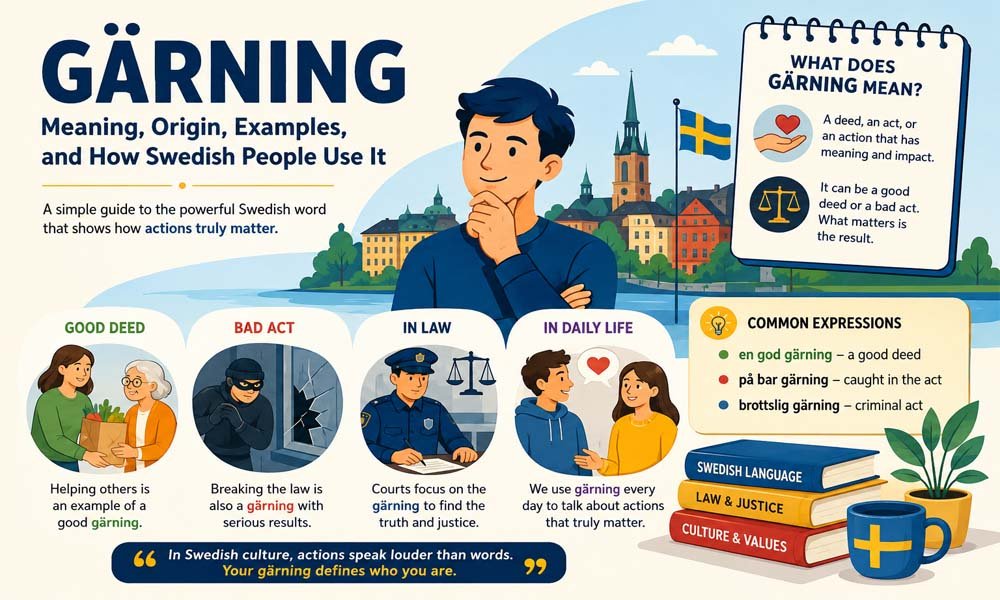
The word gärning is a Swedish noun. In English, it is often translated as deed, act, or action. These words are close, but they do not always tell the full story.
A gärning is usually an action that has meaning or creates a result. It is not used for every little thing you do during the day. It is used when an action stands out because it changes something or affects someone.
Think about a normal morning. You wake up, brush your teeth, and eat breakfast. These are everyday actions. Swedish people would not normally call them a gärning because they are simple daily tasks.
Now imagine helping a lost child find their parents. Or imagine someone breaking into a store. Both actions are very different, but both can be called a gärning because they have an important result.
This is why gärning can describe both good and bad actions. The word focuses on the action itself and the effect it has.
Gärning vs Gärningen: What Is the Difference?
Many people learning Swedish see these two words and wonder if they mean different things. The answer is actually very simple.
Gärning means a deed or an act. It talks about an action in a general way.
Gärningen means the deed or the act. It points to one specific action that everyone is talking about.
The ending -en works much like the English word the. It makes the noun specific instead of general.
Here are two easy examples:
- En god gärning means a good deed.
- Polisen utreder gärningen means The police are investigating the act.
This small change is important because it helps people understand exactly which action is being discussed.
Many beginners mix these words up. The easiest way to remember them is this:
- Gärning = a deed.
- Gärningen = the deed.
Once you know this rule, reading Swedish becomes much easier.
Where Did the Word Gärning Come From?
Like many old Swedish words, gärning has a long history.
The word comes from the Swedish verb göra, which means to do or to make. This connection tells us that the word has always been linked with actions.
Hundreds of years ago, people in Scandinavia spoke Old Norse. In that language, there was a similar word called gerningr. It also meant a deed or an important act.
As the Swedish language changed over many years, the spelling became different. The meaning stayed almost the same.
That is one reason the word still feels strong today. It has been part of the language for a very long time, and people still use it when talking about actions that matter.
Even in 2026, the word keeps its original idea. It reminds people that actions often speak louder than words.
How Swedish People Use Gärning Every Day
Many people think gärning is only used in police reports or courts. That is not true.
Swedish people also use the word when talking about meaningful actions in daily life. Parents may praise a child for helping a neighbor. Teachers may thank students for showing kindness. Friends may talk about someone doing a brave thing.
Imagine a student who stays after school to help clean the classroom without being asked. A teacher might call that en god gärning, which means a good deed.
Now think about someone returning a lost wallet with all the money still inside. That is another great example of a gärning because the action helped another person.
People usually do not use the word for small daily habits like making coffee or watching television. Those actions happen every day and do not carry special meaning.
Instead, gärning is saved for actions that people remember because they made a real difference.
Gärning in Swedish Law
One place where gärning is used very often is Swedish law.
When police or judges study a case, they focus on the action itself. They want to know exactly what happened before deciding anything else.
Instead of making quick guesses about a person, they carefully study the gärning. They ask simple but important questions.
What happened?
When did it happen?
How did it happen?
Why did it happen?
These questions help build a clear picture of the event.
Swedish law also uses several common phrases that include gärning.
Uppsåtlig gärning means an intentional act. This describes something done on purpose.
Oaktsam gärning means a careless act. This describes something that happened because someone failed to be careful.
Another well-known phrase is på bar gärning. This means caught in the act. It is used when someone is seen doing something wrong at the exact moment it happens.
These words may sound formal, but they all focus on one simple idea. The action is the most important part of the case.
Common Words Related to Gärning
Once you learn gärning, you will notice several other Swedish words that are built from it.
One common word is gärningsplats. This means crime scene. It is the place where the action happened.
Another word is gärningsperson. This means the person who carried out the act. Today, many official reports prefer this word because it can refer to any person.
You may also hear gärningsman. It means male offender or male perpetrator. Older reports often used this word, but gärningsperson is becoming more common because it is gender-neutral.
Another useful word is gärningsbeskrivning. This means description of the act. It explains exactly what happened during the event.
You might also hear brottsplats, which also means crime scene. While it is similar to gärningsplats, it focuses more on the location of a crime.
Learning these words together makes it much easier to understand Swedish news reports, legal stories, and crime novels.
Common Gärning Phrases and Expressions
Once you know the basic meaning of gärning, it becomes much easier to understand common Swedish phrases. These phrases appear in daily talk, books, newspapers, and TV shows. They all use the same idea of an action that matters.
Learning these expressions also helps you sound more natural when reading or learning Swedish. Even if you never speak Swedish, you will understand what people mean when you see these words.
One of the most common phrases is en god gärning. It means a good deed. People use it when someone helps another person without expecting anything back.
For example, giving food to someone in need, helping an older neighbor, or picking up lost items are all examples of en god gärning. These are simple actions, but they make a real difference.
Another common phrase is brottslig gärning. It means a criminal act. This phrase often appears in news stories and legal reports. It talks about an action that breaks the law.
You may also hear på bar gärning, which means caught in the act. Imagine someone trying to steal a bicycle and the police arrive at that exact moment. That person has been caught på bar gärning.
These phrases may seem simple, but they help explain many real-life situations. Once you learn them, the word gärning becomes much easier to understand.
Gärning Examples You Can Understand Easily
The best way to learn a new word is by seeing it in real examples. Let us look at a few simple sentences.
Det var en god gärning.
This means That was a good deed.
Imagine helping someone carry heavy shopping bags home. A Swedish speaker could use this sentence to praise your action.
Here is another example.
Polisen utreder gärningen.
This means The police are investigating the act.
This sentence often appears in news reports after a serious event.
Another example is:
Han greps på bar gärning.
It means He was caught in the act.
You can also hear:
Hennes gärning hjälpte många människor.
This means Her deed helped many people.
These examples show that gärning can be used in many different situations. Sometimes it describes kindness. Sometimes it describes crime. The meaning depends on the action.
Gärning in News, Books, and Movies
If you read Swedish news, you will often see the word gärning. Reporters use it because it keeps the focus on the action instead of making quick guesses about people.
For example, a news report may say that the police are studying gärningen. This tells readers that the investigation is still happening. It avoids blaming someone before all the facts are known.
The word is also common in Swedish crime books and detective stories. One important gärning often starts the whole story.
A detective then follows clues, talks to people, and slowly learns what really happened. The story grows from that one important action.
Many Swedish TV shows use the same style. The first event changes everything. Every new clue helps explain the gärning little by little.
This is one reason language learners often see this word while reading Swedish books or watching Nordic crime dramas.
Why Gärning Is More Than Just an Action
At first, gärning may seem like another word for action. But after learning more, you can see that it means much more.
A normal action happens every day. A gärning is an action that people notice because it changes something.
Think about a firefighter saving a family from a burning house. That is much more than an everyday action. It is a gärning because it changes lives.
The same is true when someone hurts another person or breaks the law. People remember those actions because they have serious results.
This idea is also connected to character. Many people believe actions tell the truth about who we are.
Someone may promise to help but never do it. Another person quietly helps without saying anything. Most people remember the second person because of their gärning.
That is why many Swedish people believe actions matter more than words.
Common Questions About Gärning
Many people have questions when they first learn this word. Let us answer some of the most common ones.
A popular question is whether gärning is only used for crimes. The answer is no.
The word can describe both good and bad actions. Helping a stranger is a gärning. Breaking the law is also a gärning. The word itself is neutral.
Another common question is whether the word is old. While it has very old roots, it is still used every day in modern Swedish.
Some people also wonder if it is a formal word. It depends on the situation.
In legal writing and news reports, it is very common. In everyday life, people also use it when talking about meaningful actions.
Many learners ask if every action can be called a gärning. Usually the answer is no.
Small daily habits like making breakfast or brushing your teeth are normally not called gärning because they do not have special meaning.
What We Can Learn From the Word Gärning
Now you know much more about the Swedish word gärning.
It means more than simply doing something. It describes actions that have importance, create change, or leave a lasting effect.
You also learned that the word comes from göra, meaning to do. It has been part of the Swedish language for hundreds of years and is still widely used in 2026.
Today, you can hear gärning in daily conversations, schools, newspapers, books, movies, police reports, and courts. It is a word that connects language with real life.
Learning gärning also teaches a valuable lesson. People often remember what we do more than what we say.
A kind action can brighten someone’s day. A brave action can change a life. Even a small helpful deed can become someone’s favorite memory.
The next time you hear the word gärning, you will know it is talking about an action that truly matters.
Conclusion
The Swedish word gärning may look simple, but it carries a deep meaning. It reminds us that actions have power. They can help people, solve problems, or sometimes cause harm.
Whether you are learning Swedish, reading a news story, or simply curious about new words, understanding gärning gives you a better view of both the language and the culture.
At the end of the day, people may forget many of our words. But they often remember our actions. That is the real message behind gärning. It is not just about what we do. It is about making our actions count.
You may also read: Portar Leisa: From Old Traditions to Modern Art and Design