Have you ever wondered why some businesses get their data so fast? Others wait for hours to see new reports. The reason may be how they move and handle their data each day.
ETL process optimization helps make this work faster and easier. It helps businesses save time and reduce errors. It also makes sure the right data reaches the right place without wasting too much money.
In 2026 many businesses use data to make daily choices. Slow data can lead to late reports and poor plans. This guide will explain how ETL works and how to make each step better.
What Is ETL Process Optimization?
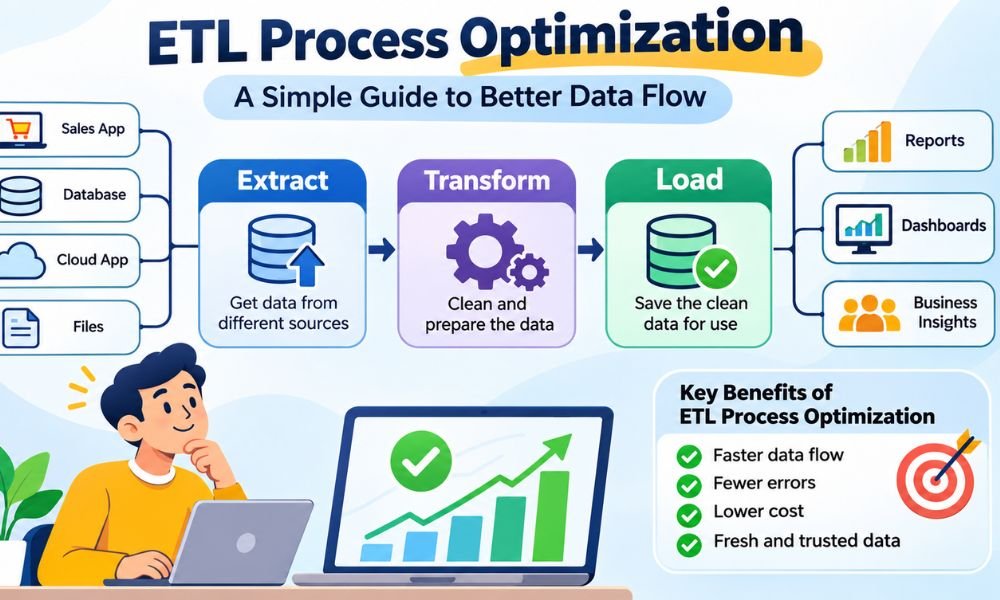
ETL stands for Extract, Transform, and Load. These are three steps used to move data from one place to another. Each step has its own job. Together they help turn raw data into useful information.
ETL process optimization means making these steps work better. The goal is to move data faster while keeping it correct. It also helps reduce extra work and keeps the whole system running well each day.
Think about an online store that gets hundreds of orders each day. It needs to collect sales details and make reports. A better ETL process helps the store see its sales without long waits or missing records.
Why Is ETL Process Optimization Important?
Businesses need fresh data to make good choices. If reports arrive late then teams may use old facts. ETL process optimization helps data reach its new home on time so people can act with more care.
It also helps save money. Slow systems may use more power and take longer to finish jobs. When a business removes extra work it can spend less while still getting the data it needs each day.
Correct data matters just as much as speed. A fast system is not helpful if it loses orders or adds the same sale twice. Good ETL work keeps records safe and makes reports more useful.
How Does the ETL Process Work?
The first step is Extract. This means taking data from places like apps and databases. A shop may collect order details from its website. It can also collect payment records from another system.
The next step is Transform. This means cleaning and changing the data so it is easy to use. The system may fix date formats or remove repeated records. It can also join details from two sources.
The last step is Load. The clean data moves into a new database or data warehouse. Teams can then use it for reports. ETL process optimization helps all three steps work with less delay.
Common Problems in ETL Process Optimization
One common problem is moving too much data. Some systems copy every record each day even when only a few have changed. This takes more time and puts extra pressure on the source system.
Slow database queries can also cause trouble. A query may read a huge table when it only needs a few rows. Large files and weak network links can add more delays to the whole process.
Failed jobs are another problem. A system may stop halfway through and start again from the first step. This wastes time and can create repeated records. Safe restart plans help prevent these issues.
Continue reading: Dworo.io: Everything You Need to Know in 2026
How to Find Slow Steps in ETL Pipelines
Before making changes you need to find what is slow. Check how long it takes to extract data. Then check the time used to clean and load it. Also look for time spent waiting.
For example a job may take 30 minutes to finish. If reading the data takes 20 minutes then that is a good place to start. Making a five-minute loading step faster may not help much.
You should also check errors and missing records. Look at how much data moves and how old it is when reports are ready. Test more than one run because busy days may show new problems.
Best ETL Process Optimization Techniques
One useful method is to move only new or changed records. This is called incremental loading. It can save time because the system does not need to read the same old data again each day.
Another method is to make database queries do less work. Teams can remove extra steps and read only the fields they need. They can also load many records at once instead of sending them one by one.
Some jobs can run at the same time. This is called parallel processing. It may help when there is enough system power. Yet too many jobs can slow things down so each change needs testing.
How ETL Process Optimization Improves Data Extraction
Data extraction is the first part of ETL. It collects records from websites and apps or other systems. If this step takes too long then the whole process may slow down before the next step begins.
ETL process optimization can make extraction faster by reading only what is needed. A store with one million old orders may need just today’s changes. This means less data to move and less work.
Some systems use change data capture or CDC. It tracks when records are added or changed or deleted. Teams must still check for missed updates and safe restarts. This keeps the data correct while saving time.
ETL Process Optimization for Faster Data Transformation
Data transformation is the second step in ETL. It changes raw data into a clean and useful form. This step can become slow when the system handles too much data or repeats the same work.
ETL process optimization helps make this step faster. Teams can remove extra tasks and keep only the work they need. For example a store can clean new order records without checking every old sale again.
SQL queries also play a big role. A slow query may read too many rows or join large tables. Teams can use filters to read less data. They should test each change to make sure it works.
How ETL Process Optimization Makes Data Loading Faster
Data loading is the last step in ETL. It moves clean data into a database or data warehouse. This step can take a long time when records are sent one at a time instead of in groups.
One useful method is bulk loading. It sends many records together and cuts down on extra work. Teams can also choose better file sizes. Very small files may slow the process because each file needs its own work.
ETL process optimization also helps prevent repeated records. If a job fails and starts again it should not add the same sale twice. Teams can use record IDs and safe update rules to keep data correct.
Continue reading: ImportPellet: What You Should Know Before Visiting This Website
ETL vs. ELT: Which One Works Better?
ETL and ELT both help move data from one place to another. The main difference is when the data gets cleaned. ETL cleans data before loading it. ELT loads data first and cleans it later.
ETL can be a good choice when data needs to be cleaned before it reaches its new home. ELT may work well when a data warehouse has enough power to handle large amounts of raw data.
Neither method is always faster. The best choice depends on data size and cost. It also depends on how safe the data must be. Some teams use both methods to meet different needs.
Best Tools for ETL Process Optimization
Many tools can help teams manage data jobs. Apache Airflow is one popular choice. It helps plan when tasks should run. It can also track failed jobs and start them again when needed.
Dagster and Prefect are other tools that help manage data work. They can make it easier to see what is running and what has failed. Debezium helps track changes made inside supported databases.
BigQuery and Snowflake help teams store and work with large amounts of data. PostgreSQL also offers tools for fast data loading. The best tool depends on the size of the job and the team’s needs.
Common ETL Process Optimization Mistakes
One common mistake is making changes without checking the real problem. A team may buy more system power when a slow query is the cause. This can waste money without making the job much faster.
Another mistake is running too many tasks at once. More workers may seem like a good way to save time. Yet they can put too much pressure on a database and make the whole system slower.
Some teams also forget to check data after a job runs. A fast pipeline may still miss records or add the same ones twice. Good ETL process optimization includes tests and safe ways to fix failed jobs.
ETL Process Optimization Best Practices for 2026
In 2026 businesses need data that is both fast and correct. A good first step is to track how long each job takes. Teams should also check costs and how fresh the data is when it arrives.
Safe restarts are just as important. If a job stops halfway through it should be able to start from a saved point. Teams should also test new changes with the same amount of data before using them.
Think about a store that takes 40 minutes to update its sales report. Reading only changed orders may save time. Better queries and bulk loading may help too. Each change should be tested before the next one.
Conclusion
ETL process optimization helps businesses move data with less delay and fewer errors. It can also lower costs by removing work that is not needed. The main goal is to make data useful without losing trust in it.
The best way to begin is to find the slowest part of a data job. Check how much time each step takes. Then make one small change and see if the results get better.
Good data flow takes regular care. As a business grows its data needs may change. By checking speed and data quality often teams can keep their ETL systems working well in 2026 and beyond.
(FAQs)
What is ETL process optimization?
ETL process optimization means making data work faster and easier. It improves how data is collected and cleaned before being stored. The main goal is to save time and money while keeping all data correct and safe.
Why is ETL process optimization important?
It helps businesses get fresh data without long waits. It also reduces errors and extra work. When data moves faster and stays correct teams can make better choices and create reports on time.
What are the three main steps of ETL?
ETL has three steps. Extract collects data from different sources. Transform cleans and prepares the data. Load moves the clean data into a new system. All three steps work together to make data useful.
How can I make my ETL pipeline faster?
Start by finding which step takes the most time. Then remove extra work and improve slow queries. You can also load records in groups. Test each change to see if it really saves time.
What is incremental loading in ETL?
Incremental loading moves only new or changed data. It does not copy every old record again. This can save a lot of time when a business has millions of records but only a few change each day.
What is the difference between ETL and ELT?
ETL cleans data before loading it into a new system. ELT loads data first and cleans it later. Both methods can work well. The best choice depends on data size and cost and safety needs.
Which tools are best for ETL process optimization?
Popular tools include Apache Airflow and Dagster and Prefect. These help teams manage data jobs. Debezium tracks database changes. Snowflake and BigQuery help store and process large amounts of data. Each tool serves a different purpose.
What are the most common ETL pipeline problems?
Common problems include slow queries and large data files. Failed jobs and repeated records can also cause trouble. Some pipelines move too much old data. Finding the real cause is the first step toward fixing it.
Can ETL process optimization reduce business costs?
Yes. Better ETL jobs can use less computer power and move less data. This may lower running costs. It can also reduce the time teams spend fixing errors. Savings depend on the system and changes made.
How often should businesses improve their ETL pipelines?
Businesses should check ETL performance often. They should look for slow jobs and missing records. A full review is useful when data grows or reports become late. Small checks can help stop bigger problems later.
Continue reading: Custom EHR Implementation: A&I Solutions Timeline