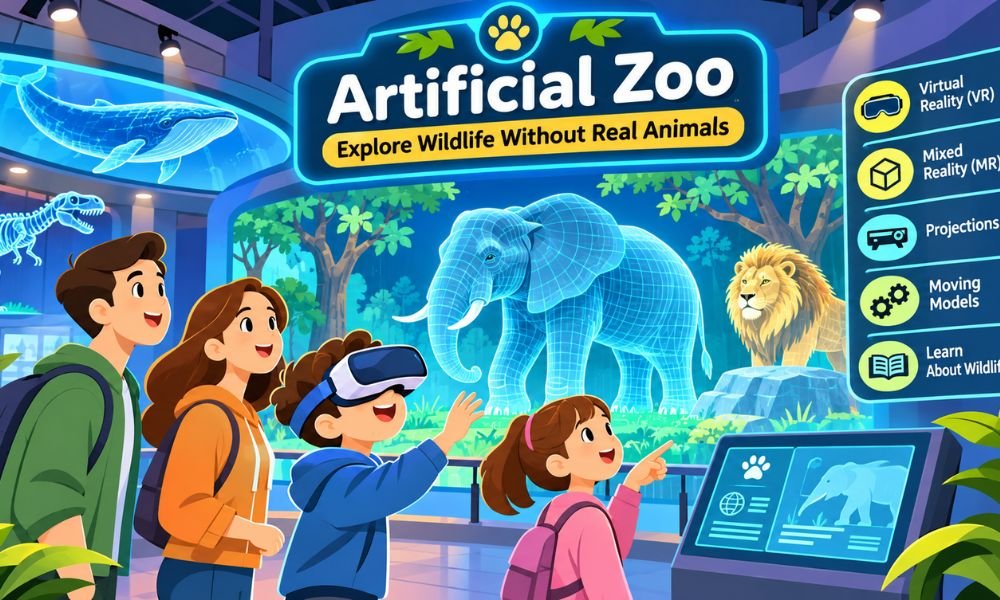
Have you ever wanted to see a giant whale swimming right in front of you? What if you could watch a dinosaur walk past you without any danger? An artificial zoo can make these amazing scenes possible through modern technology.
In 2026, people can explore wildlife in new ways. Some attractions use digital screens and special glasses to show animals. Others use moving models and virtual worlds. These experiences let visitors enjoy wildlife without needing live animals in every display.
An artificial zoo is more than a place to watch digital creatures. It can also help people learn about nature and animal habitats. In this article, we will explore how it works and why it is interesting. We will also discuss its features and benefits.
What Is an Artificial Zoo?
An artificial zoo is a wildlife attraction that shows animals through technology instead of live exhibits. These animals may appear on screens or through special glasses. Some places also use moving animal models that look almost real.
Unlike a traditional zoo, a fully digital zoo does not need living animals for its displays. Visitors can see lions or elephants through digital images. They may even explore places where real animals would be hard to find.
However, not every attraction is fully digital. Some traditional zoos also offer virtual animal shows. This means visitors should check whether the whole attraction is animal-free or only one part uses digital animals.
How Does an Artificial Zoo Work?
An artificial zoo uses computers and special equipment to create animal scenes. These tools can make animals appear to walk or swim around visitors. Sounds and lighting help make the experience feel more exciting and natural.
Some attractions use virtual reality headsets. When visitors wear them, they can see a digital world. Imagine standing in a forest while a large elephant walks nearby. The animal is not real, but the scene can feel close.
Other attractions use projections and moving models. A giant whale may appear on a screen while a robotic dinosaur moves its head. The technology depends on the attraction. Some displays also let visitors control what happens next.
Different Types of Artificial Zoos
There are several types of artificial zoo experiences. One popular type uses virtual reality. Visitors wear headsets and explore digital habitats. They may see ocean animals or walk through a forest filled with virtual creatures.
Another type uses augmented reality. This technology adds digital animals to the real world through a screen or special glasses. Mixed reality goes further by allowing digital objects to connect with the space around visitors.
Some attractions use large projections or mechanical animals. A moving dinosaur model can turn its head and make sounds. Other places combine screens and sound effects to create a wildlife show. Each type offers something different for visitors.
Why Are Artificial Zoos Becoming Popular?
One reason people enjoy an artificial zoo is the chance to see animals in unusual ways. Visitors may explore the deep ocean or watch extinct creatures move. These scenes would be difficult or impossible to see in real life.
Families may also enjoy learning together. Children can ask questions about animals while watching digital shows. Some attractions let visitors choose scenes or interact with displays. This can make learning feel more like an adventure.
Technology also gives museums and wildlife attractions new ways to tell stories. They can show how animals live and how habitats change. Still, not every digital show offers the same quality. A good experience should be both fun and useful.
Continue reading: Eleksan: Everything You Need to Know About This Turkish Company
Main Features of an Artificial Zoo
One exciting feature of an artificial zoo is its digital animal displays. Visitors may see a tiger walking through a forest or a shark swimming underwater. Detailed images and sound can help make these scenes feel more natural.
Some attractions also offer interactive activities. Visitors might use a controller or move their hands to explore a digital scene. Others may simply watch a show. It is important to know that not every moving animal responds to visitors.
Learning is another useful feature. A digital show can explain what animals eat and where they live. It may also show how pollution affects their homes. These lessons can help visitors understand wildlife while enjoying the experience.
Benefits of an Artificial Zoo for Visitors
An artificial zoo can help people explore wildlife without needing live animals in its digital displays. This is useful for showing creatures that are extinct or difficult to observe. Visitors can also see animal habitats that are far from home.
Another benefit is learning. Schools may use digital wildlife shows to teach children about nature. For example, students could watch how sea turtles move through the ocean. A good show can explain the dangers these animals face.
These attractions can also offer enjoyable family activities. Parents and children may explore digital worlds together and share what they learn. However, age limits and equipment rules can vary. Families should check these details before planning a visit.
The next part of the article will compare artificial zoos with traditional zoos. It will also explore real attractions around the world and explain their role in wildlife education and conservation.
Continue reading: Lori Anne Allison: The Full Story of Johnny Depp’s First Wife
Artificial Zoo vs Traditional Zoo
An artificial zoo and a traditional zoo offer different ways to explore wildlife. One uses digital animals and moving models. The other keeps living animals. Both can teach visitors about nature in their own ways.
In a traditional zoo, visitors watch real animals eat and move. Sometimes animals hide or sleep during the day. Digital attractions can show planned scenes at set times. This makes some animal encounters easier to enjoy.
However, digital animals cannot fully replace real wildlife. Living animals make their own choices and show natural behavior. Digital animals follow a designed program. Visitors should choose an experience based on what they want to see.
| Feature | Artificial Zoo | Traditional Zoo |
|---|---|---|
| Animals | Digital or mechanical | Living animals |
| Technology | Main part of the show | May be an extra |
| Animal care | No live display animals to care for | Needs daily animal care |
| Learning | Digital wildlife lessons | Real animal observation |
| Experience | Planned digital scenes | Natural animal behavior |
| Equipment | May need special glasses | Usually not needed |
Famous Artificial Zoo Experiences Around the World
An artificial zoo is not just an idea. Some real attractions already offer digital wildlife shows. These places use different tools to help visitors explore animals. Each attraction offers its own type of experience.
One example is Hologram Zoo in Brisbane, Australia. It uses special projections to show animals and other creatures. Visitors can enjoy themed shows without seeing live animals in those displays. The operator recommends the attraction for children aged three and older.
Another example is Visions of Nature at the Natural History Museum in London. It uses mixed reality to explore possible future habitats. Milwaukee County Zoo in the United States also offers virtual reality shows. These include Gorilla Trek and Shark Dive. Check official websites for current tickets and show times.
Can an Artificial Zoo Help Save Wildlife?
An artificial zoo can help people learn why animals need protection. Digital shows may explain how forests and oceans support wildlife. They can also show what happens when pollution or habitat loss puts animals in danger.
Imagine watching a digital sea turtle swim through clean water. The next scene shows plastic waste near its home. This simple example can help children understand why keeping oceans clean matters. Good lessons can turn curiosity into care.
Still, digital shows cannot save animals on their own. Real wildlife protection needs people who care for habitats and protect living species. Some attractions may support these efforts through donations or partnerships. Visitors should check for proof of such work.
Challenges and Disadvantages of Artificial Zoos
An artificial zoo has many interesting features, but it also has limits. Digital animals cannot behave exactly like living creatures. Their actions depend on the technology and programs used. Some visitors may prefer watching real animals.
Another challenge is cost. Special headsets and digital equipment can be expensive. Some attractions charge extra for certain shows. Visitors may also need to pay for parking or general admission. Checking the full price helps avoid surprises.
Comfort is important too. Some people feel dizzy or uncomfortable while using virtual reality headsets. Young children may find large digital creatures scary. Certain experiences also have age limits. Families should read the safety rules before booking.
How to Plan Your First Artificial Zoo Visit
Planning an artificial zoo visit can be simple. Start by finding an attraction that matches your interests. Some places focus on ocean animals. Others offer dinosaurs or forest wildlife. Check the official website to see what is included.
Next, look at ticket prices and show times. Some experiences last only a short time. Others include several activities. Ask whether special glasses are provided and whether children need adult supervision. These details can help you plan your day.
Accessibility also matters. Check if visitors can sit during the show or leave early when needed. Ask about wheelchair access and sound levels. If someone cannot use a headset, find out whether another viewing option is available.
The Future of Artificial Zoos
The future of artificial zoo attractions may bring even more exciting experiences. Better screens and digital tools could make animal displays look more natural. Visitors may also get more ways to explore habitats and learn about wildlife.
Artificial intelligence could play a role in future attractions. For example, digital animals might respond to visitor movements or questions. This could make some shows more interactive. However, not every artificial zoo uses artificial intelligence today.
Digital wildlife experiences may also become more useful for schools and museums. Students could explore ancient habitats or learn about endangered animals. Traditional zoos and digital attractions may continue to work side by side. Both can offer different lessons about nature.
Conclusion
An artificial zoo offers a new way to explore wildlife through technology. Visitors can see digital animals and learn about their homes. Some attractions use virtual reality while others use projections or moving models. Each one offers a different experience.
These attractions can be fun for families and useful for learning. They can also show animals that people may never see in real life. However, digital wildlife cannot replace living animals or the real work needed to protect them.
In 2026, an artificial zoo can be an interesting choice for people who enjoy animals and technology. Before visiting, check the ticket price and age rules. Choose a place that offers clear information and a safe experience for everyone.
(FAQs)
What Is an Artificial Zoo?
An artificial zoo is a place where people see digital animals instead of live ones. It uses special screens and other technology to create wildlife scenes. Visitors can explore nature and learn about animals without seeing them in real cages.
How Does an Artificial Zoo Work?
An artificial zoo uses computers and digital tools to show animals. Some places use virtual reality headsets. Others use projections or moving models. These tools make animals appear to walk or swim while visitors watch and learn.
Are There Real Animals in an Artificial Zoo?
A fully artificial zoo does not need live animals for its displays. It shows digital or mechanical creatures instead. However, some traditional zoos offer digital shows alongside real animals. Always check the venue before booking your visit.
Can You Touch Animals in an Artificial Zoo?
You cannot touch digital animals because they are not real. However, some attractions let visitors interact with them through hand movements or controllers. Mechanical animal models may also move. Touching them depends on the attraction’s rules.
Is an Artificial Zoo Safe for Children?
Many artificial zoo experiences are suitable for children. However, some have age limits or require special headsets. Large animals and loud sounds may scare younger visitors. Parents should check safety rules and show details before visiting.
Where Can You Visit an Artificial Zoo?
Hologram Zoo in Brisbane is one example of a digital wildlife attraction. London’s Natural History Museum also offers mixed reality wildlife experiences. Some traditional zoos have virtual reality shows. Check current opening dates before making travel plans.
How Much Does an Artificial Zoo Ticket Cost?
Ticket prices depend on the attraction and the activities offered. Some places charge for each digital show. Others include several experiences in one ticket. Visitors should check current prices and extra fees on the official website.
Can an Artificial Zoo Help Protect Endangered Animals?
An artificial zoo can teach visitors about endangered animals and their habitats. Digital shows may explain why some species are at risk. However, real wildlife protection still needs habitat care and conservation work. Education alone cannot save endangered species.
What Are the Main Disadvantages of an Artificial Zoo?
Artificial zoos cannot show the full natural behavior of living animals. Some experiences also require costly equipment. Virtual reality may cause discomfort for certain visitors. Digital shows can be educational, but their quality depends on how well they are made.
Will Artificial Zoos Replace Traditional Zoos in the Future?
Artificial zoos may become more common as technology improves. However, they are unlikely to replace every traditional zoo. Digital animals offer planned experiences while living animals show real behavior. Both types of attractions can help people learn about wildlife.
Continue reading: Zulu Phrases: Easy Words and Meanings You Should Know