Producing good-quality hay involves much more than cutting grass and leaving it in the field to dry. Farmers must choose the right harvesting time, manage moisture, operate suitable equipment, and collect the finished forage before unfavorable weather causes problems. Each stage influences how much usable hay reaches storage and whether the harvested crop maintains its feeding value. For agricultural businesses looking to improve their haymaking operations, exploring equipment from a farm tractor manufacturer in China can provide opportunities to compare tractors for different forage harvesting activities. A suitable tractor can operate compatible mowers, tedders, rakes, and balers, helping farmers organize the entire harvesting process. However, successful hay production depends on combining the right machinery with suitable weather conditions and careful field management.
Understanding the Hay Production Process
Haymaking is the process of cutting forage crops and drying them for later use as animal feed. Common hay crops include different grasses, alfalfa, and clover, depending on local growing conditions. The process usually involves several stages, including mowing, conditioning, drying, raking, baling, and storage. Each stage requires attention because mistakes during harvesting can reduce the quality or quantity of usable forage. Tractors help connect these activities by powering suitable attachments and moving equipment across the field. Instead of treating harvesting as one operation, farmers should understand how each stage affects the next. Proper coordination helps reduce unnecessary delays and supports better forage preservation.
Choosing the Right Time to Cut Forage
Harvest timing has a significant influence on hay quality. As forage plants mature, their fiber content generally increases, while digestibility and some nutritional characteristics may decline. Cutting earlier can help preserve feeding quality, but harvesting too soon may reduce the amount of forage collected. Farmers should consider crop maturity, intended livestock requirements, and expected weather conditions before beginning. Weather forecasts are particularly important because cut forage needs enough suitable drying time before baling. A short period of favorable weather can be more useful than beginning a large harvest immediately before rainfall. Planning the cutting schedule carefully gives tractors and harvesting equipment a better opportunity to complete operations without unnecessary interruptions.
How Tractors Support Efficient Mowing
Mowing is the first major mechanical operation in hay production. Tractor-powered mowers cut standing forage and leave it in the field for drying. Different mower designs are available, including disc and drum systems. Their suitability depends on crop type, field conditions, working width, and tractor compatibility. Farmers should choose equipment that matches their expected harvesting area and available operating time. An attachment that is too large for the tractor may create performance or safety problems, while an undersized mower can make harvesting unnecessarily slow. Operators should also check fields for stones, branches, and other obstacles before mowing. Careful preparation helps protect equipment and reduces the likelihood of damage during harvesting.
Why Cutting Height Deserves Attention
Cutting forage extremely close to the soil may seem like a way to collect more material, but it can create additional problems. Very low cutting heights may introduce soil contamination into the harvested crop. They can also affect plant regrowth, depending on the forage species and growing conditions. Farmers should follow crop-specific recommendations when setting mowing height. The field surface also matters. Uneven ground, hidden stones, and raised areas may require additional care during operation. Correct mower adjustment helps maintain a consistent cut while reducing unnecessary contact with the soil. This is especially important for farms planning multiple forage harvests during one growing season.
Improving Drying With Conditioning Equipment
Freshly cut forage contains considerable moisture, which must be reduced before it can be stored safely as dry hay. Conditioning equipment can help speed up drying by crushing or crimping plant stems, making it easier for moisture to escape. Some mowing systems combine cutting and conditioning into one operation, while other arrangements use separate equipment. However, excessive conditioning can damage leaves, particularly in crops such as alfalfa. Because leaves contain valuable nutrients, unnecessary leaf loss can reduce forage quality. Farmers should adjust equipment according to crop characteristics and follow the implement manufacturer's recommendations. The purpose of conditioning is to support drying without causing avoidable damage to the harvested material.
The Role of Tedders in Haymaking
After mowing, forage may lie in dense layers that dry unevenly. Material underneath the swath can retain moisture longer than forage exposed to sunlight and moving air. A tedder spreads and lifts the cut material, improving its exposure to drying conditions. Tractor-powered tedders can be useful when weather conditions require faster or more uniform drying. However, tedding should not be performed unnecessarily. Handling forage that has become too dry can cause fragile leaves to break away. The appropriate timing depends on crop type, moisture condition, and weather. Farmers should inspect the forage before deciding whether another pass is beneficial.
Preparing Windrows for Baling
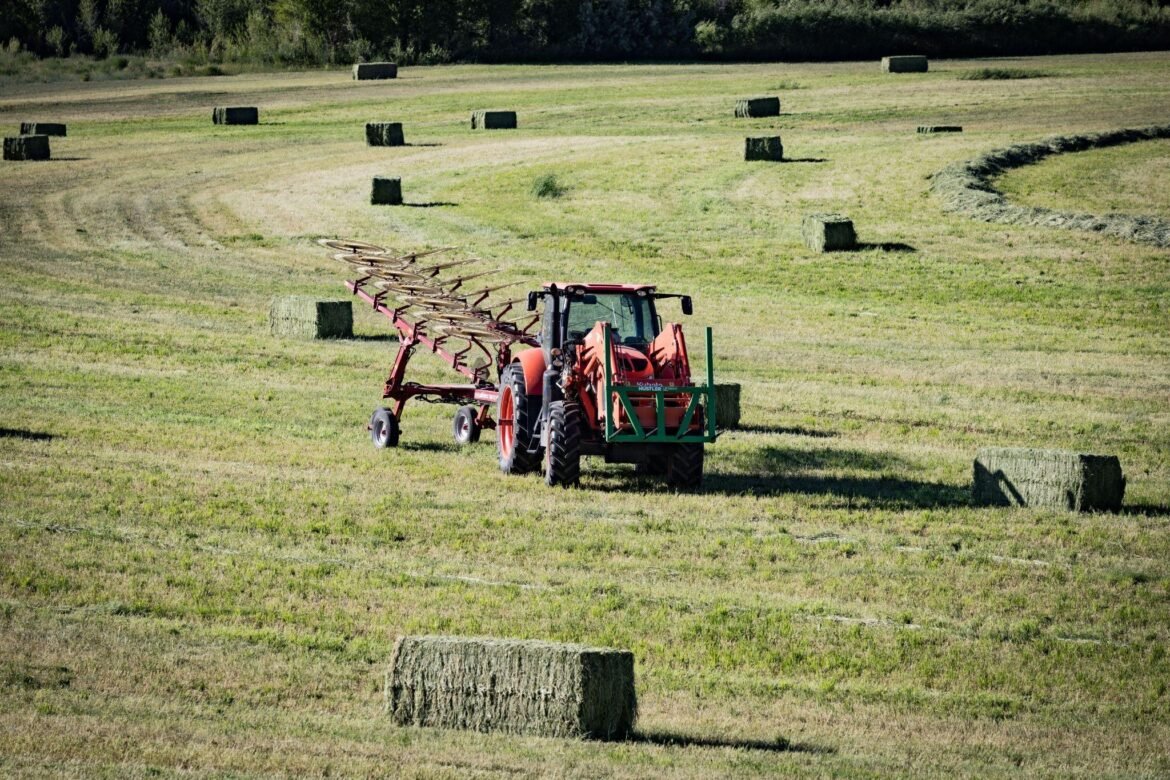
Once forage has dried sufficiently, it is generally gathered into rows called windrows. These rows allow balers to collect material more efficiently. A tractor operating a suitable rake can gather scattered forage into manageable windrows. When selecting equipment from a farm tractor manufacturer in China, farmers should consider the power and operating requirements of the harvesting attachments they intend to use. Windrow size and consistency matter because uneven rows can affect baler feeding and field efficiency. Raking too aggressively or when forage is excessively dry may cause unnecessary leaf losses. The aim is to prepare a uniform supply of forage for the baler while preserving as much usable material as possible.
Understanding Tractor-Powered Baling Operations
Baling turns loose, dried forage into manageable packages that can be transported and stored. Common options include small square bales, large square bales, and round bales. Different bale types suit different agricultural businesses, storage systems, and handling equipment. Small square bales may be convenient for certain customers and smaller feeding operations, while larger bales can reduce the number of individual packages requiring handling. Balers have specific tractor power, PTO, and hydraulic requirements. Farmers should confirm these specifications before purchasing or connecting equipment. Correct operating speeds, consistent windrows, and proper baler adjustment can help produce more uniform bales and reduce unnecessary interruptions.
Why Moisture Control Matters Before Storage
One of the most important considerations in hay production is ensuring that forage reaches a suitable moisture level before baling. Hay baled with excessive moisture may develop mold or experience dangerous heating during storage. In severe cases, excessive heating can create a fire risk. Safe moisture recommendations vary according to bale size, density, and the storage system being used. Farmers should use appropriate moisture-testing methods rather than relying entirely on appearance. Checking several locations within the forage provides a better understanding of drying conditions. Once hay is stored, newly harvested bales should be monitored according to recognized hay-storage safety guidance, particularly when moisture concerns exist.
Organizing Bale Collection and Field Transportation
After baling, farmers must collect the finished hay and move it to an appropriate storage location. Leaving bales exposed to unfavorable weather can create additional quality problems, especially when rain is expected. Tractors equipped with suitable trailers or bale-handling attachments can support collection and transportation.
Before moving hay, farmers should consider:
- Bale weight: Ensure lifting equipment and trailers have adequate rated capacity.
- Field access: Select suitable routes that allow safe machinery movement.
- Load security: Properly secure transported bales to prevent shifting.
- Storage preparation: Arrange sufficient space before collecting the harvest.
- Operator safety: Keep people clear of raised loads and moving machinery.
Careful transportation planning helps reduce unnecessary handling and keeps harvesting operations organized.
Protecting Hay Quality During Storage
Even properly harvested hay can lose quality when stored under unsuitable conditions. Moisture exposure, poor ventilation, and direct contact with damp ground can contribute to spoilage. Covered storage areas generally provide better protection than leaving unprotected hay outdoors. Farmers should select storage arrangements that suit their climate, bale type, and available facilities. Adequate separation from moisture sources and appropriate stacking practices are important. Bales must also be stacked securely to reduce collapse hazards. Storage facilities should remain accessible for inspections, loading, and emergency response. Good storage practices protect the work already invested in growing, cutting, drying, and collecting the forage.
Improving Haymaking Through Better Field Records
Farmers can improve future haymaking decisions by recording basic information from each harvest. Useful records include cutting dates, crop maturity, weather conditions, drying time, baling moisture, and harvested quantities. These details help identify which practices produced satisfactory results and where problems occurred. For example, repeated delays between mowing and baling may suggest that harvesting capacity needs to be reviewed. Records may also reveal whether certain fields dry more slowly because of crop density or local conditions. Using this information allows farmers to plan future harvesting operations with a clearer understanding of their equipment and field requirements.
Exploring Suitable Tractor Options for Forage Operations
Hay production involves several connected activities, so tractor buyers should consider their complete harvesting system rather than focusing on one attachment. The selected machine should match the equipment used regularly and provide suitable operating capabilities. The agricultural tractor range available through gengjiaagri.com includes models across different horsepower categories, with options intended for various farming applications. Farmers planning haymaking operations can explore these tractors and discuss PTO specifications, transmission configurations, and compatibility with their intended forage equipment. Final attachment requirements and operating capabilities should always be confirmed before purchasing.
Conclusion
Successful hay production depends on careful timing, suitable harvesting equipment, and responsible forage handling. From mowing and conditioning to raking, baling, and transportation, tractors help farmers complete important stages of the process. However, machinery alone cannot guarantee high-quality hay. Crop maturity, weather conditions, moisture management, and storage practices remain essential. By coordinating these factors and selecting suitable tractor-powered equipment, agricultural businesses can reduce avoidable harvesting losses, improve operational efficiency, and produce better-preserved forage for future livestock feeding.