A fall can change an older adult’s life in a matter of seconds. One misstep on a wet bathroom floor or a loose rug, and a confident, independent parent can suddenly face a hospital stay, a long recovery, and a new fear of moving around their own home. The good news is that most falls are preventable, and the right fall prevention tips for seniors can lower the risk far more than most families expect.
If you’re already worried about a parent’s safety at home, you can book a tour at Seaside Hallandale Beach to see what a safety-focused living setup looks like in person.
Why Falls Matter More Than Most Families Realize
Falls are one of the leading causes of injury among adults over 65. They often lead to fractures, head injuries, and a loss of confidence that quietly shrinks a person’s world. Many seniors who fall once begin avoiding stairs, walks, and social outings out of fear, which weakens muscles and balance even further and raises the chance of another fall.
That cycle is exactly why prevention matters. Acting early, before a serious fall happens, protects both physical health and independence, and it’s why fall prevention tips for seniors deserve attention long before an accident occurs.
Common Risk Factors for Falls in the Elderly
Understanding the risk factors for falls in the elderly makes it easier to spot problems before they turn into injuries. Most falls come from a combination of causes rather than a single one.
Physical and health-related factors
- Weak leg muscles or reduced overall strength
- Poor balance or an unsteady walking pattern
- Vision changes, including cataracts or outdated glasses prescriptions
- Chronic conditions such as arthritis, diabetes, or neuropathy
- Dizziness from low blood pressure or dehydration
Medication and lifestyle factors
- Sedatives, sleep aids, or blood pressure medications that cause drowsiness
- Taking several medications at once, which increases side effects
- Poor sleep and fatigue
- Sedentary habits that weaken the body over time
- Wearing loose slippers or shoes without good grip
Environmental factors
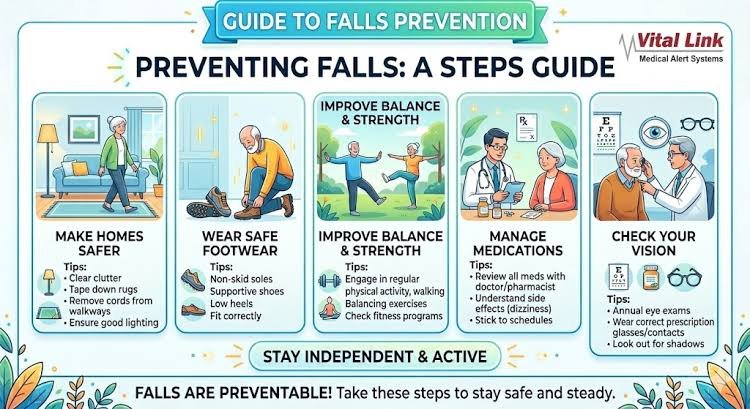
- Loose rugs, cords, and clutter in walkways
- Poor lighting, especially at night
- Slippery bathroom floors and tubs without grab bars
- Stairs without sturdy handrails
If several of these apply to someone you love, it’s worth taking a closer look at their daily routine and living space.
Home Safety for Seniors: Room-by-Room Fixes
Strong home safety for seniors starts with small, inexpensive changes that remove everyday hazards. A quick walk through the house with a safety mindset can reveal problems that have become invisible through familiarity.
Bathroom
- Install grab bars near the toilet and inside the shower
- Add non-slip mats or adhesive strips to the tub floor
- Consider a shower chair and handheld showerhead
- Keep a night light between the bedroom and bathroom
Bedroom and living areas
- Remove or secure throw rugs with non-slip backing
- Keep pathways wide and clear of furniture and cords
- Place a lamp within easy reach of the bed
- Arrange frequently used items at waist level to avoid reaching or bending
Stairs and entryways
- Make sure handrails run the full length on both sides
- Mark stair edges with bright, contrasting tape
- Improve lighting at the top and bottom of every staircase
- Repair uneven steps, cracked walkways, and loose door thresholds
Balance Exercises for Older Adults
Physical strength is one of the strongest defenses against falls. Balance exercises for older adults, done a few times a week, help the body react quickly when footing becomes unstable. Always check with a doctor before starting a new routine, especially if there are existing health concerns.
Simple options include:
- Standing on one foot while holding a sturdy counter for support
- Heel-to-toe walking along a straight line
- Sit-to-stand repetitions from a firm chair to build leg strength
- Gentle tai chi, which research links to improved balance and fewer falls
- Water exercises, which build strength with less joint stress
Consistency matters more than intensity. Even ten to fifteen minutes a few times a week can make a noticeable difference in steadiness over a couple of months.
Everyday Habits That Reduce Fall Risk
Beyond exercise and home changes, daily habits play a bigger role than many people think. Some of the most effective fall prevention tips for seniors are also the simplest ones to repeat every day.
- Review medications regularly. Ask a doctor or pharmacist whether any prescription could cause dizziness or drowsiness.
- Get vision and hearing checked yearly. Small changes in senses can affect balance and awareness.
- Wear supportive, closed-back shoes. Avoid walking in socks or loose slippers on smooth floors.
- Stay hydrated and eat balanced meals. Dehydration and poor nutrition can cause weakness and lightheadedness.
- Rise slowly. Standing up too quickly from a bed or chair can cause a sudden drop in blood pressure.
- Use a cane or walker when recommended. Mobility aids are tools for independence, not signs of weakness.
Creating a Safe Living Environment for Seniors
A truly safe living environment for seniors goes beyond a few grab bars. It combines good design, reliable support, and a routine that keeps residents active and aware.
Key elements include:
- Well-lit hallways and common areas
- Handrails, wide doorways, and step-free layouts
- Flooring chosen for traction
- Easy access to help in an emergency
- Daily opportunities for safe, supervised movement
For many families, building all of this into a private home becomes difficult or expensive, especially as needs change over time. That is often when a supportive community becomes worth considering.
Talking With a Parent About Fall Safety
Many older adults resist safety suggestions because they feel it implies they are no longer capable. How the topic is raised often matters more than what is said.
- Choose a calm moment, not right after a scare or an argument
- Ask what feels difficult or unsteady before offering solutions
- Frame changes as ways to stay independent, not signs of decline
- Start with one small change, like a night light or a grab bar, and build from there
- Involve their doctor if the conversation feels stuck
Sharing fall prevention tips for seniors as a team effort, rather than a list of orders, tends to earn far more cooperation.
Keeping Track of Progress Over Time
Fall prevention is not a one-time project. Needs change as health, vision, and strength change, so a regular check-in keeps the plan current.
Once or twice a year, consider:
- Repeating the room-by-room home walkthrough
- Scheduling a vision, hearing, and medication review
- Asking a doctor or physical therapist to assess balance and gait
- Noting any near-misses, since they often signal a growing risk
- Adjusting exercise routines as strength improves or changes
Writing down small observations, such as a parent gripping furniture while walking or avoiding the stairs, helps families spot patterns early and share accurate details with healthcare providers.
When Falls Signal It’s Time for More Support
One fall does not always mean a parent can no longer live at home. But some patterns deserve attention:
- Two or more falls within a short period
- Near-misses or frequent stumbling that a parent downplays
- New fear of walking, bathing, or using stairs
- Bruises or injuries that are not explained
- A caregiver who is exhausted from constant worry and supervision
When these signs appear, it’s a good time to talk with a doctor and explore options that offer more consistent support.
How a Supportive Community Helps Prevent Falls
At Seaside Hallandale Beach, safety is part of everyday design rather than an afterthought. Residents have their own well-appointed suite, on-site staff available when help is needed, chef-prepared meals that support steady energy and strength, and a spacious open-air courtyard where daily movement and socializing happen in a secure setting.
Scheduled group activities encourage gentle exercise, and having trained staff nearby means that small problems, like a new unsteadiness or a change in routine, get noticed early instead of going unseen at home. For families who worry constantly about a parent living alone, this kind of environment puts many of the fall prevention tips for seniors covered above into daily practice, which often brings real peace of mind.
Frequently Asked Questions
What is the most common cause of falls in older adults?
Weak muscles, poor balance, and home hazards like loose rugs and poor lighting are the most common causes.
How often should seniors do balance exercises?
Most guidance suggests a few short sessions each week, once a doctor approves.
Can medications really increase fall risk?
Yes, sedatives and some blood pressure medicines can cause dizziness, so a regular medication review helps.
Is assisted living only for people who have already fallen?
No, many families choose it early to prevent falls and add daily support before a crisis happens.
Moving Forward With Confidence
Falls are common, but they are not an unavoidable part of aging. Putting fall prevention tips for seniors into practice early gives older adults the best chance of staying safe and independent. Combining practical home changes, regular movement, medication reviews, and a supportive setting gives older adults the best chance of staying safe, active, and independent for longer. Starting early, before an injury forces the conversation, makes every step easier for the whole family.
If you’d like to see how a safety-minded community supports daily life, you can schedule a tour and experience it firsthand.