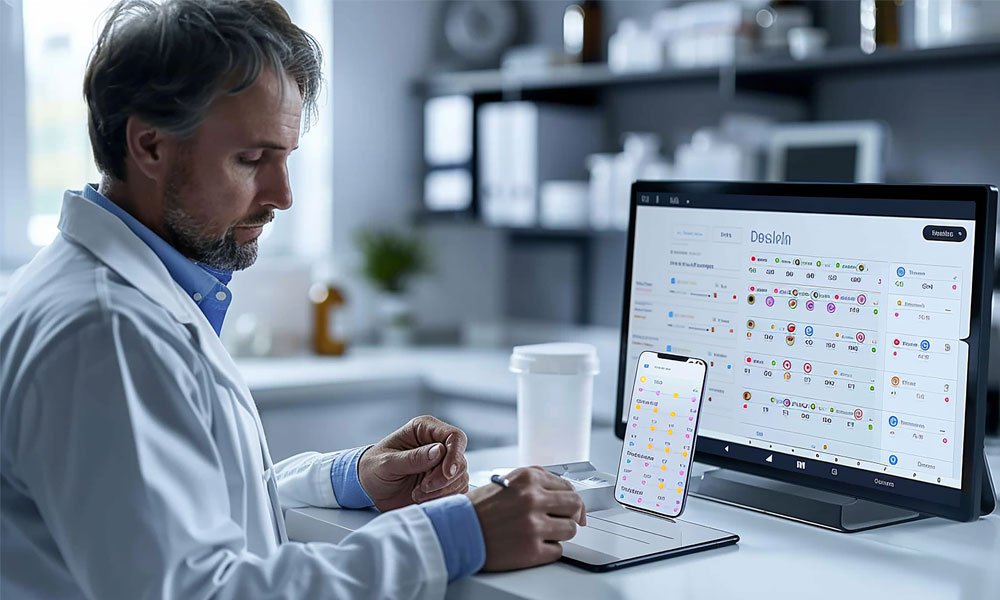
Chronic Care Management (CCM) is a systematic way of helping patients with two or more chronic conditions that are likely to last at least 12 months or for the patient’s lifetime. Medicare’s CCM framework encompasses a full range of care planning, medication management, care-management services, and care coordination with other health care providers.
Chronic care management solutions integrate these needs into technology, streamlined workflows, and continuous patient support. This guide covers what they are and how providers can select the best one for their practice.
What are Chronic Care Management Solutions Used For?
Chronic care management solutions are technology platforms, services, or a combination of the two that enable healthcare organizations to deliver ongoing support and services to patients who have chronic conditions. The idea is to develop a more secure system of care for patients, outside of the traditional office visit. Relying on individual staff members to remember when a patient needs follow-up is not a structured solution; it is a task that can be organized by a system. Tasks can be assigned, care plans can be maintained, and unresolved issues can be surfaced.
Essential Features of a CCM Solution
The longer the list of features, the better the platform is not necessarily. Whereas for healthcare organizations, focus should be placed on capabilities that will have an immediate effect on patient care and care coordination, staff productivity, and the documentation of patient care.
Comprehensive Care Plan Management
A care plan should be a dynamic clinical document, not a document that is set in stone. It should assist the care team in knowing about a patient’s chronic illnesses, treatment goals, medications, interventions, and ongoing needs.
Comprehensive care planning is one of the key elements of CCM, according to CMS. The plan may include a list of problems, measurable treatment goals, expected outcomes, symptom management, medication management, and coordination with other practitioners.
Authorized staff should be able to easily document, review, update, and create changes to the care plan with a strong platform.
Communication and Patient Engagement
Communication is key to the management of chronic diseases. Patients may need guidance to understand treatment options, medications, and symptoms or even arrange for an appointment or the rest of their medical treatment.
Useful capabilities include:
- Scheduled patient outreach
- Two-way communication
- Automated reminders
- Health education
- Medication support
- Appointment reminders
- Outreach documentation
- Patient escalation workflows
EHR Integration
A CCM platform should complement and support the EHR and not be another information silo. Bad integration can cause care coordinators to check several systems, duplicate information and waste time doing repetitive tasks.
In an evaluation request vendor, request to know how patient demographics, clinical information, care plans, documentation, tasks, and provider notifications flow between systems. Any vendor should be able to show these workflows, not just say that integration is available.
How CCM Solutions Improve Patient Care
Chronic conditions are issues that are not solved just at appointments; they need to be addressed throughout the year. There is a structured CCM program that will help facilitate communication between care teams, barriers, and follow-up between visits.
Proactive management in between appointments
Office visits can only give a partial picture of the patient’s condition. Much can change in a patient’s symptoms, compliance with the medication regimen, lifestyle or treatment plan between visits.
For instance, a diabetic with hypertension is starting to have side effects to medication. The patient brings up the problem during a regular CCM encounter. The concern may be recorded and referred to the appropriate clinician to review, rather than waiting for several weeks for the next appointment.
Better Coordination Across Providers
It is common for patients with several chronic conditions to come into contact with a variety of health care professionals, such as the primary care provider, specialists, pharmacies, laboratories, hospitals, etc. Key data can be siloed if there is no concerted effort.
With a structured CCM workflow, teams can monitor communications, any follow-up tasks, referrals, and other items left outstanding. CMS also considers coordination with other practitioners and health care resources to be important components of comprehensive CCM.
Operational Advantages for Healthcare Practices
An in-house CCM program can be an extra burden on nursing, medical assistant, care coordinator, and administrative staff.
Potential benefits include:
- Improved patient communication
- Reduced duplicate documentation
- Centralized care-management workflows
- Easier care plan updates
- Better task assignment
- More quick identification of overdue activities.
- Improved clinical escalation process
- Improved program reporting
- Increased ability to expand enrollment.
It’s important to actually track the efficiency of operations, not just calls made. When the care coordinator takes several minutes to locate information prior to each patient interaction, these time delays can add up to a significant staffing cost if the patient population is large.
Supporting Medicare CCM Requirements
Technology can help with CCM workflows, but that doesn’t mean the practice is compliant with Medicare’s requirements if it is using software. There are still requirements for providers that pertain to patient eligibility, consent, care planning, documentation, billing, and service delivery.
CMS has been providing specific guidance with regard to CCM services and related billing codes. CMS includes CPT 99490 for the first 20 minutes of clinical staff CCM services and CPT 99439 for any additional 20 minutes of service (assuming applicable requirements and coding rules are met).
Required documentation should be part of the normal process of a well-designed system. It should facilitate staff getting meaningful care activities right, not more contacts with the patient just to get more time.
Connecting CCM With Remote Patient Monitoring
While the two services, CCM and RPM, serve distinct purposes, they can be integrated as part of a larger chronic disease strategy. CCM also emphasizes the continuous coordination, communication, and management, whereas RPM relies on connected devices to gather patient health information remotely.
Take a case of uncontrolled high blood pressure. RPM can help with providing regular blood pressure readings from the patient’s home, and CCM can help with the medication conversation, education, care coordination, and follow-up.
CCM and RPM needs should be assessed separately, as eligibility, consent, documentation, billing, and operational needs vary.
Conclusion
Chronic care management solutions integrate patient engagement, care coordination, documentation, and clinical workflow with technology. Tellihealth is a good option for practices that also require full care management capabilities, beyond the standard CCM software, and remote care capabilities.
FAQs
Who are the winners of chronic care management solutions?
Structured CCM solutions offer advantages to primary care practices, specialty practices, hospitals, and health systems. They can be especially beneficial for companies handling patients that require frequent care and communication between appointments.
Are CCM solutions Medicare billable?
CCM technology can assist providers on workflow and documentation of Medicare applicable services. Practices, however, are required to comply with current CMS regulations for eligibility, consent, documentation, coding and billing.
How can Tellihealth facilitate chronic care management?
Tellihealth integrates CCM technology with committed care-management support to enable healthcare organizations to coordinate patient engagement and follow-up care. It can also integrate CCM with remote care options, allowing for a more comprehensive chronic care management strategy.