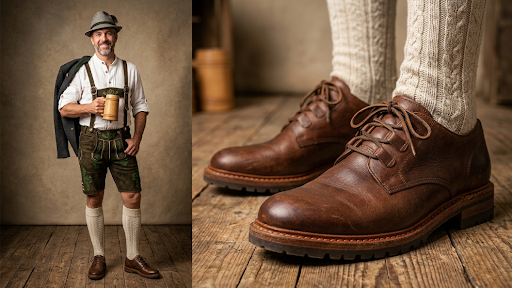
For men and women building authentic Bavarian traditional ensembles in 2026, quality haferl shoes represent the specific Bavarian footwear tradition that distinguishes complete authentic outfits from partial approximations. Named for the specific side-lacing style that has defined Alpine work and traditional footwear across centuries, Haferl shoes provide the finishing detail that anchors traditional Trachten ensembles visually while offering practical comfort across long festival days and various outdoor Bavarian cultural activities. Understanding what makes authentic Haferl construction distinct, how the specific styles suit different contexts, and how to properly coordinate Haferl with your complete German outfit helps ensure your traditional ensemble achieves the authentic character that quality footwear delivers.
Haferl construction connects directly to centuries of Alpine work culture, developed by traditional Bavarian and Austrian craftsmen to serve the practical needs of mountain workers, farmers, and hunters who required sturdy footwear supporting outdoor activity across rugged terrain. The distinctive side-lacing style emerged from practical function — allowing wider foot opening for easier entry and exit while providing appropriate lacing tension for secure fit during outdoor activity. Contemporary quality Haferl construction preserves these traditional characteristics while incorporating modern comfort refinements suited to contemporary use.
The Distinctive Haferl Side-Lacing Pattern
The most immediately recognizable Haferl feature is the specific side-lacing pattern. Traditional Haferl feature leather laces or cords running through side lace loops on the outer side of each shoe rather than standard front eyelets running down the shoe center. This distinctive lacing pattern serves both practical and cultural functions.
Practically, side-lacing allows wider foot opening for easier shoe entry and exit — historically important for Alpine workers who needed to change footwear frequently between indoor rest periods and outdoor work activity. The wider opening accommodates larger foot proportions during entry, then the side-lacing provides secure fit during wear. Modern buyers benefit from this same practical advantage when putting on and removing Haferl.
Culturally, the distinctive side-lacing reads immediately as Bavarian traditional footwear to anyone familiar with Alpine heritage. Cheap imitations sometimes shortcut to standard front lacing, immediately revealing costume-grade rather than authentic construction. Genuine Haferl always feature proper side-lacing as fundamental construction characteristic.
The lace material itself matters within authentic Haferl construction. Traditional leather laces provide authentic character and appropriate durability for the specific side-lacing configuration. Cord laces exist in some traditional configurations but leather laces represent the more common authentic choice. Quality laces should match the shoe leather in color or provide appropriate contrasting character.
Materials Across Quality Tiers
Quality Haferl construction uses substantial leather uppers with appropriate thickness and character. Full-grain leather (using outer leather surface with natural grain pattern) delivers superior long-term performance compared to lower-quality leather grades. Full-grain leather develops distinctive patina across years of wear, actually improving in appearance as the shoes age with proper care.
Vegetable-tanned leather traditionally developed by Alpine leather craftsmen provides authentic character particularly suited to traditional Haferl. This tanning process, using natural tannins from tree bark and vegetation, produces leather with distinctive character and appropriate durability for outdoor use. Chrome-tanned leather (using chemical processes) represents modern alternative that some quality construction incorporates.
Leather sole construction represents traditional quality standard, providing appropriate flexibility and traditional character. Modern rubber-and-leather combinations provide practical outdoor durability while maintaining traditional aesthetic. Full rubber soles serve maximum practical use at some aesthetic cost for pure traditional character. Different sole configurations suit different specific use cases within Bavarian heritage engagement.
Interior construction including quality lining, appropriate cushioning, and proper structural support affects both comfort and durability. Quality Haferl feature substantial construction throughout rather than shortcut interior details. Cheap imitations often show inadequate lining, insufficient cushioning, and poor structural support that lead to discomfort during extended wear.
Coordinating Haferl With Complete German Outfit
Understanding how Haferl shoes coordinate with the complete german outfit helps position footwear selection within broader traditional ensemble context. Complete German outfit for men includes lederhosen foundation, coordinating Trachtenhemd (traditional shirt), wool knee socks, quality Haferl shoes, appropriate Bavarian hat, and complete accessorization. For women, complete German outfit includes dirndl foundation, Dirndlbluse, appropriate stockings, quality traditional shoes (Haferl for some configurations, Mary Janes for others), and coordinating jewelry.
Color coordination between Haferl and other ensemble elements matters for finished visual character. Brown Haferl coordinate with brown lederhosen configurations and warm-toned ensemble elements. Black Haferl coordinate with more formal ensemble configurations and cooler-toned elements. The Haferl color should coordinate with belt hardware, watch chain color, and other leather accessories creating unified color story across the complete ensemble.
For men wearing kurze (short) lederhosen with visible knee socks, the Haferl provide clear focal footwear element visible below the sock line. The traditional silhouette showing kurze lederhosen, wool knee socks, and quality Haferl creates the distinctive Bavarian look that photographs immediately as authentic. Standard fashion shoes or athletic footwear break this traditional visual coherence dramatically.
For men wearing kniebund (knee-length) or lange (ankle-length) lederhosen, the Haferl are less prominently featured in the visual but still matter for complete authentic character. Proper Haferl beneath longer trousers maintains traditional coherence even when less visible than in kurze configurations.
Sizing and Fit for Practical Wear
Getting sizing right for Haferl shoes requires attention to specific construction differences from standard modern shoes. European sizing predominates in Haferl construction, with 40 (approximately US 7) through 47 (approximately US 13) representing common range for men and 36 through 42 (approximately US 5 through 10) for women. Following specific retailer sizing guides prevents fit disappointment.
Foot measurement should include length, width, and instep circumference. Traditional Haferl construction sometimes runs slightly wider than modern athletic shoe fits, accommodating traditional Bavarian foot proportions historically common in Alpine populations. Buyers with narrow feet may need specific narrow sizing options; wide feet buyers may find standard traditional Haferl more accommodating than modern narrow shoe fits.
Break-in period for quality leather Haferl typically requires 3 to 5 wearings for the leather to soften and shape to your feet appropriately. Initial wearings may feel somewhat stiff; continued wear develops personalized fit that quality synthetic imitations never achieve. This break-in process represents part of what distinguishes quality leather construction from cheap alternatives.
For major festival attendance requiring 8-hour-plus wear, breaking in shoes across several shorter wearings before the event prevents blister issues on the actual event day. Wearing new Haferl for 2 to 3 hours periods across the 2 to 3 weeks before major Oktoberfest attendance allows appropriate break-in without demanding the shoes serve full-day wear before proper fit development.
Winter and Cool Weather Considerations
For cool weather Bavarian events including autumn Oktoberfest attendance during cooler periods and winter cultural gatherings, appropriate Haferl selection matters. Higher Haferl extending above the ankle provide additional warmth and support compared to standard low-cut versions. Some winter Haferl configurations incorporate warmer linings or additional interior construction supporting cold-weather use.
Traditional Bavarian winter includes substantial outdoor time during Christmas markets, winter cultural events, and Alpine hunting culture occasions. Quality Haferl designed for cool-weather use provide appropriate warmth without sacrificing traditional aesthetic. Some regional traditional configurations feature specific winter Haferl styles reflecting particular Alpine winter culture heritage.
For warm-weather festival attendance during summer and early autumn Oktoberfest periods, standard low-cut Haferl work universally. The lower height provides comfortable warm-weather wear without excessive coverage that could cause discomfort during warm-weather attendance.
Where Haferl Shoes Belong
Beyond Oktoberfest and specifically Bavarian traditional contexts, quality Haferl work across broader traditional and outdoor recreational contexts. Alpine hiking traditionally used Haferl-style footwear, and quality construction serves this outdoor recreational use appropriately. Traditional Bavarian cultural events, German-American heritage gatherings, and various Alpine cultural celebrations all provide contexts for quality Haferl.
Beyond specifically traditional contexts, quality leather Haferl provide sophisticated casual footwear working with contemporary trousers and casual wear in appropriate contexts. The distinctive character reads as thoughtful heritage acknowledgment in daily wear contexts, providing subtle traditional character without demanding full ensemble commitment.
Bavarian and Alpine weddings represent formal contexts where quality Haferl coordinate with complete formal Trachten ensembles. Ring bearer roles, groomsman participation, and specific ceremonial contexts all provide appropriate contexts for quality traditional footwear.
Care and Longevity
Quality leather Haferl last 10 to 25 years or more with proper care, actually improving in appearance across years of wear as the leather develops patina and character. Required care includes leather conditioning every 3 to 6 months maintaining suppleness and preventing drying, appropriate cleaning after outdoor wear including brushing off dirt and treating any moisture damage, quality shoe trees maintaining shape during storage, and periodic resoling when soles wear.
Water damage requires prompt attention. If quality leather Haferl get significantly wet, drying slowly at room temperature (never with direct heat that would distort the leather) prevents damage. Stuffing with newspaper or shoe trees maintains shape during drying. Conditioning after complete drying restores suppleness.
Storage between wearings preserves shape and construction. Shoe trees maintain proper shape during storage; appropriate storage away from extreme temperatures preserves leather character. Cedar storage may protect against moths that could damage any wool sock interior or fabric elements. Multi-year use across various contexts extends the value of quality construction substantially.
Resoling represents specific advantage of quality Haferl construction. When soles wear across years of use, quality retailers can resole the shoes preserving the leather uppers for continued use. This resole capability supports multi-decade ownership of quality construction, potentially extending useful life well beyond initial sole wear.
Frequently Asked Questions
What makes Haferl different from standard leather shoes? Distinctive side-lacing pattern, traditional Alpine construction techniques, specific styling elements, and heritage character all distinguish Haferl from standard front-lacing leather shoes.
Are Haferl comfortable for full festival day wear? Yes when properly broken in. Quality leather construction shapes to your feet across 3 to 5 wearings, providing comfortable full-day wear.
Should I buy leather sole or rubber sole Haferl? Leather soles provide classic traditional aesthetic; rubber-and-leather combinations provide practical outdoor durability. Choose based on expected use — leather for indoor contexts, rubber-leather for outdoor practicality.
How do I break in new Haferl? Wear across several 2-3 hour periods over 2-3 weeks before major festival attendance. Quality leather softens and shapes to your feet across this process.
Can I wear Haferl with jeans and modern clothing? Yes for subtle heritage character in daily wear. Quality Haferl work as sophisticated casual footwear beyond specifically traditional contexts.
How much should I spend on quality Haferl? $120 to $250 for accessible authentic construction; $250 to $450 for mid-range premium; $450+ for heritage-grade construction from established makers.
For men and women completing authentic Bavarian ensembles in 2026, quality haferl shoes anchor the traditional Trachten look in ways that no fashion shoe substitute can achieve. Understanding what distinguishes authentic Haferl construction — the distinctive side-lacing pattern, quality leather uppers, traditional construction techniques, and appropriate soles for practical wear — helps ensure your footwear properly completes your traditional german outfit rather than undermining even quality upper ensemble investment through inappropriate footwear selection. Combined with proper coordinating lederhosen or dirndl, quality Trachtenhemd or Dirndlbluse, appropriate wool socks, and complete accessorization, quality Haferl deliver the finishing detail that transforms good traditional outfits into properly complete authentic Bavarian ensembles that photograph beautifully and read as thoughtful heritage engagement across multiple annual events for decades of continued use.