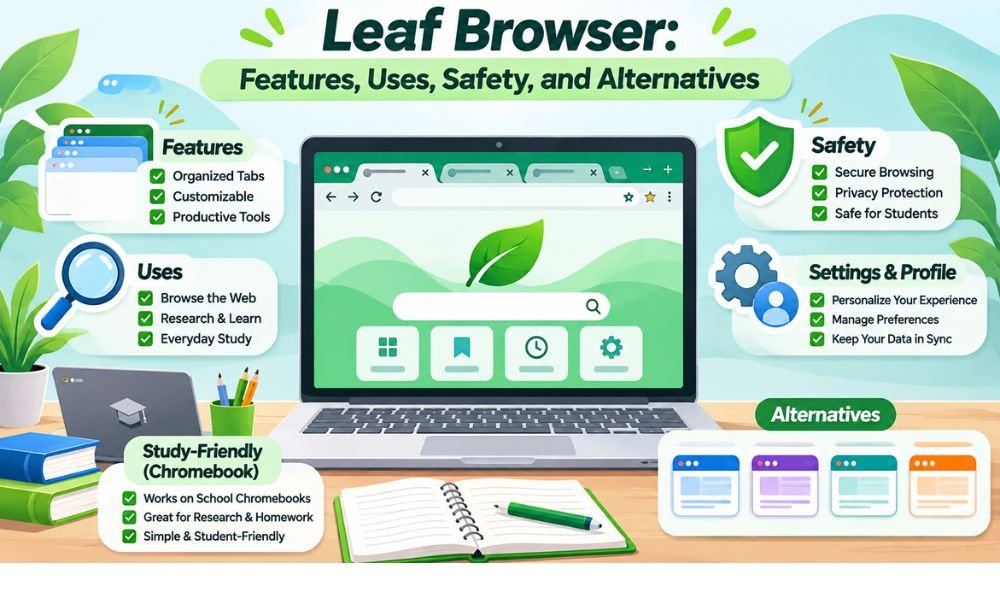
Have you ever wanted a simple browser that makes your online work easier? Leaf Browser is a name that has gained attention among students and internet users. People search for it because they want easy browsing and better control over their tabs.
In 2026, many people want tools that are fast and simple to use. Some also want more privacy while browsing. Leaf Browser has been linked to these needs. Yet not every tool using this name offers the same features.
In this article, we will explore what Leaf Browser is and how it works. We will also discuss its main features and common uses. You will learn about school Chromebook support and why some schools block browser extensions.
What Is Leaf Browser?
Leaf Browser is a name used for browser tools and extensions. Some older guides describe it as a lightweight Chrome extension. They say it helped users browse websites and manage tabs without making things too hard.
Other guides describe Leaf Browser as a tool for online testing and browser automation. These tasks involve using software to repeat actions on websites. However, there is no clear proof that these guides describe the same original product.
There is also a Chrome extension called Leaf Browser that adds a leaf image over an open page. It is a different type of tool. This is why checking the developer and features is important before downloading anything.
How Does Leaf Browser Work?
The way Leaf Browser works depends on which version you use. A browser extension works inside another browser such as Google Chrome. It adds extra features without replacing the whole browser. These features can help users with certain online tasks.
For example, a student may want to keep study pages easy to find. A tab tool can help organize open pages. This makes it easier to move between homework and online lessons. Not every Leaf Browser version supports these features.
Some articles also link Leaf Browser with separate browsing sessions. A session keeps certain website details apart from another session. This can help with testing websites or managing different work tasks. Such features should be checked before using a tool.
Continue reading: Bill Hudson: Everything About Kate Hudson’s Father and His Life Today
Main Features of Leaf Browser
One reason people became interested in Leaf Browser was its reported simple design. Older guides describe it as easy to use. A clean layout can help people focus on their work instead of dealing with too many buttons.
Another feature mentioned in older articles is tab management. Tabs allow users to keep several websites open at once. This can help students and people who do online research. However, the exact tab features of the original extension remain unclear.
Some sources also mention browser profiles and automation features. These can help developers test websites and repeat simple tasks. Such tools may require extra settings or software. Readers should not expect every Leaf Browser download to include these advanced features.
Common Uses of Leaf Browser
Leaf Browser has been discussed for several online activities. One common use is everyday browsing. People may want to open learning websites or read articles. A simple browser tool can make these tasks feel easier and more organized.
Students may also look for Leaf Browser when working on school projects. Imagine having several homework pages open at once. A good tab tool can help keep those pages in order. This can save time when moving between different subjects.
Some technical guides mention web testing and data collection. Developers may use browser tools to check website pages and find errors. Others collect public product details for research. These advanced uses depend on the software and are not confirmed for every Leaf Browser version.
How to Get Leaf Browser on a School Chromebook
Many students search for Leaf Browser because they use school Chromebooks. These laptops often have special settings made by school staff. Such settings help protect students and school data. They may also limit which extensions students can install.
The first step is to check the Chrome Web Store. Search for Leaf Browser and read the description carefully. Check the developer name and the features. A matching name does not mean it is the original tool you want.
If your school allows extensions, you may be able to install an approved one. If it is blocked, ask your teacher or school IT team for help. Google allows schools to review extension requests and approve tools for students.
Why Is Leaf Browser Blocked on Some Chromebooks?
School Chromebooks often have rules that control what students can install. These rules are set by school administrators. They help keep devices safe and working well. This is why some browser extensions may not be available to students.
You might see a message saying an extension is blocked by your administrator. This means the school has not allowed that extension. It does not always mean the tool is dangerous. Schools may block tools for many different reasons.
The safest option is to ask for permission. Students can also use approved tools for organizing tabs and schoolwork. Trying to change device settings without permission can cause problems. Google confirms that administrators can allow or block extensions on managed devices.
Is Leaf Browser Safe to Use?
Safety is important when using any browser or extension. Leaf Browser may seem simple and easy to use. However, older versions and unknown downloads can create risks. Some files may contain harmful software or ask for too many permissions.
Another concern is online privacy. Some websites collect information about your device and browsing habits. This can happen even when you use private browsing tools. No browser can promise complete privacy or keep every online action hidden.
Before installing Leaf Browser, check where the file comes from. Read user reviews and look at the developer’s details. Avoid unknown websites that offer free downloads. A trusted browser with regular updates is usually a safer choice.
Is Leaf Browser Still Available in 2026?
Many people wonder if Leaf Browser is still available in 2026. Older guides report that the original browser extension was discontinued. However, it is difficult to confirm its full history because different tools have used the same name.
A Chrome Web Store extension named Leaf Browser was updated in March 2026. It places a leaf image over web pages. This does not mean the older browsing tool has returned. The two products should not be confused.
If you find a Leaf Browser download online, check its details first. Look at the version and developer name. Make sure the tool offers the features you need. Never trust a download just because its name looks familiar.
Best Leaf Browser Alternatives in 2026
If Leaf Browser does not meet your needs, several other tools are worth trying. The best choice depends on your work. Some browsers focus on privacy. Others help with tabs or let users manage separate browser profiles.
Brave is a good option for everyday browsing. It blocks many ads and trackers. Firefox Focus is useful for private browsing on mobile phones. Ungoogled Chromium may suit people who want more control over their desktop browser.
For schoolwork, OneTab and Workona can help keep tabs organized. GoLogin and Multilogin offer separate browser profiles for work and testing. Incogniton is another option. Bromite is outdated, so users should look for a browser that still receives security updates.
Leaf Browser vs Google Chrome
Leaf Browser and Google Chrome are not the same type of tool. Chrome is a full web browser made by Google. It lets people visit websites and install extensions. The older Leaf Browser was described as a Chrome extension.
Google Chrome also offers features for daily work. Users can save bookmarks and manage tabs. They can also sync browsing data between supported devices. This makes Chrome useful for students and people who work online every day.
Leaf Browser may interest people who want a particular extension feature. However, its older features and support are not fully clear. Chrome is a more reliable choice for general browsing because it continues to receive regular updates.
Common Leaf Browser Problems and Fixes
Some users may face problems when trying to install Leaf Browser. The extension may not appear in the Chrome Web Store. This could mean the older version is no longer listed. Check the developer before trying another download.
Another common problem happens on school Chromebooks. Students may see a message saying the extension is blocked. This usually means school settings do not allow it. The best solution is to ask the school administrator for permission.
If an installed extension stops working, try restarting Chrome. You can also check for browser updates. Look at the extension’s settings and supported versions. If the problem continues, use a trusted alternative instead of downloading unknown copies.
Tips for Using Leaf Browser Safely
The first safety rule is to download software from trusted places. Avoid websites that offer unknown files or modified versions. These files may put your device at risk. Always check the developer name before adding an extension.
You should also review browser permissions. Some extensions ask to read website data or change page content. Only allow access when it is needed. Keep your browser updated and remove extensions that you no longer use.
If you use a school Chromebook, follow the rules set by your school. Do not change locked settings without approval. For private browsing, remember that websites may still see some information. Safe browsing also depends on your own online habits.
Frequently Asked Questions About Leaf Browser
Many readers want to know whether Leaf Browser is free. Older guides describe the original extension as free to use. However, its current availability is unclear. Always check the exact product before assuming a download is free.
Another common question is whether Leaf Browser works on Android or school Chromebooks. Support depends on the exact version. School devices may block unknown extensions. There is also no clear proof that the original extension has an official Android app.
People also ask which browser is a good replacement. Brave is useful for private daily browsing. OneTab helps organize open tabs. Firefox Focus is made for mobile privacy. The best option depends on what you want to do online.
Continue reading:Where Is Steven Cauble Now? The Real Story of Lisa Whelchel’s Ex-Husband
Conclusion
Leaf Browser became a topic of interest because people wanted simple browsing tools. Older articles describe it as a lightweight extension with useful features. However, different products now use the same name, so checking their details is important.
In 2026, users have many choices for browsing and managing tabs. Students can try approved school tools. Everyday users can choose browsers such as Chrome or Brave. People who need advanced features can explore trusted tools made for those tasks.
Before using Leaf Browser, think about your main goal. Do you want better tab control or more privacy? Choose software that is safe and easy to use. A trusted tool can make your online work simpler and more comfortable.
(FAQs)
What Is Leaf Browser Used For?
Leaf Browser is a name linked to simple browsing tools and Chrome extensions. Older guides describe features such as tab management and online browsing. Some also mention website testing. The exact features depend on which version you use.
Is Leaf Browser Still Available in 2026?
The original Leaf Browser extension is reported to be discontinued. However, other extensions with the same name may still appear online. Always check the developer and version before installing anything. A matching name does not mean it is the original tool.
Is Leaf Browser Safe to Download?
Leaf Browser may be safe when downloaded from a trusted source. However, old versions and unknown files can create security risks. Check the developer and permissions before installing. Avoid websites that offer modified copies or ask for private information.
How Can I Get Leaf Browser on a School Chromebook?
First, search for Leaf Browser in the Chrome Web Store. If your school allows the extension, you may be able to install it. If installation is blocked, ask your teacher or school administrator for approval instead.
Why Is Leaf Browser Blocked at School?
Schools often block unknown extensions to protect students and their devices. Leaf Browser may be restricted because it is not approved by the administrator. Students should follow school rules and use approved tools for browsing and schoolwork.
Is Leaf Browser Free to Use?
Older articles describe Leaf Browser as a free browser extension. However, the price and availability of current tools with this name may differ. Check the official listing before downloading. Be careful with unknown websites asking for payment.
Can Leaf Browser Work on Android Phones?
There is no clear proof that the original Leaf Browser extension has an official Android app. Some websites may offer apps with similar names. For mobile browsing, users can choose trusted options such as Brave or Firefox Focus.
Is Leaf Browser Better Than Google Chrome?
Google Chrome is a full browser with regular updates and many features. The older Leaf Browser was described as an extension. Chrome is generally more useful for daily browsing. Leaf Browser may only suit people seeking its specific older features.
Can Leaf Browser Hide My Online Activity?
No browser can make every online action invisible. Some browser tools offer privacy features, but websites may still collect information. Your school or internet provider may also see certain activity. Never assume Leaf Browser provides complete online privacy.
What Are the Best Leaf Browser Alternatives in 2026?
Brave is useful for private everyday browsing. Firefox Focus is a simple choice for mobile users. OneTab helps organize open tabs. Workona can help manage projects. GoLogin and Multilogin offer separate browser profiles for professional work.
Continue reading: voddler.co.uk: What Is It and How Does It Work?