Have you ever searched on Google and found too many pages? Some pages are helpful. Others have nothing to do with what you need. What if a simple search trick could help you find better results?
That is where inurl:spatial comes in. This search query helps you find web pages that have the word “spatial” in their web address. It can help students and bloggers find useful pages without checking every website.
In this guide for 2026 we will explain how this search trick works. You will learn how to use it on Google and find useful information. We will also share easy tips for SEO research and better searches.
What Is Inurl:Spatial?
Inurl:spatial is a special search query used on Google. It helps people find web pages with the word “spatial” in their URL. A URL is simply the web address you see at the top of your browser.
For example a website may have an address like example.com/spatial-data/. Google may show this page because its address contains the word “spatial.” This makes the query useful when you want to find pages with certain words in their addresses.
However this search does not find maps by itself. It also does not measure distance or search a map database. It only looks for a word in a web address. The page may be about maps or something else.
How Does Inurl:Spatial Work?
The inurl:spatial query has two simple parts. The first part is inurl: which tells Google to look at web addresses. The second part is spatial which is the word you want Google to find.
You must write the query without a space after the colon. The correct way is inurl:spatial. Writing inurl: spatial may not work as you expect. This small detail is important for getting useful search results.
Google may find the word in a website name or page address. For example spatial.example.com and example.com/spatial-guide/ both contain the word. Still not every matching page will be about maps or GIS. Some may discuss sound or design.
How to Use Inurl:Spatial on Google
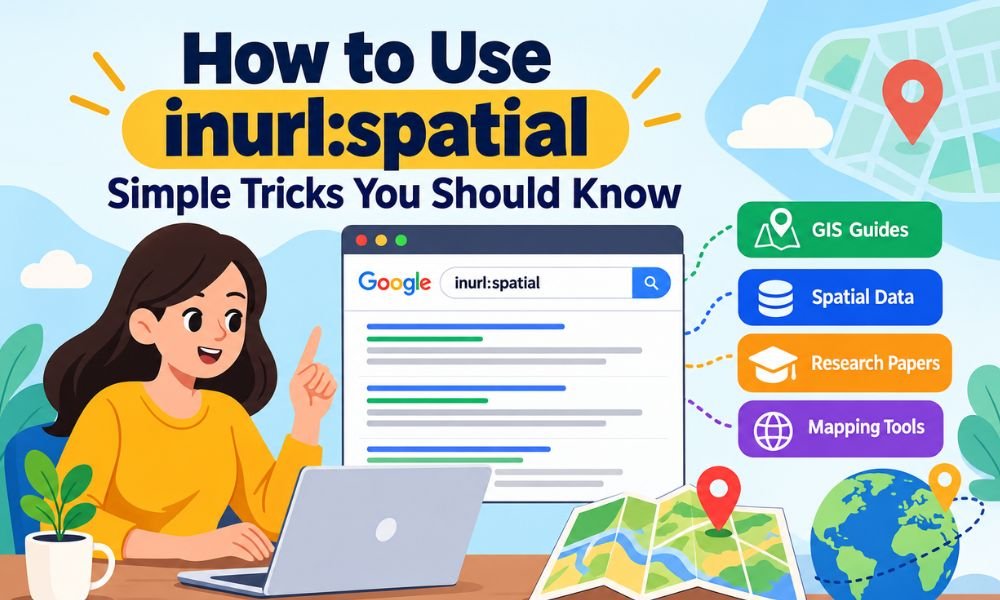
Using inurl:spatial is easy. First open Google in your browser. Next type inurl:spatial into the search box. Press Enter and Google will show pages that may have this word in their web addresses.
Now look at the results. Read each page title and check its address. You may see pages about maps or research. You may also find pages about other topics. Open the ones that match what you need.
For example imagine you are a student looking for map data. You can search inurl:spatial GIS instead of using the basic query. The extra word helps Google focus on GIS pages. This can make your search more useful.
What Can You Find With Inurl:Spatial?
One useful thing about inurl:spatial is the range of pages it can help you find. You may discover GIS guides and online maps. You can also find pages about spatial data and tools used to study places.
Students may use this query to find school lessons and research papers. Bloggers may use it to discover new topics. People who work with maps may find guides about location data and ways to use it.
But remember that the word “spatial” has many uses. It can describe sound and room design as well as maps. This means some results may not help you. Always read the page before trusting its information.
Best Inurl:Spatial Search Tricks
You can make inurl:spatial more useful by adding extra words. For example inurl:spatial GIS can help you find pages linked to mapping. You can also search inurl:spatial PostGIS to look for guides about a spatial database tool.
Another helpful trick is using quotation marks. Try inurl:spatial "spatial data" when you want pages linked to that phrase. This may help narrow your search and remove some pages that do not match your needs.
You can also remove unwanted topics. For example inurl:spatial GIS -audio asks Google to leave out results linked to audio. This is useful when sound-related pages appear too often. Start with a simple search and add filters only when needed.
Continue reading: Tyna Robertson: What Happened to Kennedy Urlacher’s Mother
How Inurl:Spatial Helps With SEO
SEO means making your website easier for people to find through search engines. Inurl:spatial can help with SEO research because it shows pages that use certain words in their addresses. This can help writers study how websites organize content.
For example imagine you run a blog about maps and location tools. You can search for spatial pages and see what other websites discuss. You may find guides about map data or tools that you have not covered yet.
This can give you fresh article ideas. You can also study page names and see how sites group related topics. However the query itself does not improve your Google ranking. Its real value comes from helping you plan better content.
The first half ends here. The second half will continue with competitor research and GIS data. It will also explain other Google search tricks and common mistakes. Readers will learn how to check results and use this query more wisely.
Using Inurl:Spatial for Competitor Research
Do you want to know what other websites are writing about? The inurl:spatial search query can help you explore their pages. It shows web addresses that use the word “spatial.” This makes it useful for finding related content.
For example you can search site:example.com inurl:spatial on Google. This looks for matching pages from one website. You may find guides and blog posts about spatial topics. You can then study what those pages offer readers.
This can also help you find missing topics for your own blog. Maybe another website explains spatial data but does not show how to use it. You could write a simple guide with real examples. Remember that Google may not show every page from a website.
Continue reading: First Time Meme: The Funny Story Behind the Famous Joke
How Inurl:Spatial Helps Find GIS Data
GIS stands for Geographic Information System. It is a tool used to study places and maps. People use GIS to look at roads and land. It also helps them understand how different places are linked.
The inurl:spatial query can help students find GIS lessons and map data. For example you can search inurl:spatial GIS data. Google may show pages with maps and guides. Some results may also lead to research from schools.
Before using any GIS data you should check where it came from. Look for the name of the group that made it. Check when the data was last updated. Also check which area it covers and whether you are allowed to use it.
Inurl:Spatial vs. Other Google Search Tricks
Google has several search tricks that help people find pages. The inurl: search looks for words in web addresses. The site: search helps you look within one website. Both can be useful when searching for specific information.
Another trick is intitle: which looks for words in page titles. You can also use filetype:pdf when looking for PDF documents. For example inurl:spatial filetype:pdf may help you find reports and guides about spatial topics.
You can combine these tricks when needed. For example site:example.com inurl:spatial helps you look for matching pages on one website. Keep your search simple at first. Add more filters when you need to narrow the results.
Common Inurl:Spatial Mistakes to Avoid
One common mistake is adding a space after the colon. The correct search is inurl:spatial. Some people write inurl: spatial instead. This may change how Google reads the query and lead to results they did not expect.
Another mistake is thinking every matching page is about maps. The word “spatial” can also appear in pages about sound and design. Always read the page title and content before deciding whether the result is useful.
Some people also trust the number of results shown by Google. This number may not be exact. It can change when you search again. Using too many filters can also hide good pages. Try one search change at a time.
Limits of Inurl:Spatial You Should Know
The inurl:spatial query is helpful but it has limits. It cannot show every page that contains the word in its address. Some pages may not appear in the results. This means you should not treat it as a full website list.
It also cannot tell you whether a website is safe or correct. A page may have a matching address but contain old or wrong information. You should check the writer and the source before using anything important from that page.
Another limit is that this query cannot tell you how many people search for a topic. It cannot improve your website ranking on its own. It also cannot measure distances or work like a GIS tool. It is only a search method.
Easy Tips for Better Inurl:Spatial Results
Start with a simple inurl:spatial search before adding extra words. Look at the first few results and see what appears. If you find too many unrelated pages then add a word like GIS or mapping to narrow your search.
Next check each useful page carefully. Read its title and web address. Look for the writer’s name and the date. If the page shares facts or research then check where that information came from before trusting it.
You can also save helpful pages for later. Make a small list of useful links and write down what each page explains. For SEO research you can compare these pages with your own content. This may help you find better ideas.
Conclusion
The inurl:spatial search query is a simple way to find pages that contain the word “spatial” in their web addresses. It can help students and bloggers discover useful guides. It can also help people who study maps find GIS resources.
You can make this search more useful by adding words and other Google search tricks. For example you can use site: to focus on one website. You can also use filetype:pdf to look for documents instead of normal web pages.
In 2026 this search method can still be a helpful part of online research. Just remember that search results are not always complete or correct. Start with a simple query and check what you find. A good search is only the first step. Knowing which pages to trust matters even more.
(FAQs)
What Is Inurl:Spatial in Google Search?
Inurl:spatial is a Google search query that helps find pages with the word “spatial” in their web addresses. It is useful for finding GIS guides and research pages. It can also help people explore websites about maps and location data.
How Do I Use Inurl:Spatial on Google?
Open Google and type inurl:spatial into the search box. Press Enter to see the results. Google may show pages with this word in their URLs. You can add words like GIS or mapping to find more useful pages.
Is Inurl:Spatial Free to Use?
Yes. You can use inurl:spatial on Google without paying any money. You do not need special software or an account. Just open your browser and enter the query. Some websites you find may charge for their content.
Can Inurl:Spatial Help Improve SEO?
Inurl:spatial can help with SEO research. It lets you find related pages and study how websites name their URLs. You can also discover new article ideas. However using this search query does not directly improve your Google rankings.
Can I Use Inurl:Spatial to Find GIS Data?
Yes. You can search inurl:spatial GIS to find pages related to maps and location data. Some results may include GIS lessons and research papers. Always check the source and date before using any data you find.
What Is the Difference Between Inurl:Spatial and Site:?
The inurl: operator looks for words in website addresses. The site: operator limits results to a certain website or domain. You can combine them with a query like site:example.com inurl:spatial to find matching pages on one site.
Why Does Inurl:Spatial Show Unrelated Results?
The word “spatial” has many meanings. It can describe maps and land. It can also describe sound and room design. Google may show pages about these topics because their URLs contain the same word. Adding GIS can help narrow the results.
Can Inurl:Spatial Find PDF Files and Research Papers?
Yes. Try searching inurl:spatial filetype:pdf on Google. This may help you find reports and study guides in PDF format. You can also add GIS or another topic. Check the author and date before trusting a document.
Does Inurl:Spatial Show Every Page on Google?
No. Inurl:spatial does not give a complete list of every matching page. Google may leave out some results. Pages can also change or disappear over time. Use this query to discover useful links rather than count all website pages.
Is Inurl:Spatial Still Useful in 2026?
Yes. Inurl:spatial can still be useful for finding pages and studying website URLs in 2026. Students can use it for research. Bloggers can use it to explore content ideas. Always check the results because Google search behavior can change.
Continue reading: Lola Iolani Momoa: Everything to Know About Jason Momoa’s Daughter