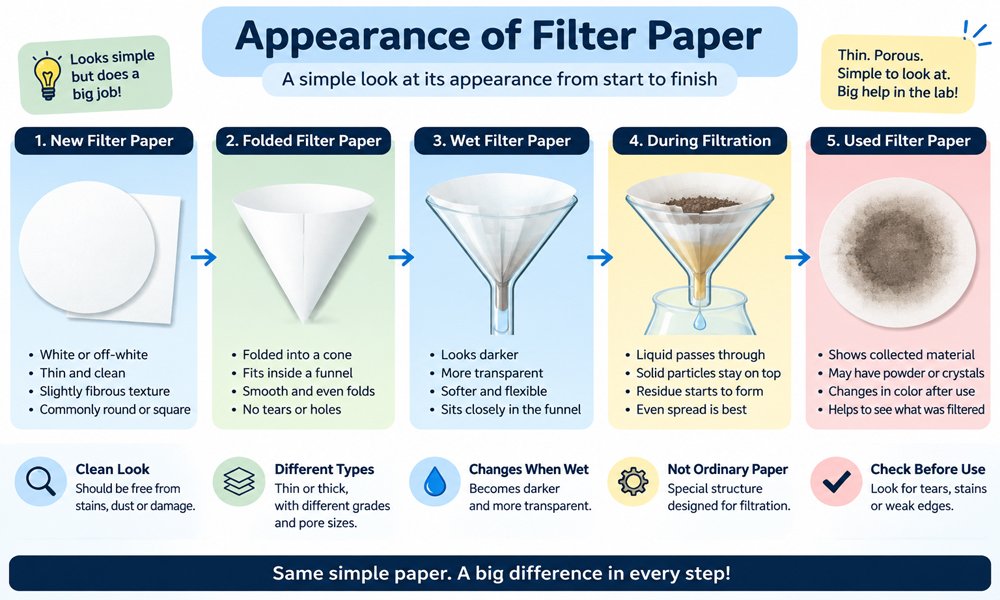
Filter paper may look like a simple piece of paper. Yet it has a special job. It helps separate solid bits from liquid. You can often see it in school labs. It is also used in science work.
The appearance of filter paper can tell us some useful things. A clean sheet should have an even color and surface. Tears or stains may show a problem. Its look can also change when it gets wet.
In this guide we will explore its color and feel. We will also look at thickness and tiny pores. Later we will see how filter paper looks when folded and used. Everything is explained in simple words.
What Is the Normal Appearance of Filter Paper?
Most new filter paper looks white or off-white. It is thin and light. It should look clean across the whole sheet. There should not be dark marks or holes on a new piece.
The appearance of filter paper may remind you of normal paper at first. Look closer and you may see a soft fiber pattern. These fibers form the main body of many types of lab filter paper.
Filter paper often comes in round sheets. This shape makes it easy to fold for a funnel. Some types also come as square sheets. The size and shape can change based on the work being done.
Color of Filter Paper
White is the most common color for lab filter paper. This light color has a useful benefit. It makes dirt and colored solid bits easier to see after they collect on the paper.
Not every sheet is bright white. Some filter papers can look cream or light gray. This can depend on the material used to make them. A slight color change does not always mean something is wrong.
However a strange stain can be a warning sign. Dark marks or oily spots may mean the paper is dirty. Clean filter paper is important because dirt can affect some lab work and change the result.
Texture and Appearance of Filter Paper
The appearance of filter paper is closely linked to its texture. From far away its surface can look smooth. When you look closely you may notice many small fibers across the surface.
Most common lab filter paper is made from cellulose fibers. The surface may feel soft and a little rough. This is normal. The fiber structure helps create paths where liquid can travel through the sheet.
Different grades can feel different. Fine paper may have a tighter and smoother feel. Faster filter paper may feel more open or rough. You should use the correct grade instead of choosing paper only by touch.
Thickness of Filter Paper
Filter paper does not always have the same thickness. Some types are thin and very easy to fold. Others are thicker and stronger. The right choice depends on the type of filtering work you need to do.
Thin paper can sit neatly inside a funnel. Thicker paper may be useful when more strength is needed. Still thickness does not tell you exactly how small the pores inside the filter paper are.
Two sheets may have a similar appearance of filter paper but work in different ways. One may catch smaller solid bits. Another may let liquid pass faster. This is why checking the paper grade is important.
You may also read: What Is Cricfooty? The Easy Guide You Need to Read
Pores in Filter Paper
Filter paper contains many tiny spaces called pores. You normally cannot see each pore with your eyes. They are part of the fiber structure. These tiny spaces make filtration possible.
Imagine pouring muddy water through suitable filter paper. The liquid can move through the tiny paths. Larger solid bits stay behind on the surface. This simple action shows why the pore structure matters so much.
Fine filter paper can hold smaller particles. It may also let liquid move through more slowly. Coarser paper can give a faster flow. However very small particles may sometimes pass through with the liquid.
Appearance of Filter Paper After Folding
Round filter paper is often folded before use. A common method creates a cone shape. The cone then sits inside a funnel. Good folding helps the paper stay in the right place during filtration.
Filter paper can also be folded into a fluted shape. This form has several folds around it. The folds create extra spaces and channels. These can help liquid move through the filter more freely.
The folded paper should not have holes or torn areas. Its bottom point should stay complete. A tear can let solid particles pass into the liquid below. Careful folding helps protect the appearance of filter paper and its function.
Appearance of Filter Paper When Wet
The appearance of filter paper changes when liquid touches it. Dry paper may look bright white. Wet paper often becomes darker. It can also look more transparent because liquid fills spaces between the fibers.
Wet filter paper also feels softer and more flexible. When it is placed correctly in a funnel it can rest closely against the funnel wall. This helps keep the paper steady while liquid is being added.
Some changes are normal. A darker and slightly clear look is usually expected when the paper becomes wet. However holes torn areas or strange dark spots may point to damage or dirt that needs attention.
Appearance of Filter Paper During Filtration
The appearance of filter paper changes again during filtration. Liquid spreads across the paper and moves through its tiny pores. Solid bits stay on top. These bits slowly form a layer called residue.
The residue may be light or dark. It may look like powder or small grains. Its look depends on what is being filtered. For example muddy water may leave brown dirt behind while cleaner liquid leaves very little.
The residue should often spread in a fairly even way. If it gathers on one side the funnel may be tilted. The liquid may also have been poured too fast. Good placement helps the filter work better.
You may also read: DPSIT: Everything You Need to Know in Simple Words
Appearance of Used Filter Paper
Used filter paper often looks very different from a new sheet. It may hold dirt crystals powder or other solid matter. The original white surface can make this material easy to notice.
The appearance of filter paper after use can give simple clues about what was removed. A dark layer shows that solid matter was trapped. A thick layer may also explain why the liquid started moving more slowly.
Still you should not identify an unknown material only by looking at it. Two materials can have a similar color or shape. Proper lab tests are needed when you need to know exactly what a substance is.
Signs of Damaged Filter Paper
Good filter paper should be clean and complete. A hole or tear is a clear problem. Liquid and solid matter may move through the damaged area. This can make the filtered liquid less clean.
Look for deep folds stains weak edges and dirty spots too. A sheet that feels very damp before use may have been stored badly. Very dry old paper can also become weak or brittle.
Imagine finding a small tear near the bottom of folded paper. It may seem harmless at first. Yet that tiny tear can let particles escape. Checking the paper before use can prevent this simple problem.
Filter Paper vs Ordinary Paper
Filter paper and writing paper can look similar. However they are made for different jobs. Writing paper is made for pens and printing. Filter paper is made to let liquid pass while trapping solid particles.
The appearance of filter paper is often more fibrous and porous. Normal paper may contain coatings colors or other added materials. Its pore structure is not made to give controlled filtration in laboratory work.
This is why normal writing paper should not be used as a simple replacement. Proper filter paper gives a more controlled flow. It also offers known grades that can be chosen for different filtration needs.
How to Check Filter Paper Before Use
Take a quick look at the paper before starting. Check its color and surface. Look for holes stains dust and damaged edges. A clean sheet should have an even look across most of its surface.
Next check the package or product label. It may tell you the paper size grade and particle retention level. It can also give details about filtration speed and the material used to make the paper.
Do not choose paper based only on the appearance of filter paper. Two sheets can look almost the same but have different pore sizes. The label gives better information about which type is right for your work.
How to Store Filter Paper Properly
Good storage helps filter paper stay clean. Keep unused sheets in a dry place. Protect them from water dust and chemicals. The original box or pack is often a good place to keep them.
Try not to touch the main filtering area more than needed. Your hands can leave oil or dirt on the surface. In careful lab work clean gloves or clean tweezers can help protect the paper.
Check stored paper before using it again. If its color has changed or it smells unusual it may have been exposed to something. A clean fresh sheet is a safer choice when accurate filtration matters.
Conclusion
The normal appearance of filter paper is simple to recognize. Most types are white or off-white. They are thin clean and slightly fibrous. They also contain tiny pores that cannot normally be seen with your eyes.
Its look changes during use. Wet paper becomes darker and may look more clear. Used paper can hold powder dirt crystals or other residue. These changes can help you understand what happened during filtration.
Still appearance cannot tell you everything. Always check the paper grade and product information when choosing a filter. In 2026 filter paper remains a simple but useful tool in school science labs and many other types of work.
(FAQs)
What Does Filter Paper Normally Look Like?
Filter paper normally looks like a thin white or off-white sheet. It often has a soft and slightly rough surface. Small fibers may become easier to notice when you look closely at the paper.
The appearance of filter paper should normally be clean and even. New paper should not have large stains holes or tears. Circular sheets are very common because they are easy to fold and place inside funnels.
Different grades may look a little different. Some are thicker or smoother than others. These small changes are normal. Always check the product details when you need a certain type for your filtration work.
Why Is Filter Paper Usually White?
White makes it easier to see material collected during filtration. Brown dirt or colored particles can stand out clearly against a white background. This makes simple observation much easier during and after an experiment.
The white color also comes from the clean fibers used to make many lab filter papers. Some papers may have a light cream or gray shade. This does not always mean that the sheet is dirty.
However a sudden dark mark or oily stain is different. It may show that the paper has become dirty. In this case using a fresh sheet may help protect the quality of your filtration.
Why Does Filter Paper Look Transparent When Wet?
Dry filter paper contains tiny spaces between its fibers. When liquid enters these spaces it changes the way light passes through the sheet. The paper can then look darker and more transparent than before.
This change in the appearance of filter paper is usually normal. The paper may also become softer. Wetting it inside a funnel can help it sit closely against the funnel wall before filtration starts.
You should still watch for damage. A wet sheet should not suddenly develop large holes or broken areas. If it tears badly replacing it can help stop solid particles from passing into the filtered liquid.
Should Filter Paper Have Visible Holes?
No. Normal laboratory filter paper should not have visible holes or tears. It does contain many tiny pores. However these pores are generally far too small to see clearly with the naked eye.
A visible hole is different from a normal pore. It can allow unwanted solid material to pass through. Even a small tear near the bottom of the paper may affect the final filtration result.
Check the sheet before folding it. Then look at it again after folding. Gentle handling can help prevent damage. This small check takes little time and may save you from having to repeat the work.
Can You Tell Pore Size by Looking at Filter Paper?
You cannot reliably tell the exact pore size just by looking at filter paper. A fine sheet and a coarse sheet can sometimes have a very similar color texture and overall appearance.
Fine paper can trap smaller particles but may filter more slowly. Coarser paper may allow liquid to pass faster. The right type depends on the material and the result you need from the filtration.
For this reason do not depend only on the appearance of filter paper. Read the package or maker’s information. It is a much better way to check the grade particle retention and suggested use.
You may also read: Rashywings.com: What It Is and What Readers Can Find