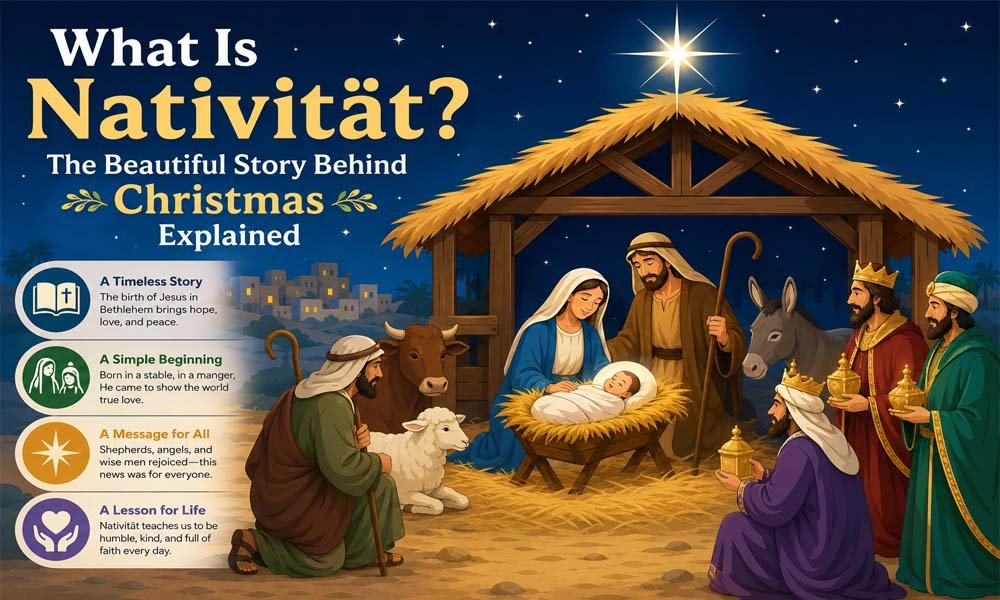
Have you ever wondered why the story of one baby born in a small town is still remembered by millions of people? Even in 2026 people around the world continue to celebrate this special event every Christmas. The story is called Nativität and it has inspired people for many generations.
Nativität is much more than the birth of a child. It is a story about hope love peace and new beginnings. For Christians it marks the birth of Jesus Christ. For many others it is also a reminder that kindness and care can make the world a better place.
In this guide you will learn what Nativität means where the story comes from why Bethlehem became so important and how this beautiful event continues to shape Christmas today. Everything is explained in simple words so anyone can enjoy and understand it.
What Is Nativität?
The word Nativität simply means birth. It comes from the old Latin word nativitas which also means birth. Over many years the word became connected with one very special event. Today when people say Nativität they are usually talking about the birth of Jesus Christ.
Many people think Nativität and Christmas mean the same thing. They are closely connected but they are not exactly the same. Nativität is the story of Jesus being born. Christmas is the yearly celebration of that birth. In simple words one is the event and the other is the celebration.
Even after thousands of years the meaning of Nativität has stayed strong. It reminds people that great things can begin in the simplest places. It also teaches that hope can appear even during difficult times. That is one reason why the story is still shared with children and adults across the world.
The Story of Nativität in Simple Words
The story of Nativität begins with a young woman named Mary. One day an angel appeared to her with wonderful news. The angel told her that she would have a baby named Jesus. This child would have a very special purpose.
Mary was engaged to Joseph. At first Joseph was confused by everything that was happening. Then an angel appeared to him in a dream and told him not to be afraid. Joseph trusted God’s message and stayed by Mary’s side.
Not long after this Mary and Joseph had to travel to Bethlehem. The Roman ruler had ordered a census and families had to return to their hometowns. The journey was long and tiring but they continued together with hope.
When they arrived Bethlehem was crowded with visitors. Every room was already full. They could not find a place to stay. Finally they found shelter in a simple place where animals were kept.
That night Jesus was born. Mary gently wrapped her baby in cloth and laid Him in a manger which was normally used to hold food for animals. It was not a rich place but it became one of the most important places in history.
Many people love this part of the Nativität story because it shows that greatness does not always begin in grand places. Sometimes the biggest changes begin quietly with love faith and hope.
Why Bethlehem Was Chosen for Nativität
Bethlehem is a small town located a short distance from Jerusalem. Long before Jesus was born this town already had an important place in Jewish history. It was known as the City of David because King David was born there.
Mary and Joseph traveled to Bethlehem because of the Roman census. Since Joseph belonged to the family line of King David he had to register there. What seemed like a simple trip later became one of the most famous journeys in history.
Many Christians also believe that Jesus was born in Bethlehem because of an old Bible promise. Hundreds of years before His birth the prophet Micah said that a future ruler would come from Bethlehem. Because of this many people see the town as the perfect place for the Nativität story.
Today millions of visitors travel to Bethlehem every year. They come to learn about the birthplace of Jesus and to remember the message of peace and hope that began there.
Nativität in the Bible
The story of Nativität is found mainly in two books of the Bible. These books are the Gospel of Matthew and the Gospel of Luke. Both tell the story of Jesus’ birth but each writer shares different details.
Matthew spends more time telling us about Joseph. He explains how Joseph received a dream from an angel and chose to trust God’s plan. Matthew also tells us about the Wise Men who followed a bright star until they found Jesus.
Luke gives more attention to Mary and the birth itself. He tells us about the journey to Bethlehem the stable the manger and the shepherds watching their sheep at night. Luke also shares how angels filled the sky with joyful news.
When these two Bible accounts are read together they give a full picture of Nativität. One adds details that the other does not include. Together they help readers understand the story in a simple and meaningful way.
The People in the Nativität Story
Every person in the Nativität story has an important part. Their actions help us understand why this event became so special.
Mary is the mother of Jesus. She showed courage and strong faith even when life became difficult. She trusted God’s plan and cared for her child with love. Because of this many people admire her kindness and strength.
Joseph also plays an important role. He protected Mary and Jesus and stayed with them through every challenge. He reminds us that true courage often means quietly doing the right thing even when life is uncertain.
At the center of the story is baby Jesus. Christians believe His birth changed history. His arrival brought hope to people who had waited many years for God’s promised Savior.
The story also includes angels shepherds and the Wise Men. The angels announced the good news. The shepherds hurried to see the baby after hearing the message. The Wise Men traveled a long distance by following a bright star because they believed a great king had been born.
The Star and the Gifts in Nativität
One of the most famous parts of Nativität is the bright Star of Bethlehem. According to the Gospel of Matthew the Wise Men saw this unusual star and believed it was leading them to someone very special.
The Wise Men were learned visitors from the East. They studied the skies and believed the star marked the birth of an important king. Their long journey showed great patience faith and determination.
When they finally found Jesus they gave Him three famous gifts. The first gift was gold. Gold was a gift for kings and showed honor and respect.
The second gift was frankincense which was a valuable sweet-smelling incense often used in worship. The third gift was myrrh which was a costly oil used for healing and burial in ancient times. Christians often see these gifts as symbols of Jesus’ kingship His holiness and His future sacrifice.
These gifts were valuable but their deeper meaning is even more important. They remind us that the Nativität story is about giving with love respect and faith rather than giving expensive things.
The Meaning of Nativität
The story of Nativität is about much more than the birth of a baby. For Christians it is the moment when God came into the world through Jesus Christ. This belief is often called the Incarnation. In simple words it means God chose to live among people and understand their lives.
For many years people believed that a Savior would come. The birth of Jesus was seen as the answer to that promise. Because of this the story became one of the most important events in Christianity.
Even if someone does not follow the Christian faith the message of Nativität is still easy to understand. It speaks about love hope peace and kindness. These are values that people everywhere can appreciate.
Think about a time when someone helped you during a difficult day. Even one small act of kindness can change how you feel. That is why the message of Nativität still touches people in 2026.
How Nativität Became a Christmas Tradition
Christmas is celebrated because of the story of Nativität. Every year families gather to remember the birth of Jesus. Churches hold special services and many people read the Bible story together.
Over the years many traditions grew from this event. Christmas songs tell the story of the holy night. Children perform plays about Mary Joseph the shepherds and the Wise Men. These simple activities help keep the story alive.
One of the best known traditions is the nativity scene. In German it is called a Krippe. It shows Mary Joseph baby Jesus animals shepherds and sometimes the Wise Men gathered around the manger.
The first live nativity scene was created by Saint Francis of Assisi in the year 1223. He wanted people to see the story instead of only hearing about it. His idea became popular and spread to many countries.
Today homes churches schools and public places still display nativity scenes. They remind everyone that the true heart of Christmas began with a simple birth in Bethlehem.
How Different Countries Celebrate Nativität
People around the world celebrate Nativität in many different ways. The story stays the same but each country adds its own traditions and customs.
In Germany families often build beautiful Krippe displays at home. Christmas markets also show large nativity scenes that attract visitors from many places. These displays help children learn the story in a fun way.
In Mexico many families celebrate Las Posadas. During this tradition people remember Mary and Joseph looking for a place to stay. They walk together sing songs and welcome neighbors into their homes.
Italy and Spain are famous for detailed nativity scenes. Some displays include not only the main Bible figures but also bakers farmers musicians and village workers. This makes the scene feel alive and full of everyday life.
In the Philippines many people take part in Simbang Gabi. This is a series of early morning or evening church services before Christmas. Families come together to pray celebrate and prepare for the holiday.
No matter where people live the message of Nativität remains the same. It brings families together and reminds everyone about hope love and peace.
Nativität in Today’s World
Even in 2026 Nativität continues to inspire millions of people. Churches remember the story every Christmas. Families decorate their homes and spend time together during the holiday season.
Schools often present small plays that show the birth of Jesus. Children enjoy acting as angels shepherds Mary Joseph and the Wise Men. These simple performances help young people understand the story.
Many charities also use Christmas as a time to help others. People donate food clothes toys and money to families in need. In this way the message of kindness becomes real instead of remaining only a story.
Many people who are not Christians also enjoy the values found in Nativität. They see it as a reminder to care for family help neighbors and treat everyone with respect.
Common Myths About Nativität
There are many stories about Nativität that people have heard for years. Some are based on the Bible while others became popular through tradition.
One common belief is that there were exactly three Wise Men. The Bible never says there were three men. It only tells us about three gifts. There may have been more travelers.
Another common idea is that Jesus was born on December 25. The Bible does not give an exact birth date. December 25 became the traditional day for celebrating Christmas many years later.
Some people also believe the Wise Men arrived on the same night Jesus was born. The Bible suggests they may have arrived later after His birth. Even so they remain an important part of the Nativität story.
Learning these simple facts helps us better understand the Bible while still enjoying the traditions that families have loved for many years.
Life Lessons We Can Learn from Nativität
The story of Nativität teaches many lessons that still matter today. One lesson is humility. Jesus was born in a simple place instead of a palace. This reminds us that greatness is not measured by money or fame.
Another lesson is kindness. Mary Joseph the shepherds and the Wise Men all cared for others in different ways. Their actions show that love is often shown through simple acts.
Faith is another important lesson. Mary and Joseph trusted God even when life became difficult. Their courage reminds us to stay hopeful during hard times.
The story also teaches us to help others. A smile a kind word or a helping hand can make someone’s day better. These small actions keep the spirit of Nativität alive every day.
Why Nativität Still Matters Today
Some stories disappear with time. Nativität is different. It has been shared for more than two thousand years because its message is simple and timeless.
People today still face stress worry and uncertainty. The story reminds us to slow down spend time with loved ones and remember what is truly important.
It also brings people together across different countries and cultures. Families gather around meals churches welcome visitors and communities celebrate together. These moments create lasting memories.
Whether someone follows the Christian faith or simply enjoys the values of kindness and peace the message of Nativität continues to offer hope for the future.
Conclusion
At its heart Nativität is a story about hope love peace and new beginnings. It reminds us that one simple event in a small town changed the lives of millions of people around the world.
The birth of Jesus continues to inspire families churches and communities every Christmas. The story teaches that true greatness begins with humility kindness and faith rather than wealth or power.
As we move through 2026 the message of Nativität is still as meaningful as ever. It encourages us to care for others stay hopeful during difficult times and bring more peace into our homes and communities. That is why this beautiful story continues to be remembered and celebrated every year.
(FAQs)
What does Nativität mean?
Nativität means “birth.” Today it is mainly used to describe the birth of Jesus Christ. The word comes from the Latin word nativitas and is closely connected with the Christmas story.
Is Nativität the same as Christmas?
Not exactly. Nativität is the story of the birth of Jesus. Christmas is the yearly celebration of that special event. They are closely connected but they are not the same thing.
Why was Jesus born in Bethlehem?
According to the Bible Mary and Joseph traveled to Bethlehem because of a Roman census. Christians also believe Bethlehem fulfilled an old prophecy that the promised Savior would be born there.
Who were the Wise Men?
The Wise Men were visitors from the East who followed the Star of Bethlehem. They brought gifts of gold frankincense and myrrh to honor Jesus and recognize His special role.
What does the Star of Bethlehem represent?
The Star of Bethlehem guided the Wise Men to Jesus. For many Christians it represents God’s guidance hope and the light that leads people toward truth.
Why was Jesus placed in a manger?
There was no room for Mary and Joseph to stay when they arrived in Bethlehem. Jesus was placed in a manger because He was born in a simple place where animals were kept.
Who created the first nativity scene?
Saint Francis of Assisi created the first live nativity scene in 1223. He wanted people to better understand the story of Nativität by seeing it with their own eyes.
How is Nativität celebrated today?
People celebrate through church services nativity scenes Christmas songs family gatherings Bible readings and acts of kindness. Different countries also have their own special traditions.
What lessons does Nativität teach us?
Nativität teaches humility kindness hope faith sharing and peace. It reminds us that even small acts of love can make a big difference in the lives of others.
Why is Nativität still important in 2026?
The story remains important because its message never grows old. It encourages people to care for one another value family stay hopeful and remember that love and kindness are always worth sharing
You may also read: Korps Sukarela: A Complete Guide to Training, Community Service, and Volunteer Life