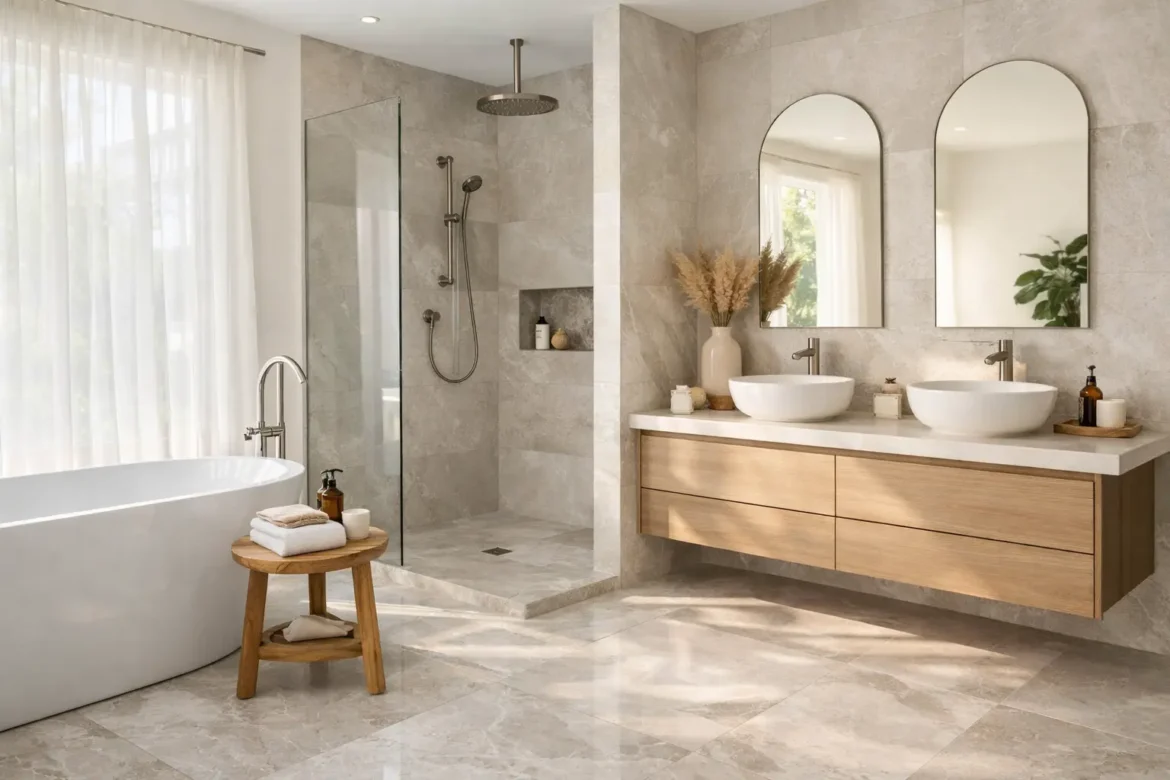
A tile is a small thing. A few centimetres of fired clay, glazed and pressed. Yet when thousands of them come together on a floor or wall, they define the personality of an entire room. Tiles carry colour, texture and pattern in ways paint and timber cannot, and they handle water, heat and heavy use with ease. If you are exploring ceramic tiles Melbourne, this guide skips the generic advice and focuses on the design decisions that really change how a finished space looks and performs: material, finish, size and layout.
Ceramic or Porcelain? Understanding the Difference
These two names are often used interchangeably, but they are not identical.
- Ceramic tiles are made from clay fired at lower temperatures. They are typically lighter, easier to cut and well suited to walls and many residential floors.
- Porcelain tiles are made from denser clay fired at higher temperatures, making them harder and less porous. They are an excellent choice for high-traffic or wet areas and outdoor use.
For wall tiling, splashbacks and many interior floors, ceramic provides a wide range of colours and patterns at a friendly price. For driveways, patios or commercial-style traffic, porcelain may be the better long-term fit. Always check the product’s rating for its intended use.
The Power of the Finish
The surface of a tile changes both the look and the practicality.
Glossy
A shiny glaze bounces light around the room, making small spaces feel brighter and bigger. It is a favourite for bathroom walls and kitchen splashbacks. Gloss can be slippery underfoot, so it is better suited to walls than wet floors.
Matt
Matt tiles have a softer, more contemporary look and hide fingerprints and water spots better. They are popular for modern floors and for achieving a calm, understated style.
Textured and Structured
Ripples, grooves and three-dimensional surfaces add depth and catch light dramatically. Feature walls and fireplaces become focal points when textured tiles are used.
Anti-Slip
For showers, outdoor areas and entryways, look for tiles with a suitable slip-resistance rating. Safety should always come before appearance.
Size Matters More Than You Think
Tile size changes the entire mood of a room.
- Small tiles and mosaics suit curved surfaces, shower floors and decorative detail. They have more grout lines, which adds texture and grip.
- Medium tiles are versatile and work almost anywhere.
- Large-format tiles create a sleek, seamless look with fewer grout lines. They make rooms feel open and are easier to keep clean, but they need a very flat surface and skilled installation.
- Long, narrow tiles can imitate timber planks and create a strong sense of direction.
A good rule is to match scale to space: bigger tiles can work beautifully in small rooms, so long as they are laid carefully.
Layout Patterns to Consider
How tiles are arranged is as important as which ones you pick.
- Straight (stacked): Clean and modern, with aligned grout lines.
- Brick bond (offset): A classic subway-style layout that adds movement.
- Herringbone: A timeless zigzag that brings elegance and energy.
- Chevron: A sharper, more dramatic cousin of herringbone.
- Diagonal: Tiles set at 45 degrees can make a room feel wider.
- Basketweave and mixed-size patterns: These add a vintage, handcrafted feel.
Dry-lay a few tiles before committing to a pattern. Seeing the layout in real life prevents costly regrets.
Choosing Colour With Confidence
- White and soft neutrals keep a space bright, timeless and flexible.
- Earth tones create warmth and a connection to nature.
- Greys and charcoals deliver a sophisticated, urban look.
- Bold colours and patterns make statement walls and floors, especially when kept to a limited area.
- Patterned encaustic-style tiles bring character and a nod to heritage.
Natural and artificial light both change how colour appears, so check samples in your own home at different times of day.
Grout: The Quiet Hero
Grout seals the gaps between tiles and strongly influences the final look. A matching colour makes the surface appear continuous, while a contrasting colour highlights the pattern. Dark grout hides stains, while light grout feels crisp but may need more cleaning. In wet areas, consider moisture-resistant products and make sure waterproofing is done correctly beneath the tiles.
Planning Quantities and Budget
- Measure accurately and calculate the total area.
- Add 10 to 15 percent extra for cuts, breakage and future repairs, especially for complex layouts.
- Buy from the same batch so that colour and size are consistent.
- Include associated costs: adhesive, grout, waterproofing, trims, tools and labour.
Keeping a few spare tiles stored away is smart, since a particular range may not stay available.
Installation Basics
Great tiles can be ruined by poor preparation. Surfaces must be clean, level and stable. Waterproofing is essential in wet areas, and the right adhesive depends on the tile type and size. Skilled tilers know how to set lippage, spacing and cuts so the result looks sharp. If you are not experienced, hiring a professional is usually money well spent.
Care and Maintenance
Tiles are tough, but a little care keeps them looking sharp.
- Sweep or vacuum regularly to remove grit.
- Mop with a neutral cleaner rather than harsh acids that can damage grout.
- Wipe up spills promptly.
- Reseal grout periodically where needed.
- Use mats at entries to reduce wear.
Final Thoughts
Tiles are a long-term investment, and the decisions you make about material, finish, size and layout will be on display every day. Take your time, look at real samples, think about how each space will be used and invest in good installation. When those pieces fall into place, the result is a surface that is beautiful, practical and built to last.