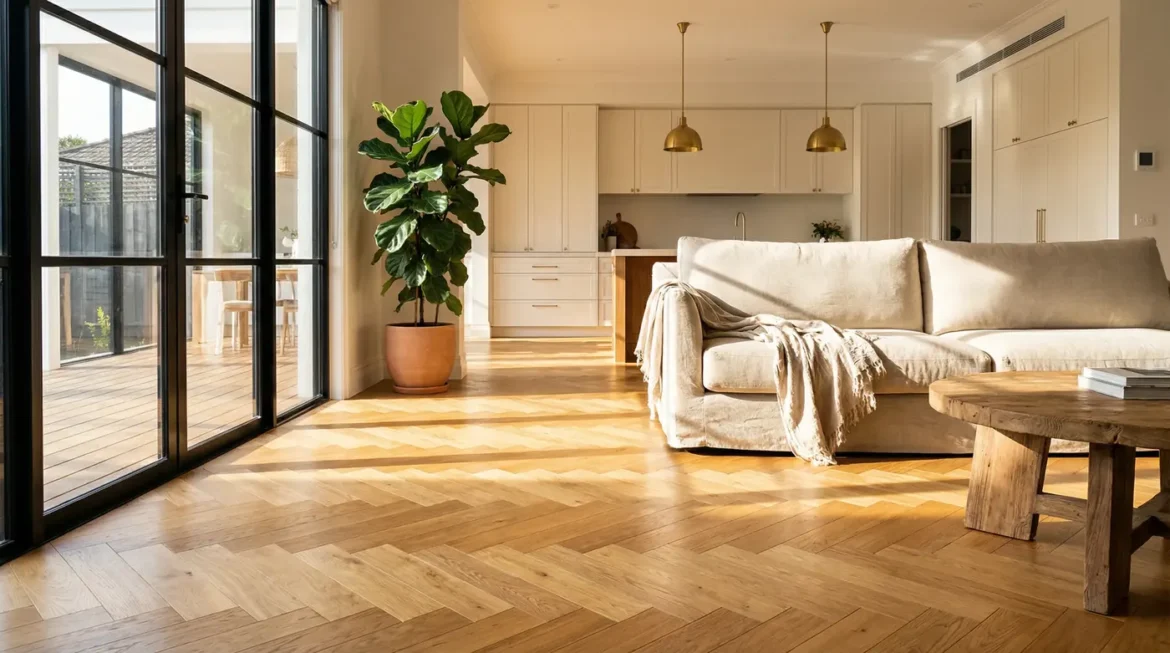
Ask any homeowner what they would change if they could start again, and flooring comes up surprisingly often. It is the largest surface in your home, it is walked on every day, and it quietly shapes how each room feels. Timber has stayed popular for generations because it is warm, durable and endlessly adaptable. If you are researching timber flooring Melbourne, the most helpful approach is to stop thinking about “a floor” and start thinking room by room. Each space has different demands, and the right board in the living room may be the wrong one in the laundry.
Why Timber Keeps Winning
Before getting into rooms, it helps to understand why timber remains a favourite in Victorian homes, from Federation cottages to new-build townhouses.
- Longevity: A well-chosen hardwood floor can last for decades and can be sanded and refinished several times.
- Warmth: Timber feels softer and less cold underfoot than stone or tile, which matters during a Melbourne winter.
- Value: Quality flooring is one of the features buyers notice first at inspections.
- Character: Grain, colour variation and natural markings mean no two floors look exactly alike.
The Living Room: Where Looks and Durability Meet
Living areas take the most traffic, from kids and pets to furniture being dragged around. This is where harder species earn their keep.
Look for a timber with a high hardness rating and a finish designed for heavy use. Wider boards suit open-plan spaces because they show more grain and fewer joins, while narrower boards give a classic, traditional look. If you want a calm, modern feel, choose a lighter, even-toned board. For a dramatic, cosy atmosphere, deeper tones and a satin finish work beautifully.
The Kitchen and Dining Area: Planning for Spills
Kitchens ask more of a floor than almost anywhere else in the house. Water, oil, dropped utensils and constant footfall all test the surface.
Timber can work well here, provided it is properly sealed and spills are wiped up promptly. A durable, high-quality coating protects the surface, and good sealing along the edges and under appliances helps prevent moisture creeping in. If your kitchen flows into a dining area, using the same boards throughout creates a seamless look that makes the whole space feel larger.
Bedrooms: Comfort Comes First
Bedrooms see less wear, so this is the place to prioritise feel and atmosphere. Softer species and warmer tones create a restful look, and you can add rugs for extra comfort. Because traffic is light, you have more freedom to pick a distinctive board or a more detailed grain without worrying about constant scuffing.
Hallways and Entries: The First Impression
Entries collect grit, wet shoes and bags. A tough species with a protective finish makes sense, and a good doormat does a lot of the work for you. Hallways also act as a visual link between rooms, so choose a timber that complements the flooring on either side.
Bathrooms and Laundries: Proceed With Care
Solid timber and constant moisture are not natural partners. If you love the timber look in a wet area, speak to a flooring specialist about moisture-resistant options and correct installation. In many cases, timber is better kept to dry zones while tiles handle the wettest rooms.
Solid, Engineered or Parquet?
Different constructions suit different homes.
- Solid timber: One piece of timber from top to bottom. It is long-lasting and can be sanded back many times, but it moves with humidity and needs correct installation.
- Engineered timber: A real timber surface layered over a stable core. It handles temperature and moisture shifts well and often suits apartments or homes with concrete slabs.
- Parquet: Smaller blocks arranged in patterns such as herringbone. It adds elegance and visual interest, and works well as a feature in a hallway or formal room.
Matching Colour to Your Home
Colour changes how a room feels more than most people expect.
- Light tones reflect natural light and make smaller rooms feel open and airy.
- Medium tones hide dust and scratches well and suit busy families.
- Dark tones feel rich and dramatic but show dust and pet hair more easily.
- Natural, unstained looks highlight the raw character of the timber.
Always view samples in your own home, under your own lighting, at different times of day. A board that looks perfect in a showroom can look quite different against your walls.
Preparing for Installation
Good preparation separates a floor that looks great for decades from one that causes problems within a year.
- Check the subfloor. It should be level, dry and structurally sound.
- Allow the timber to acclimatise. Boards need time to adjust to the humidity of your home before they are laid.
- Plan the layout. The direction of the boards affects how large or narrow a space appears.
- Leave expansion gaps. Timber moves with the seasons, so gaps at the edges are essential.
- Choose a reputable installer. Skilled laying is as important as the timber itself.
Everyday Care and Maintenance
Timber is forgiving if you treat it kindly.
- Sweep or vacuum regularly to remove grit that can scratch the surface.
- Use a slightly damp mop with a cleaner suited to timber, never a soaking wet one.
- Place felt pads under furniture legs.
- Wipe up spills quickly.
- Keep indoor humidity reasonably stable.
Over many years, the finish will eventually wear. Recoating or sanding and refinishing restores the surface and can make an old floor look new again.
Questions Worth Asking Your Supplier
- Which species suit my household, pets and budget?
- What finish do you recommend for this room?
- Is the timber sustainably sourced?
- What warranty applies to the product and installation?
- How long will installation take, and can I stay in the house?
Final Thoughts
The best timber floor is the one matched to how you actually live. Think about each room’s traffic, moisture and mood, choose a construction type that suits your home, and invest in proper preparation and installation. Done well, your floor will look beautiful on day one and keep improving with age.