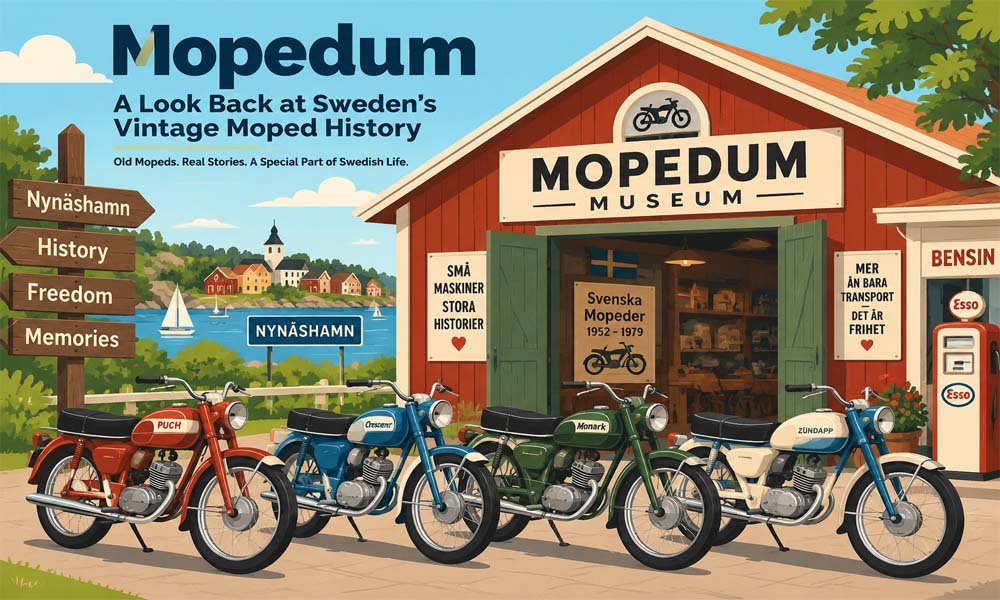
Small mopeds once played a big part in Swedish life. They helped people travel to work. They also gave young riders a new way to explore. Over time these simple machines became part of many family memories.
Mopedum helped keep these memories alive. It was linked with old Swedish mopeds and daily life from the past. The former museum showed that a small vehicle could tell a much bigger story about people and their lives.
Today we will look at Mopedum and its history. We will explore the former museum and its location. We will also look at the key changes in 1952 and 1961 that helped shape Swedish moped life.
What Is Mopedum?
Mopedum is best known through the former Mopedum Museum in Sweden. The museum focused on veteran mopeds and Swedish life from earlier years. It gave visitors a chance to see old machines in a setting that felt real.
The idea was not just to place mopeds in a room. Mopedum connected them with clothes and furniture. It also used old shops and other daily items. This helped show how these machines fitted into normal Swedish life.
The physical museum is now closed. Still the Mopedum name remains useful when looking back at Swedish moped history. It can lead people into stories about old models and riders. It also brings back memories of a different time.
The Story Behind Mopedum Museum
Mopedum Museum had a fun way of showing history. Visitors did not only see rows of old vehicles. They could also see scenes made to look like Swedish life during the years when these mopeds were common.
The displays covered the period from 1952 to 1979. They included things such as old furniture and clothes. There was also a small shop and a petrol station setting. These details helped make the past feel much closer.
Imagine seeing a classic moped beside items your grandparents may have used. That gives the vehicle more meaning. Mopedum used this idea to connect transport history with normal family life and memories from earlier Swedish years.
Where Was Mopedum Museum?
The former Mopedum Museum was in Nynäshamn in Sweden. Its address was Vikingavägen 39. People interested in classic mopeds and old Swedish life could visit the museum there before it closed.
Nynäshamn became an important part of the Mopedum story. The museum attracted people who loved old vehicles. Yet visitors did not need to be moped experts. The old rooms and daily objects offered something interesting for many people.
There is one important point for readers in 2026. The old address should not be treated as the address of an active Mopedum museum. The physical museum has closed. Older travel pages may still show details from its working years.
Why Mopedum Closed
Mopedum Museum permanently closed at the end of December 2022. Information shared during its final year said the people behind it planned to move toward new projects. This brought the physical museum experience to an end.
The closure did not erase the history Mopedum had helped show. Old mopeds still exist in private collections. Photos and old papers also help keep their stories alive. Many people continue to enjoy Swedish veteran moped history.
This is why Mopedum can still be worth learning about in 2026. The museum itself belongs to the past. Yet its main story continues through old machines and memories. It also lives through people who collect and restore mopeds.
You may also read: PDSConnect2: A Simple Way to Access Your Work Tools
Mopedum and Sweden’s 1952 Moped Change
July 1 1952 was an important date in Swedish moped history. New rules gave a clear place to a small motor vehicle that was described as a bicycle with an auxiliary engine.
These early machines were meant to stay close to normal bicycles. They had pedals and a small engine. Their main purpose was simple. They offered an easier and lower-cost way for people to travel without buying a car.
The early idea was mostly about useful transport. A worker could use a moped to get to a job. A person could also travel farther than they might on a normal bicycle. This helped small motor vehicles become useful in daily life.
How Mopedum History Changed After 1961
Another important change came in 1961. Swedish rules no longer required mopeds to look like bicycles or have pedals. This gave makers more room to build machines that looked and felt like true motor vehicles.
New designs could become more focused on the moped itself. Frames and seats could change. Fuel tanks and other parts could also take new forms. The moped slowly gained an identity that was separate from the bicycle.
This change also matched a wider change in how people used mopeds. They were still useful for travel. Yet fun and personal freedom were becoming important too. That shift would soon help make mopeds a major part of Swedish youth life.
Mopedum and Everyday Swedish Life
As mopeds changed they became a common part of daily life. They were small and simple. They also cost less than many cars. This made them a useful choice for people who needed easy transport.
Workers could use mopeds to reach their jobs. People could also ride them for small daily trips. A moped made longer travel easier than using a normal bicycle. For some families this small machine was very helpful.
Mopedum helped show this side of history. Its displays placed old mopeds beside items from daily Swedish life. This showed visitors that mopeds were not just machines. They were part of the way many people lived and traveled.
How Mopedum Became Linked With Youth and Freedom
The meaning of the moped slowly changed. It was still useful transport. Yet young riders started seeing it as something more. Having a moped could give them a new level of freedom.
Think about being young and finally having your own way to travel. You could visit friends or explore nearby places. You did not always need someone else to take you. That feeling made mopeds exciting for many young riders.
This is an important part of the Mopedum story. The moped moved beyond its early work role. It became linked with fun and youth. It could also mark a small but exciting step toward growing up.
You may also read: Acamento: The Secret Behind Smooth Strong and Beautiful Things
Classic Mopeds Linked With Mopedum History
Many classic names are remembered in the veteran moped world. Examples include the Puch Dakota and Crescent Compact. The Monark Monarped is another name that old moped fans may know.
Other remembered machines include the Sachs Saxonette and Zündapp KS50. These old mopeds show how designs changed over time. Frames and seats could look different. Lamps and fuel tanks also gave each machine its own style.
Not every old moped is rare or worth a lot of money. Some are common. Yet money is not always the main reason people care about them. An old family moped may hold memories that no price can fully show.
Collecting and Restoring Vintage Mopeds
Collecting vintage mopeds can be a fun way to protect history. Some owners want machines that still have most of their original parts. Others enjoy taking an old moped and carefully bringing it back to life.
Restoration takes time. An old moped may look good on the outside but still have problems. Brakes can need work. Tires may be too old. Cables and fuel parts can also become weak after many years.
Safety should always come before looks. A clean paint job does not mean a moped is ready for the road. Anyone planning to ride an old machine should have its key parts checked and follow the current local road rules.
Finding Parts for Mopedum Era Mopeds
Finding parts can be one of the harder parts of owning an old moped. Parts for popular models may still be fairly easy to find. Parts for less common machines can take much more time and research.
Old manuals can be very useful. They may show which part belongs on a certain model. Moped clubs and experienced collectors can also share useful knowledge. They may know which older parts can work with a certain machine.
Original parts can be important for people who want to keep a moped close to its first form. Even a small lamp or badge may tell part of its story. This attention to detail helps protect the history behind these machines.
Why Mopedum Still Matters Today
Mopedum still matters in 2026 because its story is about more than a closed museum. It shows how a small vehicle became part of Swedish transport and daily life. It also shows how everyday objects can carry strong memories.
Younger people can enjoy this history too. Some like the simple design of older machines. Others enjoy learning how engines and basic parts work. A vintage moped can feel very different from many modern vehicles filled with new technology.
Photos and old papers also matter. So do manuals and personal stories. Together they help explain who used these mopeds and why. Keeping such records can help future generations understand this part of Swedish life.
Conclusion
Mopedum gave visitors a special look at Sweden’s vintage moped history. The former museum mixed old machines with scenes from everyday life. This helped people see how mopeds fitted into homes and communities during earlier years.
The story also shows how Swedish moped culture changed. The 1952 rules helped give small motor vehicles their own place. The 1961 change allowed new designs. Over time the moped moved from simple transport toward leisure and freedom.
The physical Mopedum Museum closed in December 2022. Yet the story behind it remains worth remembering in 2026. Old mopeds still carry stories of work and youth. They also remind us how one small machine became part of Swedish life.
You may also read: Dworo.io: Everything You Need to Know in 2026